
The right digital wallet shapes your crypto experience. Yet with so many claiming to be secure and decentralized, finding one that truly gives you user control can be difficult. Some still restrict DeFi access, while others lack multi-chain support or partially hold your keys, putting your assets and freedom at risk. This contrasts with centralized wallets, which limit ownership and flexibility.
To help you make a confident decision, we’ve selected the best decentralized crypto wallets of 2026. These cryptocurrency wallets provide advanced protection, seamless dApp integration, and true cross-chain interoperability.
Explore our expert reviews below to find the wallet that best aligns with your needs.
Table of Contents
Quick Summary: Top 5 Decentralized Crypto Wallets | |
|---|---|
| Rabby Wallet | Best suited for: Multi-chain DeFi users seeking fast and secure access to multiple networks and dApps. Compatibility: Works with Chrome and Brave as a browser extension, supports over 20 EVM chains. Ease of use: Simple setup with automatic network detection and a user-friendly interface. Price: Free browser extension; no hidden fees. |
| Zerion | Best for: DeFi investors who prefer a single dashboard for tracking and managing cross-chain crypto assets. Accessibility: Available on web and mobile (iOS & Android). Extra Perk: Real-time portfolio analytics and NFT tracking. Price: Free to use; standard network fees apply. |
| MetaMask | Best for: DeFi and Web3 users who require reliable browser access and in-depth dApp integration. Accessibility: Browser extension and mobile app available. Security: Compatible with hardware wallets like Ledger and Trezor. Price: Free wallet; swap and bridge fees apply. |
| Trust Wallet | Best For: Mobile-first users who value convenience, multi-chain support, and direct dApp access. Accessibility: Supports 70+ blockchains; available for iOS and Android. Security: Private keys stored locally on device. Price: Free app; blockchain fees vary by network. |
| Ledger Nano X | Best For: Long-term holders seeking robust security and cold storage protection. Connectivity: Bluetooth-enabled for use with smartphones and the Ledger Live app. Security: A certified Secure Element chip ensures offline storage of private keys. Price: Around $149 (one-time purchase). |
1. Rabby Wallet: Best for Multi-Chain DeFi Users
Rabby Wallet is a non-custodial browser wallet designed for seamless DeFi interaction across multiple chains. It automatically detects and switches networks, helping users avoid transaction errors common with traditional wallets.
Its clean interface and built-in risk alerts make it popular among active DeFi traders. Rabby also supports multiple accounts, allowing users to manage portfolios efficiently. Thus, it’s considered one of the most user-focused wallets for Web3 participation.
Specifications | |
|---|---|
| Wallet type | Non-custodial browser extension; |
| Supported networks | 20+ EVM-compatible chains; |
| Platforms | Chrome, Brave; |
| dApp compatibility | Full integration with major DeFi platforms; |
| Open source | Yes; |
| Network switching | Automatic detection and switching. |
2. Zerion: Best for Portfolio Management and Cross-Chain Tracking
Zerion stands out as a decentralized wallet and portfolio tracker combined into one. It lets users view, swap, and track all assets (including DeFi positions and NFTs) from a single dashboard. The wallet supports multiple blockchains and syncs in real-time for accurate performance monitoring.
With its intuitive design and mobile accessibility, Zerion appeals to both investors and casual users. Its data-driven insights make it one of the best tools for managing DeFi portfolios in 2026.
Specifications | |
|---|---|
| Wallet type | Non-custodial software wallet; |
| Supported assets | Tokens, NFTs, DeFi positions; |
| Platforms | Web, iOS, Android; |
| Chain support | Multi-chain with cross-platform sync; |
| DeFi integration | Direct swaps and yield tracking; |
| Portfolio analytics | Real-time valuation and performance data. |
3. MetaMask: Best for DeFi and dApp Integration
MetaMask remains one of the most trusted wallets in the DeFi ecosystem. It connects seamlessly to thousands of dApps, enabling users to trade, stake, or interact directly with smart contracts. With both browser and mobile versions, MetaMask provides flexibility for all Web3 users. It also integrates with hardware wallets for enhanced security.
Specifications | |
|---|---|
| Wallet type | Non-custodial browser and mobile wallet; |
| Supported networks | Ethereum and EVM-compatible chains; |
| Platforms | Chrome, Firefox, iOS, Android; |
| Security options | Hardware wallet integration; |
| Built-in tools | Token swaps, gas customization; |
| User base | Over 30 million global users. |
4. Trust Wallet: Best for Mobile Accessibility
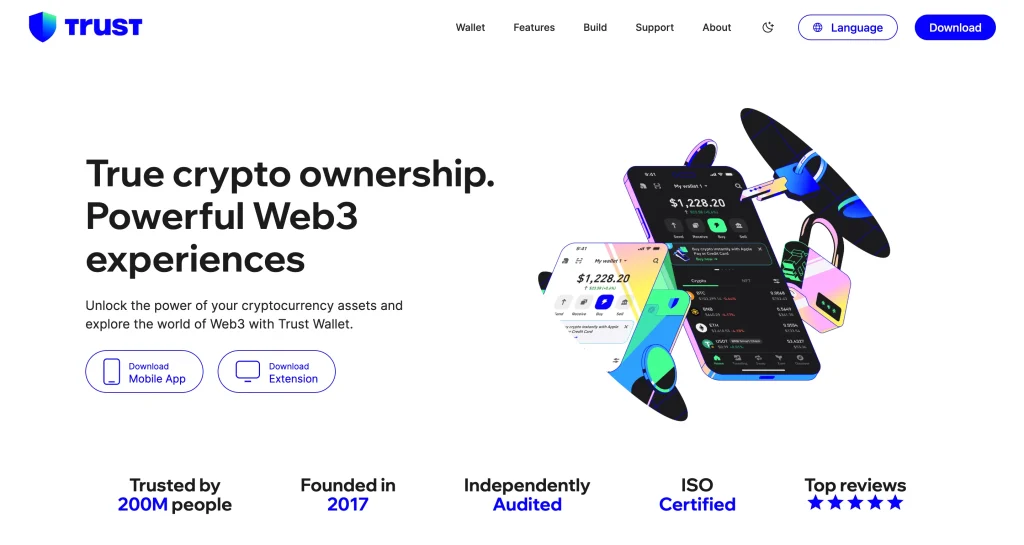
Trust Wallet is one of the most widely downloaded mobile crypto wallets worldwide, renowned for its simplicity and flexibility. It supports over 70 blockchains, including Ethereum, BNB Chain, and Solana, making it ideal for users managing a diverse range of assets.
The app offers in-wallet swaps, NFT storage, and staking, all accessible with just a few taps. As a non-custodial wallet, it gives users full control of their private keys. As a non-custodial wallet, users maintain full ownership through their recovery phrase and local key storage.
Specifications | |
|---|---|
| Wallet type | Non-custodial mobile app; |
| Supported blockchains | 70+ blockchains; |
| Platforms | iOS, Android; |
| Staking support | Built-in for supported tokens; |
| NFT support | Yes, view and store NFTs; |
| Security | Private keys are stored locally. |
5. Ledger Nano X: Best for Cold Storage Security
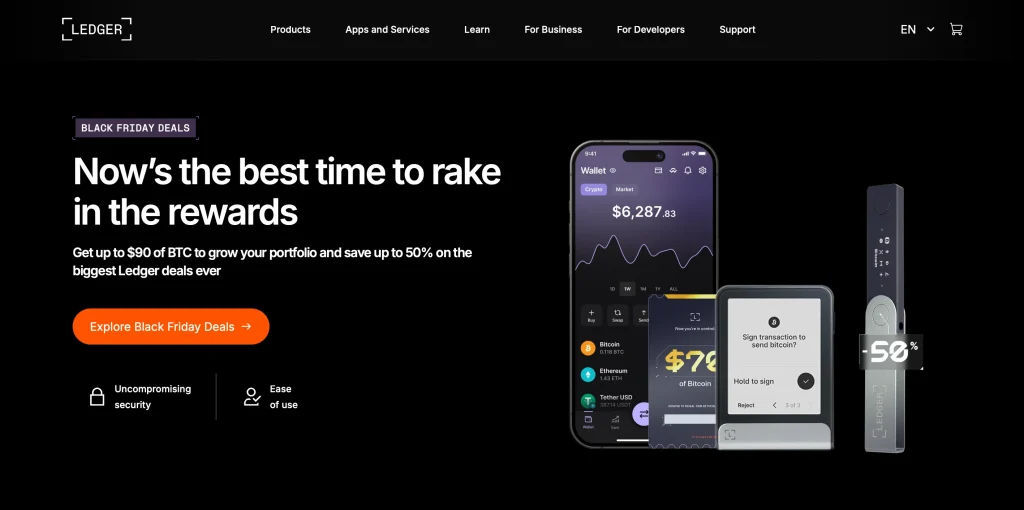
The Ledger Nano X is a premium hardware wallet designed for long-term crypto security. It enables users to securely store thousands of assets offline, using a certified Secure Element chip and encrypted firmware. Its Bluetooth connectivity allows secure pairing with smartphones and desktop apps through Ledger Live.
Also, don’t forget to check out the full Ledger Nano X review and how to set it up for increased security.
Specifications | |
|---|---|
| Wallet type | Hardware (cold storage) |
| Supported assets | 5,000+ cryptocurrencies |
| Connectivity | Bluetooth and USB |
| Compatibility | Ledger Live, MetaMask |
| Battery life | Up to 8 hours per charge |
| Price | Around $149 USD (one-time purchase) |
What to Look for in the Best Decentralized Crypto Wallets
When choosing a decentralized crypto wallet, seek full control over your digital assets without losing convenience, security, or DeFi access. Focus on these key features:
1. User Experience & Interface
An excellent interface makes crypto management effortless, even for beginners. Look for wallets offering:
- dApp browser integration for instant access to DeFi platforms and NFT marketplaces.
- One-click transaction confirmation to save time and avoid confusion.
- Responsive desktop and mobile interfaces enable you to manage assets from anywhere.
- Simple token management with built-in swap and staking options.
An intuitive wallet reduces mistakes, enhances trust, and ensures a smooth Web3 experience.
2. Multi-Chain Support
In 2025, interoperability is everything. The best decentralized crypto wallets support multiple blockchains, including Ethereum, BNB Chain, Polygon, Arbitrum, Solana, and Avalanche. Multi-chain support allows you to:
- Store, send, and swap assets across networks.
- Access DeFi protocols across different chains from a single dashboard.
- Avoid bridge risks and high gas fees with efficient transaction routing.
With multi-chain functionality, your wallet is a gateway to a connected DeFi ecosystem.
3. Security Features
Security remains the backbone of every decentralized wallet. Always check for:
- Private key ownership: You (and only you) control your keys.
- Two-factor authentication (2FA): Adds extra protection.
- Seed phrase recovery: Enables quick access if you lose your device.
- Open-source code: Ensures transparency and community-driven audits.
Select wallets with hardware or biometric security to better safeguard your funds against unauthorized access.
4. Innovation & Future-Ready Features
Top decentralized wallets are evolving fast to meet the demands of 2025’s DeFi environment. Modern solutions now include:
- Gas optimization tools to reduce transaction fees automatically.
- AI-powered risk alerts for suspicious smart contracts or phishing attempts.
- NFT portfolio tracking for collectors and traders.
Social recovery systems, allowing users to regain access safely without compromising self-custody.
5. Integration with DeFi and Web3 Ecosystems
A wallet’s value lies in connectivity. Leading decentralized wallets integrate with the broader Web3 ecosystem for direct participation in decentralized finance. Look for:
- Compatibility with top DeFi protocols like Uniswap, Aave, Curve, and PancakeSwap.
- Cross-chain smart contract interaction, allowing you to stake, lend, or trade across multiple networks seamlessly.
This integration ensures you can access all of DeFi without needing to switch apps or lose control of your assets.
Custodial vs. Non-Custodial: Which Type Fits You Best?
When debating non-custodial vs. custodial wallets, remember that the latter are managed by third parties, such as exchanges or platforms, which hold your private keys on your behalf. They’re easy to use and well-suited for beginners, but they come with trade-offs:
- You don’t own your private keys, meaning you must trust the service to safeguard your funds.
- Higher security risks, since centralized platforms are common targets for hacks.
- Limited DeFi access, as some custodial wallets restrict dApp or token compatibility.
Non-custodial wallets provide you with complete control over your private keys and, by extension, your cryptocurrency assets. This model serves as the foundation for decentralization and DeFi participation.
- You hold the keys; no third-party access or approval required.
- Full DeFi integration, allowing you to connect directly with decentralized apps, staking platforms, and NFT marketplaces.
- Enhanced privacy and autonomy, since no entity can freeze or limit your funds.
The only responsibility? Keeping your seed phrase and private keys safe. Losing them means losing access, but it also ensures no one else can ever touch your assets.
Verdict: Go Non-Custodial for DeFi and Security
For anyone engaging in decentralized finance, non-custodial wallets are the clear choice. They align with blockchain’s core principle: “not your keys, not your crypto.”
How Multi-Chain Support Shapes the Future of DeFi
1. Seamless Cross-Chain Transactions
Multi-chain support enables you to transfer assets across various networks, including Ethereum, BNB Chain, Polygon, Arbitrum, and Solana, without relying on centralized bridges. This interoperability:
- Simplifies portfolio management.
- Reduces transaction time and costs.
- Minimizes risks associated with cross-chain transfers.
By routing transactions efficiently, multi-chain wallets enable DeFi to be faster, cheaper, and more reliable.
2. Enhanced Access to DeFi Opportunities
Different blockchains host unique protocols, staking pools, and yield farms. Multi-chain wallets give you direct access to all of them, allowing you to:
- Explore diverse yield opportunities.
- Swap tokens natively between networks.
- Participate in multiple ecosystems without needing to switch tools.
This expanded access is crucial for DeFi users seeking to diversify their strategies and maximize returns.
3. Lower Fees and Better Scalability
Interoperability improves cost-efficiency. By supporting Layer-2 solutions and cross-chain routing, multi-chain wallets help reduce gas fees while maintaining high transaction speeds. This scalability is crucial as blockchain adoption grows and transaction volumes surge.
Multi-chain compatibility represents the next stage of Web3 evolution. Instead of treating blockchains as separate silos, future-ready wallets integrate them into a seamless, unified environment.
FAQ
Can a decentralized wallet be traced?
A decentralized wallet itself cannot be directly traced to your identity since it doesn’t store personal information. Yet, blockchain transactions are public and can be traced by wallet address. Using privacy tools or multiple wallets can help maintain better anonymity.
What are the risks of a decentralized wallet?
The primary risk is losing your private keys or seed phrase, which can result in the permanent loss of funds. Interacting with unverified dApps or phishing links can also lead to scams. Store your keys securely and choose wallets that include security features, such as alerts.
Which cryptocurrency is fully decentralized?
Bitcoin (BTC) is the most decentralized digital currency, run by thousands of independent computers worldwide. Other networks, such as Ethereum and Monero, also follow decentralized principles; however, their decision-making processes and consensus mechanisms may differ.
Can I lose crypto from a cold wallet?
Cold wallets, such as hardware wallets, are very safe because they are not connected to the internet. You could lose access to your money only if you lose or break the device, or forget your backup phrase. If you keep your backup phrase safe, your money is protected.
Final Thoughts
Choosing the right wallet is one of the most important decisions for anyone actively involved in crypto and DeFi. The best decentralized crypto wallets of 2025 offer more than just secure storage; they provide full ownership, multi-chain flexibility, and seamless access to the Web3 ecosystem.
Whether you prefer Rabby for advanced DeFi use, Zerion for portfolio management, MetaMask for dApp integration, Trust Wallet for mobile convenience, or Ledger Nano X for offline security, each option empowers you to stay in control of your assets.
In a rapidly evolving crypto landscape, decentralization remains the key to freedom and financial sovereignty. With the right wallet, your crypto journey becomes safer, smarter, and truly yours.