
Picking an NFT marketplace is harder than it looks. Some platforms charge high fees. Some have thin tools or a clumsy interface. Others don’t support your blockchain, or won’t let you pay with a stablecoin like USDC. Choose the wrong one and you pay more, wait longer, or get stuck holding something nobody on that venue is bidding on. And once you’ve bought your first NFTs, keep them safe offline: see our guide to the best NFT hardware wallets.
The NFT market of 2026 is smaller, quieter, and more honest than its 2021 peak. That makes your choice of marketplace matter more, not less: thinner liquidity punishes the wrong venue. This guide covers the five platforms still worth your time, what each does best, and the criteria that separate them now that the tide has gone out: fees, royalty policy, and chain support.
An NFT marketplace is a platform where you buy, sell and list non-fungible tokens, paying with crypto from your own wallet.
Table of contents
Best NFT Marketplaces: Quick Comparison
This table compares the five platforms on blockchain support, fees, auctions, and USDC payments, so you can see at a glance which one fits how you plan to buy, sell, or trade.
Quick Comparison | |
|---|---|
| OpenSea | Best for: Beginners & Mainstream NFT Trading Blockchains: 19+ Avg. Fee: 2.5% on secondary sales Auction: Yes USDC: Yes |
| Blur | Best for: Pro Traders & High-Frequency Flipping Blockchain: Ethereum Avg. Fee: 0% platform fee & ~0.5% minimum royalty Auction: Yes USDC: No |
| Magic Eden | Best for: Solana NFT Ecosystem & Multi-Chain Expansion Blockchains: 10+ Avg. Fee: 2% on secondary sales Auction: Yes USDC: Yes |
| Rarible | Best for: Multi-Chain & Customizable Storefronts Blockchains: 15+ Avg. Fee: 2.5% for buyers & sellers Auction: Yes USDC: Yes |
| Foundation | Best for: High-End Digital Art & Curated NFT Drops Blockchain: Ethereum Avg. Fee: 5% seller’s fee Auction: Yes USDC: No |
1. OpenSea, Best for Beginners and Mainstream NFT Trading

OpenSea is still the general-purpose marketplace. It lists across Ethereum, Polygon, Base and more, runs a rebuilt trading interface, and has the largest casual-buyer audience. Aggregators and pro platforms dented its dominance, and its royalty stance loosened along with the market. But for browsing, first purchases, and mainstream collections, it is still where the people are, and that matters when you want to sell: buyers can only bid where they are looking.
Key Features: | |
|---|---|
| Multi-chain support (15+ networks) | Trade across the Ethereum blockchain, Polygon, Zora, and more without switching platforms. |
| Buy NFTs with credit cards or USDC | Perfect for users who don’t want to rely on ETH or deal with Ethereum gas fees. |
| Simplified interface for new users | Easily mint NFTs, browse collections, or purchase NFTs without needing technical skills. |
| The biggest NFT marketplace by volume and user base | Discover top collections such as Bored Ape Yacht Club or explore multiple NFTs from newer creators. |
| Mainstream brand partnerships | Access exclusive drops from Reddit, Adidas, and Warner Bros. |
Why We Choose It
Breadth and familiarity. OpenSea has the widest multi-chain catalog, the interface everyone already knows, and enough liquidity on major collections to buy and sell without drama. For anyone who isn’t a professional trader, it is the sensible default.
2. Blur, Best for Pro Traders and High-Frequency Flipping
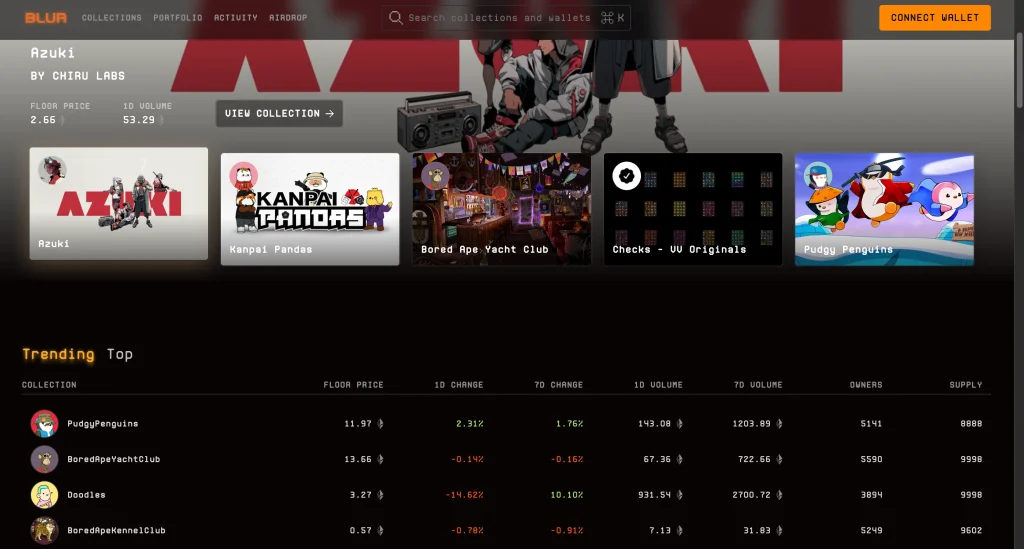
Blur is the professional terminal. It offers portfolio-level sweeps, real-time pricing, bidding pools, and the lowest fees on this list, all built for high-frequency Ethereum trading. Its token-incentive era reshaped the market and helped break royalty enforcement across the industry. Its interface assumes you know exactly what you are doing. Collectors browsing for art belong elsewhere. Flippers moving size do not.
Key Features: | |
|---|---|
| Zero platform fees | Helps maximize profits on secondary sales. |
| Advanced analytics | Real-time floor price tracking and market movement data. |
| Batch buy/sell tool | Ideal for flipping entire NFT collections or sweeping the floor. |
| Liquidity incentives | Earn your token rewards for active trading. |
| Deep wallet integration | Connect with crypto wallets (MetaMask or X2Y2.) |
Why We Choose It
Speed and price for volume traders. Aggregated listings, bid pools, and zero marketplace fees, built for people who treat NFTs as positions rather than art.
3. Magic Eden, Best for Solana NFT Ecosystem and Multi-Chain Expansion
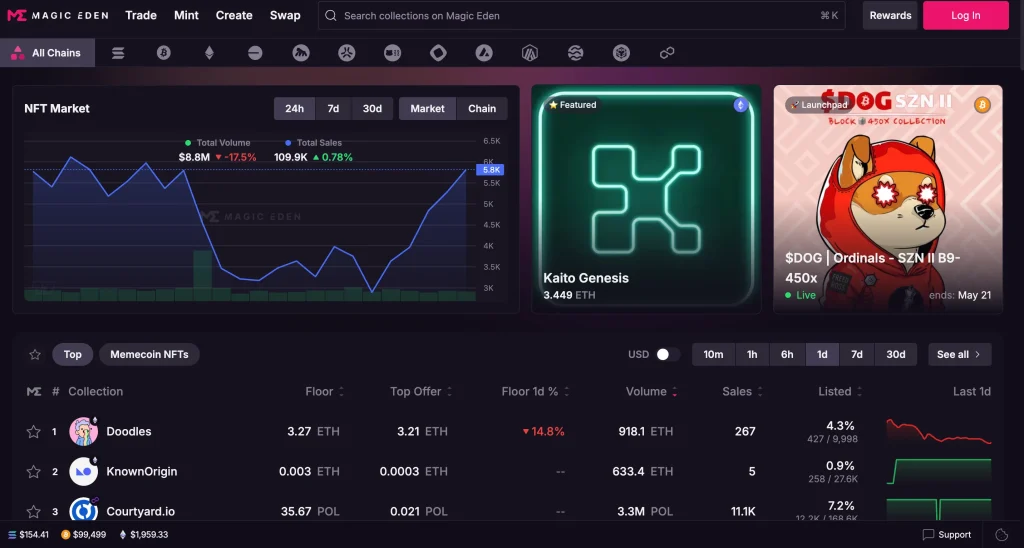
Magic Eden owns the Solana NFT scene, and it made the shrewdest expansion of the downturn: into Bitcoin Ordinals, where it became a leading venue, alongside Ethereum and Polygon support. If your NFT life runs outside the Ethereum bubble, it is the first stop. Its launchpad is still a real force for new mints on its home chains, which means new projects, and their early buyers, tend to show up here first.
Trading there means picking a Solana wallet first, which we cover in Phantom vs Solflare.
Key Features: | |
|---|---|
| Multi-chain capabilities | Supports Solana, Ethereum, Polygon, and even Bitcoin NFTs. |
| Launchpad support | Tools to help NFT artists and creators mint and market their projects. |
| Low gas fees and fast execution | Especially effective for NFT trading on Solana. |
| Mobile-friendly | Trade on the go, whether browsing or selling NFTs. |
Why We Choose It
The strongest non-Ethereum footprint in the industry. It is Solana’s home marketplace, and it expanded into Bitcoin Ordinals and cross-chain trading without losing that base.
4. Rarible, Best for Creators Who Want Multi-Chain and Customizable Storefronts

Rarible pairs multi-chain minting (Ethereum, Polygon, and others) with the most creator-friendly stance in the industry. It lets you set your own royalties and it honors them. It pulls in listings from the larger venues, so your work is not stranded on a small site. And its marketplace-builder tools let brands and communities run their own storefronts on Rarible’s rails. Volume is modest next to the giants. That is the trade for principles.
Key Features: | |
|---|---|
| No-code storefront creation | Build a custom shop on your blockchain. |
| Royalties enforcement via smart contracts | Protects NFT artists’ long-term income. |
| Governance token (RARI) | Vote on platform changes and earn rewards. |
| Integrated social tools | Engage directly with NFT buyers and collectors. |
Why We Choose It
Creator-first economics. Multi-chain minting, royalties that are respected, and community ownership through RARI. Rarible kept the creator thesis when bigger rivals dropped it.
5. Foundation, Best for High-End Digital Art and Curated NFT Drops

Foundation stayed what it always was: a curated venue for one-of-one digital art. It has clean presentation, auction mechanics suited to art rather than floor-sweeping, and a collector base that outlasted the speculators. Sellers face real curation and thinner traffic. What remains is the closest thing NFTs have to a gallery district.
Key Features: | |
|---|---|
| Curated artist onboarding | Only top-quality, vetted artists can be listed, ensuring premium content. |
| Auction-based sales model | It lets you earn top bids on 1/1 art and rare collections. |
| Strong Ethereum-native support | Trusted by artists for its stable smart contract infrastructure. |
| Royalties & artist-first mechanics | Artists receive ongoing income via royalty splits. |
| Minimalist, art-focused interface | Built for digital art lovers, not PFPs or gaming NFTs. |
Why We Choose It
Curation as a feature. Foundation is a gallery, not a bazaar, and 1/1 digital art gets the presentation and the prices serious work deserves.
How to Choose the Best NFT Marketplaces
1. Blockchain Support
Your chain picks your venues. Ethereum blue chips concentrate on OpenSea and Blur. Solana and Ordinals live on Magic Eden. Multi-chain creators lean toward Rarible. Buy where your target collection’s liquidity sits. That beats any general ranking, including this one.
2. Marketplace Fees
Platform fees now run from zero (Blur) to low single digits, because the fee war compressed everything. The real costs are gas, spread, and royalties. Compare the all-in cost of an actual purchase, not the headline fee, or the cheap-looking venue ends up costing you more.
3. Royalties Enforcement
This is the market’s sore subject. Enforcement collapsed during the trading wars, and most venues now treat royalties as optional or reduced. Rarible and the art platforms are the principled holdouts. If you create, check each platform’s current policy before you mint. It changes, and it decides your revenue.
4. Ease of Use
OpenSea and Magic Eden onboard newcomers gently. Blur’s density rewards experience. Foundation’s simplicity reflects its narrow purpose. Match the interface to your real skill level: fumbling a bid on a pro terminal costs real money.
5. Auction & Bidding
Timed auctions and offers work everywhere, but the flavors differ. Foundation’s reserve auctions suit art. Blur’s bid pools suit floors. OpenSea’s offers suit everything in between. If you are selling, pick the mechanic that matches how buyers of your asset behave.
6. Payment Options
Crypto-native payment (ETH, SOL, or the chain’s own token) works everywhere. Card on-ramps exist on the mainstream venues, with the usual fees and regional limits. Whatever the on-ramp, the NFT lands in a wallet you control. If it is worth real money, keep it in one paired with a hardware wallet.
7. Security & Reputation
The venues themselves are established. The losses happen in your wallet: fake marketplace clones, poisoned mint links, and approval-draining contracts. Bookmark the real URLs, treat DMs as hostile, review token approvals monthly, and sign valuable transactions on a hardware screen. The marketplace cannot protect a signature you gave away. Beyond that, look for:
- Integration with reputable wallets (MetaMask, Phantom);
- Smart contract audits;
- Two-factor authentication (2FA);
- Active moderation and support teams.
FAQ
Are NFTs still profitable?
They can be, but the easy money is gone. Profit now depends on picking rare or in-demand assets, such as gaming NFTs or AI-generated art, and on trading them where the buyers are. Low-fee marketplaces help too: every percentage point you save on fees is margin you keep.
Is Rarible better than OpenSea?
It depends on what you need. Rarible stands out for its community-driven features, honored royalties, and multi-chain support. OpenSea is easier for newcomers and has a larger, more active audience, which means faster exposure and quicker sales.
Where do people trade NFTs?
Most NFT trading happens on the major marketplaces: OpenSea, Blur, Magic Eden, and Rarible. All of them support auctions and offers as well as fixed-price sales.
Can I sell AI-generated art on OpenSea?
Yes. OpenSea allows AI-generated art, and its large audience and 2.5% secondary-sale fee make it a practical starting point for digital creators.
Do you make money every time an NFT is sold?
Only if the marketplace honors royalties. Platforms like OpenSea and Rarible let creators set a royalty percentage on resales, but enforcement varies, and on some venues royalties are optional for the buyer. Check the policy before you mint if resale income matters to you.
Final Thoughts
The shakeout left a clearer map. OpenSea for breadth, Blur for speed, Magic Eden for everything non-Ethereum, Rarible for creators, Foundation for art. Liquidity is thinner everywhere than it was in the boom, so price with patience. And one rule outlasts every platform cycle: the marketplace is where you transact, the hardware wallet is where you keep.
How I review: Reviewed by Andrei B. I buy the hardware wallets I review, test every product myself and score it on security, UI/UX, ease of use, price and supported coins. Before I publish, I also check recent user reviews and any hack reports.
The whole process is explained on the How We Review page. You can read more about me, or contact me with corrections, from the links at the bottom of this page. For general safety advice, see the FTC guide to cryptocurrency scams.