
Farming an airdrop is simple in theory. You use a protocol early, then hope the team hands tokens to the addresses that turned up. It pays often enough to be worth the trouble: when Uniswap launched UNI, any address that had ever called its v1 or v2 contracts could claim 400 UNI, and roughly 251,534 wallets made the cut off a snapshot that closed on September 1, 2020.
Then comes the filtering. Arbitrum ran wallets through a points system capped at 15, paid 1,250 ARB to anyone who scraped the three-point minimum, and docked a point from any wallet whose entire history landed inside a single 48-hour window.
Which wallet you sign with decides how much of this you can do without hurting yourself. It has to reach plenty of chains, hold plenty of addresses, and talk you out of the one transaction that empties everything. We’ve picked six that cover those jobs, and for EVM farming our favorite is Rabby Wallet.
A caveat first. Farming hands your address to strangers, and junk tokens turn up on their own. Pick the wrong network or paste the wrong address and that money is gone, with nobody able to reverse it.

Table of contents
Six Wallets for Airdrop Farming, Side by Side
Six Wallets for Airdrop Farming: Comparison Chart | |
|---|---|
| Rabby Wallet | Built for whoever is on EVM rollups all day. It previews every transaction before you sign and kills approvals in batches. The extension and phone app are free, and the code is MIT licensed. |
| MetaMask | The safe bet when you want a wallet every dapp already handles. It looks after Ethereum, Solana and Bitcoin keys, and the extension takes 12 hardware wallets. MetaMask puts its total at 100MM+ downloads. |
| Phantom | For Solana people who dip into Ethereum and Base as well. Malicious transactions get flagged, and Ledger is the single hardware brand it talks to. Phantom claims 20+ million users. |
| Keplr | The one to run if Cosmos airdrops and staking are your thing. Cosmos SDK chains, EVM networks, Bitcoin and Starknet all sit behind one interface. Keplr counts 20+ chains and 1M+ installs. |
| Zerion | Use it when a pile of farming addresses needs one view. Watch addresses stay view-only and wear an eye icon. The home page claims 58+ chains. |
| Ledger Nano X | Where the farming proceeds should end up. A CC EAL5+ secure element, 15,000+ coins and tokens, and Bluetooth to your phone. It runs $99 at the time of writing (September 2026). |
1. Rabby Wallet: Our Pick if You Live on EVM Rollups
Rabby is a self-custodial wallet aimed squarely at Ethereum and the EVM crowd, shipping as a browser extension and a phone app. Self-custodial means the keys are yours and the vendor can’t reach your money. Its help center claims support for every EVM-compatible network, with more than 90 wired in natively and the chain switching handled for you the moment a dapp asks.
We put it first for one reason, and that reason is signing. Before anything leaves your wallet, Rabby runs the transaction and shows the balance change, so a page promising “Claim” while the code says “Transfer” trips over itself. We’d take that over another 20 chains any day.
What Farmers Get Out of Rabby
- Simulation spells out what’s leaving and what’s arriving before your signature goes anywhere near it.
- The security engine speaks up when the spender is an EOA address, meaning a personal account rather than a contract, or when a contract shows Trust Value $0 or Deploy Day < 3.
- Approvals sort by contract or by asset, EIP-7702 delegations included, and die in batches. An approval is a dapp’s standing permission to move tokens out of your wallet.
- GasAccount covers fees on any supported network without you holding that chain’s native token, and Rabby sells it on this exact use case: claiming on a chain you’ve never touched.
- A single seed phrase yields addresses #1 through #50 out of the box, and a serial-number setting takes you on to #50 through #99.
- On the extension you can plug in Ledger, Trezor, GridPlus, OneKey, Keystone, NGRAVE ZERO, BitBox02, CoolWallet, AirGap Vault or imToken imKey.
There’s a wider picture worth having on wallets where the keys stay yours. Our rundown of the best non-custodial wallet options covers the same ground for people who aren’t chasing airdrops.
2. MetaMask: The Wallet Every Dapp Already Knows
MetaMask calls itself a browser extension and mobile app for looking after your Ethereum, Solana, Bitcoin and other blockchain private keys. Builds exist for Chrome, Firefox, Edge and Brave, alongside iOS and Android. The company puts its total at 100MM+ downloads across Google Play, the App Store and the Chrome Web Store.
Coverage is the whole argument here. New protocols test against MetaMask before anything else, so the connect button tends to work on the first try. Accounts under a single Secret Recovery Phrase are unlimited, which is how most farmers spread themselves across addresses.
Where MetaMask Pulls Its Weight
- Fresh addresses come from “Add account or hardware wallet” and then “+ Ethereum account” on the extension, or “Create account” on the phone.
- Ledger, Trezor and Lattice plug in directly, while nine air-gapped devices work through the extension. Air-gapped means the device never plugs in or broadcasts, so transactions travel by QR code.
- Keystone, Ledger and NGRAVE ZERO carry over to MetaMask Mobile.
- Spending Caps inside MetaMask Portfolio lists your approvals and revokes them on Ethereum, Polygon, BNB Chain, Optimism and Base.
- MetaMask quotes Coinspect rating it the #1 most secure wallet.
Putting a hardware wallet behind MetaMask is the cheapest upgrade a farmer can buy. We went through the choices in our list of the best hardware wallets for MetaMask.
3. Phantom: Where Solana Airdrops Land
Phantom grew up on Solana and still handles it better than anything else on this page. These days it also covers Ethereum, Base, Polygon, Robinhood Chain, Bitcoin (Native Segwit/Taproot) and HyperEVM. Phantom says 20+ million users trust it.
Junk tokens are the tax you pay for farming Solana, since sending one to your address costs a fraction of a cent. Phantom’s answer is scam detection that flags malicious transactions on the spot, and the wallet stays self-custodial, so the company never reaches your funds.
Phantom’s Useful Bits for Farming
- Seven networks live in one wallet, Bitcoin included in both Native Segwit and Taproot form.
- Malicious transactions get flagged while you work.
- Ledger’s Nano X, Stax and Flex pair with the phone app over Bluetooth.
- On the extension, a Nano S, Nano S Plus, Stax or Flex connects by cable.
- Self-custody is the default, and Phantom is clear that it has no access to your funds.
Solana farming mostly happens with a thumb. The rest of that field sits in our picks for the best mobile crypto wallets.
4. Keplr: The Wallet Cosmos Airdrops Expect
Cosmos chains have a long habit of paying stakers, and Keplr is the wallet they assume you’re holding. Keplr’s docs list Cosmos SDK chains, EVM networks, Bitcoin and Starknet, with more ecosystems promised. Its home page counts 20+ chains, 1M+ monthly transacting users and 1M+ installs.
Staking carries weight here that it never carries on Ethereum. Running several Cosmos chains at once gets far easier when staking, liquid staking and governance votes all sit behind the same window.
What Keplr Brings to a Cosmos Run
- One interface handles Cosmos SDK chains, EVM networks, Bitcoin and Starknet.
- Staking, liquid staking and a Claim Rewards flow ship with the wallet.
- You vote on governance inside the wallet, which counts on chains that reward voters.
- Cross-chain swaps and NFT handling come as part of the package.
- Ledger guides exist for both the extension and the mobile app.
- Anything not built in can be pulled from chains.keplr.app.
Since Cosmos pays stakers, it helps to know what staking actually commits you to. Our guide to the best crypto staking platforms lays out the trade-offs.
5. Zerion: For When You Have Lost Count of Your Addresses
Past a handful of addresses, signing stops being the hard part. Keeping track does. Zerion is a self-custodial wallet with a tracker bolted to it, and the tracker is why it made the list.
Any address can go in as a watch address, which Zerion defines as a view-only wallet: balances and activity show up, but sending, receiving and signing do not. An eye icon sits beside them, so you’ll never mistake one for a wallet you actually control.
The home page says 58+ chains. Its wallet tracker page says 40+ blockchains. Check whichever number applies to the chain you care about before you lean on it.
How Zerion Helps You Keep Track
- A watch address follows any wallet without the seed phrase or the private key. The seed phrase is the word list that restores every address in a wallet.
- In the extension it takes four steps: wallet selector, Add wallet, Add Existing wallet, Watch address.
- The phone app pings you whenever an address you follow trades.
- Chrome, Firefox, web, iOS and Android all show you the one portfolio.
- It’s self-custodial by design, and Ledger works with it.
Plenty of people are surprised that a single seed phrase spawns a whole run of public addresses. Start with our explainer on what a wallet address is.
6. Ledger Nano X: Somewhere Safe to Put the Winnings
Farming wallets are hot wallets, and there’s no way around that. They sign dozens of transactions a week against contracts nobody has audited, which is precisely why your proceeds should not sit in them. A Ledger Nano X runs $99 at the time of writing (September 2026) and talks to every software wallet above.
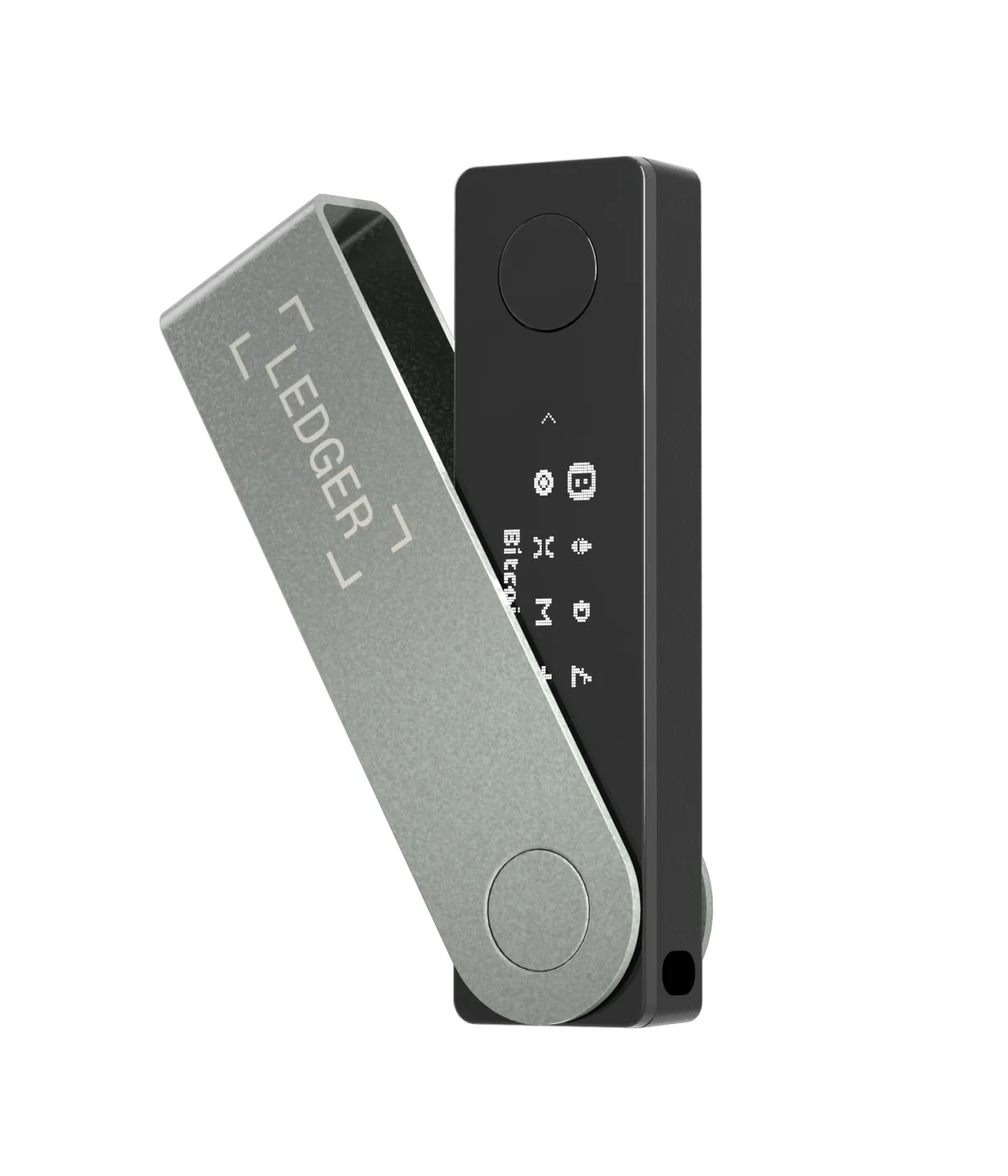
Keys stay inside a CC EAL5+ certified secure element built around the ST33J2M0 chip, and the device covers 15,000+ coins and tokens with room for up to 100 apps. A secure element is a tamper-resistant chip that holds keys and signs with them without ever letting them out. Bluetooth (BLE 5.2) links it to an iPhone or an Android handset, and you’ll get roughly 5 hours from the battery.
Why Farmers Bother With a Nano X
- Keys live in a CC EAL5+ certified secure element and never reach your browser.
- There’s support for 15,000+ coins and tokens, with space for up to 100 apps.
- Bluetooth BLE 5.2 pairs it to an iOS or Android phone.
- Rabby, MetaMask, Phantom, Keplr and Zerion all talk to it.
- You confirm on the device screen rather than in the tab.
We pulled the device apart properly in our Ledger Nano X review, setup included, along with how it stacks up against the touchscreen models.
How We Ranked These Airdrop Farming Wallets
What Happens When You Hit Sign
Farming means putting your name on contracts that are sometimes three days old. Rabby’s security engine catches a Deploy Day < 3 or a Trust Value $0 and disables the Sign button until you acknowledge the warning. That gap, between a wallet that steps in and one that forwards your clicks, decided most of this ranking.
How Much Ground It Covers
Incentives move around, and airdrops follow them. Rabby stops at EVM, Phantom spans seven networks with Bitcoin among them, and Keplr stretches over Cosmos, EVM, Bitcoin and Starknet. Nothing covers the lot, which is why you’re reading about six wallets instead of one.
Running a Pile of Addresses
One address isn’t really farming, so the wallet has to make extras painless. Rabby lists addresses #1 through #50 from a single seed phrase straight away. MetaMask will add accounts all day, though it warns that an account, once created, can never be permanently deleted.
What It Costs to Run
Installing any of these software wallets costs nothing. What drains you is gas, the fee a network charges to process a transaction, and revoking an approval is itself an on-chain transaction with a fee attached. Rabby’s GasAccount settles fees on any supported network without you holding its native token, which at least skips the bridging step.
Getting Back In If Something Breaks
Self-custody across the board means the seed phrase is effectively the account. Write it down offline, and never type it into a claim page. Better still, pair the wallet with a Ledger Nano X so the keys leave your computer altogether.
Code You Can Check
Rabby ships its extension under the MIT License and says outside firms audit it on a schedule. Open code doesn’t make a wallet safe by itself. It does let researchers test the claims, so we gave it weight without treating it as the whole story.
Picking the Right Wallet for Your Kind of Farming
Farming EVM rollups daily? Start with Rabby, and keep MetaMask around for the dapps that only speak to it. Rabby’s own documentation asks you to disable MetaMask while Rabby is running, so treat them as two modes rather than two open tabs.
Mostly on Solana? Phantom, obviously, and its scam detection earns its keep there more than anywhere. You’ll want something else for Arbitrum, Optimism or BSC, none of which Phantom supports.
Chasing Cosmos airdrops is hard to do without Keplr, whose staking and voting tools match the way those chains hand out rewards. Add a Ledger once the positions stop being small.
Already juggling 10 or 20 addresses? Bolt Zerion on as the tracker and carry on signing wherever you were. Watch addresses cannot sign, so there’s no downside to adding every address you own.
Questions We Get Asked
Which wallet is best for airdrop farming?
Rabby, if you’re on EVM chains. It previews every transaction, warns you about sketchy spenders, and clears approvals in batches. Solana farmers want Phantom instead, and Cosmos farmers want Keplr.
Do I really need more than one wallet?
Yes. No single wallet reaches every chain: Rabby is EVM-only, Phantom skips Arbitrum, Optimism and BSC, and Keplr is built around Cosmos. Two or three is normal.
Will running lots of wallets get me disqualified?
Depends on the project, and the rules usually land after the fact. Arbitrum docked a point from any wallet whose transactions all fell inside a 48-hour window, and another point if the wallet held under 0.005 ETH and had touched no more than one smart contract. Thin, identical addresses are exactly what filters like that are built to catch.
What are these random tokens showing up in my wallet?
Bait. Rabby explains that scammers airdrop tokens and NFTs so you’ll try to swap, unlock or claim them, at which point you land on a malicious site or a draining contract. Its Hide Scam Tx toggle keeps those records out of your history by default.
Should I revoke approvals when I’m done farming?
Yes, and not next month. MetaMask points out that approvals frequently ask for unlimited access and are a favorite route for scammers. Rabby adds the nastier detail: with an unlimited approval live, tokens of that type arriving in future can be swept as well. Each revocation is an on-chain transaction, so budget the gas.
Can I farm airdrops with a hardware wallet?
You can, and it’s the biggest single safety win available. Rabby’s extension takes ten hardware brands, MetaMask handles twelve on the extension, and both Phantom and Keplr work with Ledger. A Ledger Nano X is $99 at the time of writing (September 2026).
Do airdrop claims have a deadline?
Often. Arbitrum opened ARB claims on March 23, 2023 and shut them on September 24, 2023, and the tokens stopped being claimable after that. Note the deadline the day a project announces it.
Our Verdict
A wallet won’t conjure an airdrop out of nothing. What it can do is stop you losing more than you make, and that’s not a small job. Rabby takes our top spot for EVM farming because it puts the balance change in front of you before you sign and clears a session’s approvals in one go.
Keep the addresses you farm with well away from the addresses holding real money. Move anything worth keeping onto a hardware wallet, revoke approvals once you’re finished with a protocol, and remember that a wrong network or a wrong address means those funds are gone, with nobody able to reverse it.
This article is for general information only and is not financial, legal, or investment advice. Prices and features change; check the vendor’s official page before buying.