

Still not earning passive income on your crypto?
Traditional staking, liquid staking, and DeFi staking platforms are launching everywhere, and picking where to stake crypto safely and profitably in 2026 has become a challenge. Every platform claims the best annual percentage yield (APY), the lowest fees, and flexible lock-up periods. Minimum staking amounts, confusing terms, and inconsistent rewards make it hard to know where to start.
Pick the wrong platform and you risk locking your tokens for months at minimal returns. Worse, not all custodial staking platforms are transparent or even safe. If you’re juggling proof-of-stake chains and centralized staking options, the complexity only grows.
We evaluated the top crypto staking sites on five metrics: APY, minimum staking amount, supported assets, auto-staking features, and cross-chain compatibility. Whether you want liquid staking tokens or a simple set-and-forget setup, this guide breaks down the 6 best platforms to stake crypto in 2026, so you can stop researching and start earning.
Prefer to stake from a hardware wallet? Our Ledger Flex setup guide gets the device ready first.
Crypto staking is locking up proof-of-stake coins to help secure a network in exchange for rewards, either on your own or through a platform that handles it for you.
Table of contents
6 Best Crypto Staking Platforms to Earn Passive Income
Crypto exchanges are among the best places to stake. They pair user-friendly interfaces with strong security, and a reputable exchange keeps your assets safer while giving you a real shot at solid yields. Beginners and experienced investors alike get a range of tools and opportunities.
Many of these exchanges also support advanced derivatives trading. See our guide to the best futures trading platforms for a full comparison.
Quick Overview | |
|---|---|
| Binance | Best For: Our top pick for crypto staking in 2026 APY Range: ~0.2% to 25% + (varies by asset and lock period) Supported Coins: 300+ coins, including ETH, BNB, ADA, SOL Auto-Staking: Yes (for selected assets) Cross-Chain: Partial (BNB Smart Chain, ETH, etc.) |
| Nexo | Best For: auto-staking and instant yield APY Range: ~4% to 14% + (higher with NEXO rewards) Supported Coins: 60+ assets, mostly large-cap Auto-Staking: Yes (default behavior) Cross-Chain: No |
| Bybit | Best For: transparent APYs and short-term flexibility APY Range: ~0.8% to 500% + (varies widely) Supported Coins: 200+ coins, including new listings Auto-Staking: Yes (via Earn products) Cross-Chain: No |
| Gate.io | Best For: accessing hard-to-find altcoin staking APY Range: ~0.1% to 500% + (on promo or new tokens) Supported Coins: 200+, including small-cap and DeFi Auto-Staking: No Cross-Chain: Partial (some DeFi options) |
| KuCoin | Best For: passive income on emerging tokens APY Range: ~0.01% to 777% + Supported Coins: 269+ coins, including early-stage projects Auto-Staking: Yes (for soft staking) Cross-Chain: No |
| Kraken | Best For: Security and compliance-focused users APY Range: ~0.25% to 12% Supported Coins: 24 major assets (ETH, DOT, ADA, etc.) Auto-Staking: No Cross-Chain: No |
1. Binance, Our Top Pick for Crypto Staking
Launched in 2017 by Changpeng Zhao (CZ), Binance has grown into the largest crypto exchange by trading volume, and it now leads the staking space too. Its staking products sit under the Binance Earn umbrella, which gives you a simple way to earn passive income across a wide range of tokens. Binance also offers advanced trading features that suit both new and experienced investors. What stands out is how Binance simplifies staking without giving up returns or asset variety.
Staking on Binance covers flexible and locked terms, with clear APY rates for over 300 crypto assets. It also offers DeFi staking for users who want on-chain yields without managing wallets or dealing with protocols themselves. Binance supports ETH 2.0 staking with no validator setup, and its auto-staking feature reinvests your rewards for you.
We recommend Binance because it offers high-performing APYs, deep liquidity, and broad token support. In our test, the UI made it easy to find staking offers, compare yields, and manage redemptions. Customer support answered our live chat in under 5 minutes, among the fastest we’ve seen.
One Redditor put it well: “I don’t even bother looking elsewhere anymore. Binance always has one of the top yields, and I get to sleep at night knowing it’s not some sketchy app.” That mix of yield and peace of mind puts Binance at the top of our list.
Key Features for Staking Users on Binance | |
|---|---|
| Diverse Staking Options | You can choose from locked staking, DeFi staking, and ETH staking to suit different risk appetites and investment strategies. |
| Wide Range of Supported Assets | Stake various cryptocurrencies, including ETH, ADA, BNB, MATIC, and more. |
| Clear APY Display | Transparent yields and terms for each asset. |
| User-Friendly Interface | Simplified staking process with just a few clicks, suitable for beginners and experienced users. |
| No Staking Fees on Binance Earn | Maximize your rewards without worrying about additional fees. |
| Regular Updates and Additions | Continuous addition of new staking assets and features to enhance the user experience. |
2. Nexo, Best for Auto-Staking and Instant Yield
Nexo launched in 2018, founded by Antoni Trenchev and Kosta Kantchev. It isn’t strictly a staking platform, but its Earn product works much like one: you earn interest on your assets with no lockups and no gas fees. Under the hood, Nexo lends out your assets rather than staking them, which changes the reward and liquidity picture. We rank Nexo second because it makes earning on crypto both passive and frictionless.
APYs reach up to 14%, especially when paid in NEXO and tied to the loyalty program.
What stands out is the daily payout with compounding, plus penalty-free withdrawals. That suits users who value flexibility over squeezing out the maximum yield.
Nexo supports over 60 major assets, gets strong feedback on Reddit (especially for reliability and fast withdrawals), and runs top-tier security: BitGo custody, ISO/IEC 27001 certification, and a $375 million insurance fund.
In our support tests, email replies arrived in under 24 hours. Live chat was limited and slower during busy periods.
We recommend Nexo for users who want steady, predictable earnings without technical setup or locked tokens. It suits long-term holders who prefer a hands-off approach.
Key Features for Staking Users on Nexo | |
|---|---|
| Daily Compound Interest | Earnings are credited daily and compounded, boosting passive income potential. |
| No Lockups Required | Earn while keeping your assets liquid and accessible. |
| Tier-Based Yields | Loyalty levels influence your APY, offering better rates for holding NEXO tokens. |
| In-App Swaps + Earn | Combine earning and swapping within the same dashboard. |
| Insured Custody | Assets are held in insured wallets, increasing user confidence. |
3. Bybit, Best for Transparent APYs and Short-Term Flexibility
Bybit, founded in 2018, is best known as a derivatives exchange, but it has quickly become a go-to platform for fixed-term staking through Bybit Earn. What sets Bybit apart, and why we rank it third, is the mix of clean UX, predictable fixed-term yields, and rotating token campaigns.
Staking options include flexible savings and locked staking, with APYs from 0.8% to 500%+ depending on the token and term. The highest yields tend to be short-term and tied to launchpool-style events. DOT, SOL, and ETH feature regularly. You can lock assets for 7, 14, 30, 60, or 120 days, with clear terms and optional automatic redemption. Term length directly affects the APY, so weigh both the asset and the duration to get the most out of it.
Bybit doesn’t compound automatically during a term, but you can restake once it ends. It also accepts deposits over multiple networks (including Arbitrum and Optimism), which helps if you hold L2 or altchain tokens. Staking itself is fee-free, and APYs are shown upfront, a point Redditors often praise.
In our testing, live chat support answered in under 10 minutes during working hours and handled staking questions well. The documentation was also clear for first-time stakers.
We recommend Bybit for users who want predictable, locked returns and a simple interface, especially those who prefer set durations and visible yields over flexible products.
Key Features for Staking Users on Bybit | |
|---|---|
| High-Yield Locked Options | Earn more when committing for 30 to 120 days. |
| Flexible and Fixed Terms | Choose how long to stake or earn based on your risk appetite. |
| Clear APY Display | Transparent yields and terms for each asset. |
| Beginner-Friendly Dashboard | Simplified for new users entering the staking game. |
| Occasional Launchpad Bonuses | New tokens with yield boosts for early participants. |
4. Gate.io, Best for Accessing Hard-to-Find Altcoin Staking
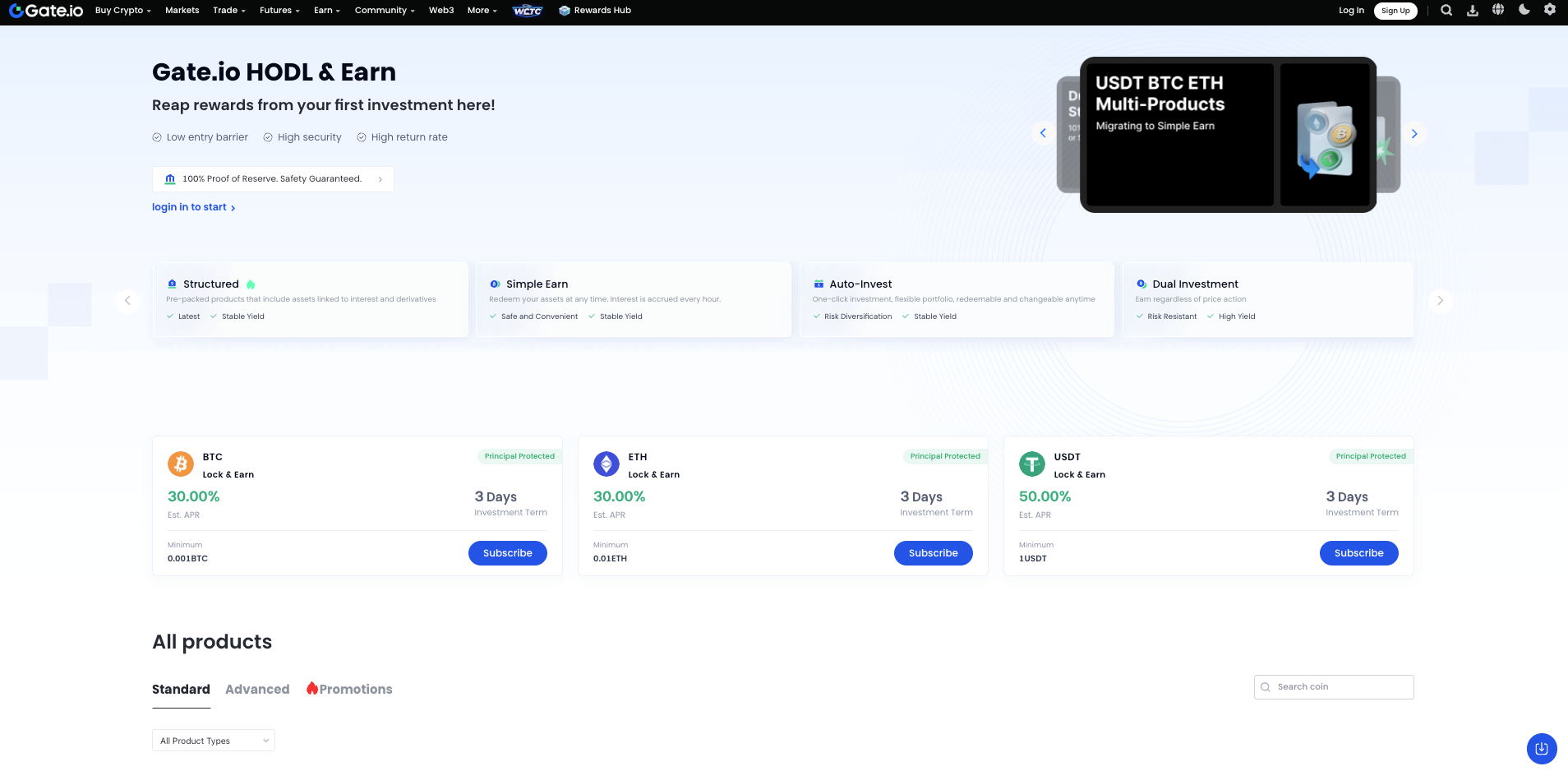
Gate.io has been around since 2013 and offers the widest variety of staking products among the centralized exchanges we tested. Its Gate HODL & Earn section covers flexible staking, locked-term savings, DeFi staking, and ETH 2.0 staking, which makes it appealing for power users. We place it fourth, not for lack of features, but because the interface can overwhelm beginners.
Over 200 assets are supported, from mainstream coins to niche tokens like CHZ, KAVA, and AXS. Some DeFi staking campaigns reach 20%+ APY, though these are often capped and time-limited.
Unlike Nexo or Bybit, Gate lets you join on-chain staking through a custodial interface, sometimes with auto-restaking depending on the token.
Cross-chain support is solid: staking products accept assets from Ethereum, BNB Chain, and Avalanche. The catch is that you must opt in to many campaigns by hand, and the dashboard isn’t always intuitive. Redditors love the selection but often mention limited customer support and confusing staking mechanics. Our tests matched that: tickets were answered, but live chat was unavailable on weekends, and replies took up to 48 hours.
Gate.io suits users who want less common staking tokens, DeFi-style campaigns, and advanced features. Be ready for a steeper learning curve.
Key Features for Staking Users on Gate.io | |
|---|---|
| Broad Token Selection | Support hundreds of digital assets, including niche altcoins. |
| DeFi Integration | Occasionally runs campaigns tied to on-chain staking protocols. |
| Clear APY Display | Transparent yields and terms for each asset. |
| Flexible & Locked Terms | Tailored staking strategies based on your preferences. |
| ETH 2.0 Staking Support | Stake ETH without managing your validator node. |
| Auto-Renewal Options | Reinvest earnings automatically for selected assets. |
5. KuCoin, Best for Passive Income on Emerging Tokens
KuCoin launched in 2017 and quickly became a favorite among traders looking for low fees and early access to emerging tokens. For staking, KuCoin Earn covers flexible staking, locked terms, and dual investment products, so you can spread rewards across a diversified portfolio. We rank KuCoin fifth for its advanced tools, wide token selection, and custom strategies.
The platform supports staking on over 269 assets, including ETH, DOT, ATOM, and native platform tokens. Yields vary: flexible staking usually pays 2–6%, while fixed terms and structured products can climb past 10%, particularly in market-neutral products. Dual investment, one of KuCoin’s standout features, pays a fixed return while you bet on a price target. It suits users comfortable with more complexity.
KuCoin also offers ETH 2.0 staking with a low entry barrier, though it’s less visible and less beginner-friendly than on Binance or Kraken (covered below). You must opt in by hand and track earnings yourself, a drawback for passive stakers.
We ran several support tests. Chat replies were slow (up to 12 hours for simple questions), and the documentation didn’t always explain staking mechanics. Redditors often note that KuCoin’s APYs are solid, but the UX can feel clunky and the lack of live support is frustrating.
We recommend KuCoin for intermediate to advanced users who want more control and options and are willing to explore structured products for higher yield.
Key Features for Staking Users on KuCoin | |
|---|---|
| Diverse Staking Options | Supports flexible staking, fixed terms, and advanced products like dual investment. |
| High-Yield Campaigns | Frequently offers limited-time APY boosts on trending tokens. |
| Structured Earning Tools | Access to dual investment and Shark Fin for strategic yield generation. |
| ETH 2.0 Access | Allows staking ETH without minimums or validator setup. |
| Manual Redemption Control | Users can choose when and how to exit locked staking (with limits). |
| Multi-Asset Support | Dozens of PoS and DeFi tokens are available across various chains. |
6. Kraken, Best for Security and Compliance-Focused Users
Kraken, founded in 2011 by Jesse Powell, is one of the longest-standing names in crypto and the most compliance-focused platform on this list. We place Kraken sixth, not for lack of quality, but because its staking menu is narrower and more conservative. It’s built for people who put security, regulation, and simplicity first.
Kraken’s staking program supports around 24 assets, including Ethereum, Solana, Polkadot, and Cardano.
Yields are lower but consistent, and the interface is clean and easy to use, even for beginners. There are no gas fees because staking is handled off-chain, and you can unstake some assets instantly, though ETH stays locked under the standard validator terms.
The platform is audited regularly, complies with US and European regulations, and has never suffered a major breach. Support in our tests was excellent: live chat was available 24/7 and gave detailed help, including guidance for first-time stakers.
Reddit feedback often praises Kraken’s reliability, though users also note that staking variety is limited compared to other platforms.
We recommend Kraken to users who want a secure platform, accept lower yields, and prefer simplicity and transparency over high-risk campaigns.
Key Features for Staking Users on Kraken | |
|---|---|
| Regulated ETH 2.0 Staking | Stake Ethereum in a compliant, secure environment. |
| Beginner-Friendly Interface | Clean dashboard with clear staking terms and rewards. |
| Instant Unstaking for Some Assets | Withdraw select tokens without penalty. |
| Secure Platform | Fully audited, U.S.-regulated, with top-tier fund protection. |
| Consistent Yield Structure | Stable APYs without high-risk promotions. |
| Live Chat Support | 24/7 access to real support, not just bots or tickets. |
Methodology: How We Choose the Best Crypto Staking Platforms
We don’t leave platform selection to chance. Every platform on this list goes through a hands-on evaluation based on practical metrics and user-focused features. We also look at the consensus mechanism behind each staking product, since that is what secures the network and validates transactions. Here’s what we check before recommending a platform:
- APY / Yield Performance: We look at yield over time, not just short-term promotional rates. Consistency, sustainability, and real user returns matter more than a headline number.
- Token Variety: A strong platform supports a wide range of staking tokens. Whether you hold majors like ETH and SOL or smaller DeFi tokens, more options mean more flexibility.
- Fees and Commission: Hidden fees quietly eat your earnings. We favor platforms with transparent fee structures and competitive commission rates that leave your rewards intact.
- Auto-Staking Features: Auto-staking and compounding grow your yield without manual work. We test these features for reliability and ease of use.
- Cross-Chain Support: The best platforms aren’t tied to a single network. We favor those that support staking across multiple chains, so you can manage assets across ecosystems with less friction.
- Community Reputation: A platform’s standing shows in its community feedback. We read reviews and discussions on Discord, Reddit, and X to gauge real user sentiment and trust.
- Security and Audits: We only include platforms that have passed third-party smart contract audits or publish transparent, verifiable safety measures.
FAQ
What is crypto staking?
Crypto staking means locking tokens to support a blockchain network and earning rewards in return. It’s used in proof-of-stake (PoS) systems and is one of the simplest ways to earn passive income on crypto you already hold.
How does cryptocurrency staking work?
You delegate or lock your crypto on a staking platform, which uses it to help validate transactions. You earn rewards based on how much you stake and the network’s terms. Some platforms offer flexible or traditional staking; others use custodial or liquid staking.
What are the benefits of crypto staking?
Staking can deliver solid returns while supporting the security and decentralization of a blockchain network. Competitive platforms offer annual percentage yields (APYs) of up to 20% or more on some assets. Locking assets for a set period also encourages a longer-term approach and gives you a steadier income stream than active trading. Many platforms offer flexible terms, from a few days to several years, so you can match the lockup to your plans.
What are the types of staking?
There are three main types: traditional, DeFi, and liquid. Traditional staking locks assets directly in a proof-of-stake network. DeFi staking puts assets into a decentralized finance (DeFi) protocol. Liquid staking lets you stake through a liquid staking platform while keeping control of your private keys and access to your capital. Each has trade-offs; the right one depends on your goals and how much control you want.
Are crypto staking platforms safe?
Most reputable platforms are secure, especially those that publish audits and follow compliance rules. But custodial platforms hold your keys, so they carry more risk than decentralized or non-custodial options. If the platform fails, your funds could be locked or lost.
Where is the best place to stake your crypto?
It depends on your priorities. Binance ranks highest overall for APY and token variety, while Kraken is the pick for a secure, regulated experience. For competitive staking rewards on altcoins, Gate.io and KuCoin are solid choices.
What is the best broker for staking crypto?
Binance is our pick for staking crypto thanks to its high APYs, wide token support, and auto-staking options. It supports flexible and locked staking on hundreds of digital assets. If you prefer to stake from your phone, check the app’s features and reviews before you commit.
Is crypto staking worth it?
Yes, if you choose platforms with transparent APYs and low fees. Staking is a low-effort way to earn on crypto you plan to hold anyway. Terms, yields, and reward structures vary widely between platforms, so compare before you commit.
Are staking rewards taxed?
Yes. In most countries, staking rewards count as taxable income. Check your local rules to see how to report them.
Final Thoughts
Choosing the best staking platform in 2026 takes more than comparing APYs. High yields are attractive, but staking fees, platform transparency, and the staking methods on offer matter just as much, whether that means liquid staking protocols, traditional staking, or on-chain options. Yield farming, which earns rewards for providing liquidity to blockchain protocols, is another feature worth weighing.
Staking can be a smart way to grow your holdings, but it isn’t risk-free. Your staked funds may be locked for a set period, exposed to network volatility, or at risk if the platform’s security is weak. And unlike traditional on-chain staking, some off-chain platforms don’t give you full control of your assets.
Stick to platforms that disclose their fees, offer a wide range of staking pools, and support both custodial and non-custodial options. Whether you’re after convenience or control, smart staking comes down to reading the fine print and picking tools that fit your long-term goals.
How I review: Reviewed by Andrei B. I buy the hardware wallets I review, test every product myself and score it on security, UI/UX, ease of use, price and supported coins. Before I publish, I also check recent user reviews and any hack reports.
The whole process is explained on the How We Review page. You can read more about me, or contact me with corrections, from the links at the bottom of this page. For general safety advice, see the FTC guide to cryptocurrency scams.