
In 2026 the crypto world is bigger, faster, and more complex than ever. Yet many people still ask the same question: “Which crypto wallet should I use?” Before you compare any of the wallets below, settle one thing first: do you want a custodial or non-custodial setup?
Brand new to this? Our best crypto wallets for beginners guide is a gentler starting point.
Mobile apps, browser extensions, hot wallets, hardware devices: with so many options, it’s easy to feel lost. Pick the wrong one and you can end up with weak security, missing coin support, or an interface that makes every transaction stressful.
Global crypto users passed 560 million in 2024. More people than ever are choosing a wallet, and more is at stake if that choice goes wrong, whether you’re just starting out or already managing a large portfolio.
That’s why we built this guide.
Below, we compare the top crypto wallets of 2026 side by side. You’ll see how each one handles security, ease of use, supported assets, and extras such as staking, swapping, and NFT access. Whether you want to store Bitcoin safely, explore NFTs, or manage a mix of altcoins, you’ll find the right fit here.
Start with the comparison table. It shows what each wallet does best, which coins it supports, how secure it is, and how easy it is to use.
Table of contents
Top Crypto Wallets: Quick Comparison | |
|---|---|
| Rabby Wallet | Best For: Browser-Based Advanced Users Type: Browser Extension Supported Assets: EVM chains, L2s, NFTs Security Level: High User-Friendliness: High |
| MetaMask | Best For: Browser-Based Defi & NFTs Type: Software/ Browser Supported Assets: ETH, ERC-20, NFTs, L2s Security Level: Medium User-Friendliness: High |
| Coinbase Wallet | Best For: Beginners & Fiat Integration Type: Software/ Browser Supported Assets: BTC, ETH, SOL, fiat, NFTs Security Level: Medium User-Friendliness: Very High |
| Ledger Live | Best For: Secure Cold & Hot Storage Combo Type: Hardware + App Supported Assets: BTC, ETH, altcoins, NFTs Security Level: Very High User-Friendliness: Moderate |
| Trust Wallet | Best For: Altcoin Diversity & Mobile Users Type: Mobile/ Software Supported Assets: BTC, ETH, BNB, +100+ coins Security Level: Medium-High User-Friendliness: Very High |
| Trezor | Best For: Open-Source Transparency & Cold Storage Type: Hardware + App Supported Assets: BTC, ETH, altcoins Security Level: Very High User-Friendliness: High |
| Zerion | Best For: Multi-Chain DeFi Portfolios on Mobile Type: Mobile/ Software Supported Assets: ETH, Polygon, Arbitrum, Optimism, BNB Chain Security Level: Medium User-Friendliness: High |
1. Rabby Wallet, Best for Browser-Based Advanced Users
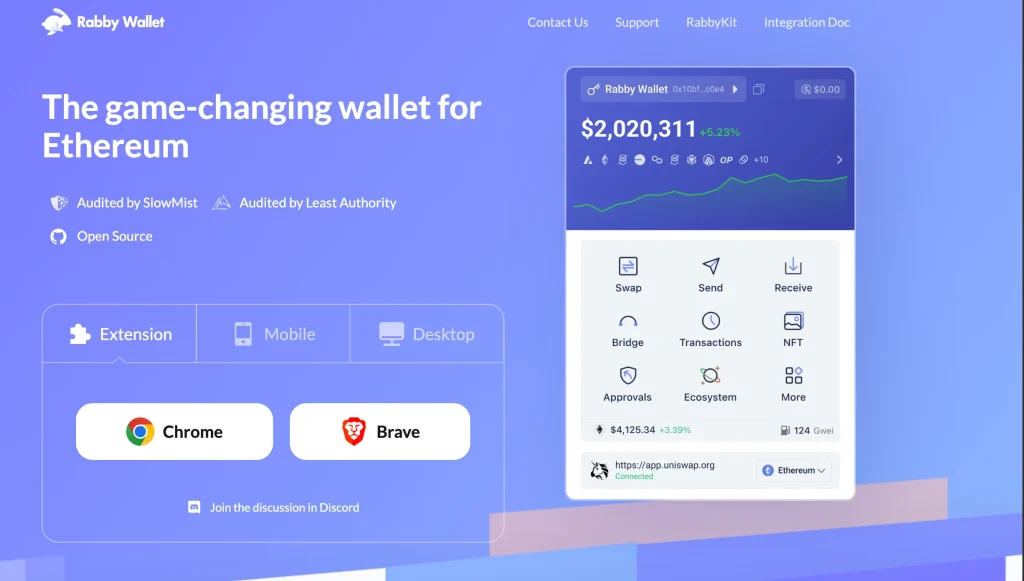
Rabby Wallet is the browser extension for people who use DeFi seriously. Its standout feature is the transaction preview: before you sign, Rabby shows you exactly what a transaction will do, so you never approve a smart contract blind. It also handles many EVM chains in one place, something older wallets manage less cleanly.
Key Features: | |
|---|---|
| Advanced transaction preview | Shows exactly what will happen before you sign any transaction |
| Multi-chain support | Seamlessly works across multiple EVM-compatible networks |
| Portfolio management | Comprehensive overview of all your assets across different chains |
| DeFi integration | Built-in support for major DeFi protocols |
| Gas optimization | Automatic gas fee suggestions to save on transaction costs |
Why We Choose It
Rabby Wallet is built for experienced users who interact with DeFi protocols often and want a clear preview of every transaction. One misread approval can drain a wallet. Rabby makes that mistake much harder to make.
More options built around that kind of use are in the list of the best wallets for DeFi.
2. MetaMask, Best for Browser-Based DeFi & NFTs
MetaMask is one of the most widely used software and browser wallets, and it remains the front door to Ethereum and DeFi. It connects to almost every decentralized app, works with Layer 2 networks, and lets you view and manage your NFTs in one place.
If Ethereum is most of what you hold, our best Ethereum wallets guide narrows the field.
Key Features: | |
|---|---|
| Universal dApp Compatibility | Works with nearly every Ethereum-based application |
| NFT management | Built-in NFT viewing and management capabilities |
| Layer 2 support | Seamless integration with popular L2 solutions like Polygon and Arbitrum |
| Mobile synchronization | Desktop and mobile versions sync perfectly |
| Staking features | Direct access to Ethereum staking services |
Why We Choose It
MetaMask is the go-to wallet if you’re exploring Ethereum DeFi and NFTs and want something almost every dApp already supports.
3. Coinbase Wallet, Best for Beginners & Fiat Integration
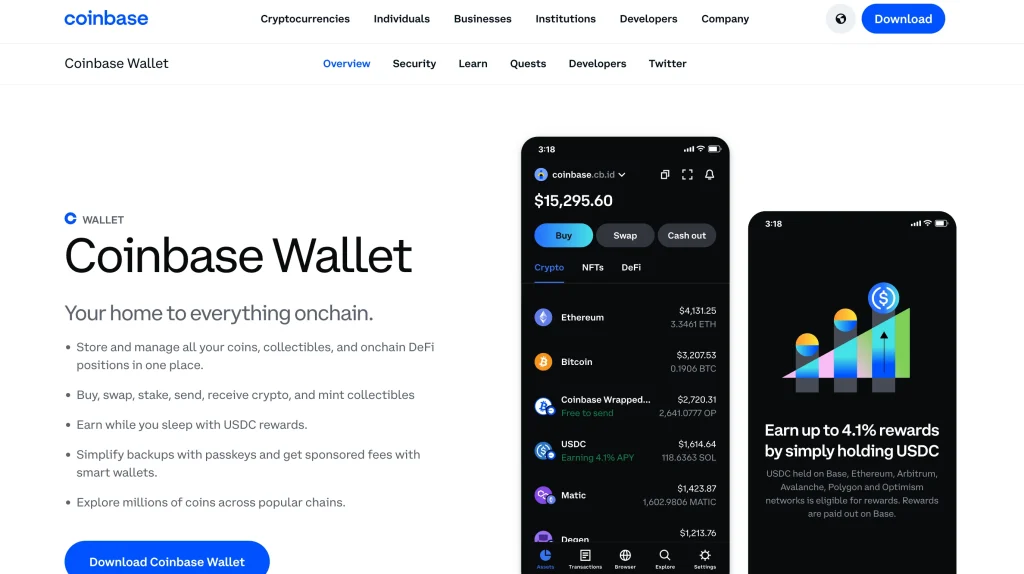
Coinbase Wallet is the easiest bridge from traditional finance into crypto, which makes it a natural first wallet. Because it ties into the Coinbase exchange, you can buy crypto with fiat directly, with no extra steps.
The result is a smooth, straightforward experience for anyone new to digital assets.
Key Features: | |
|---|---|
| Fiat integration | Direct buying and selling with traditional currencies |
| Multi-asset support | Supports Bitcoin, Ethereum, Solana, and numerous altcoins |
| User-friendly interface | Intuitive design that doesn’t intimidate beginners |
| Backup and recovery | Simplified seed phrase backup with cloud options |
| Educational resources | Built-in learning materials and tutorials |
Why We Choose It
Coinbase Wallet suits beginners who want a familiar, secure wallet with exchange access built in.
4. Ledger Live, Best for Secure Cold & Hot Storage Combo
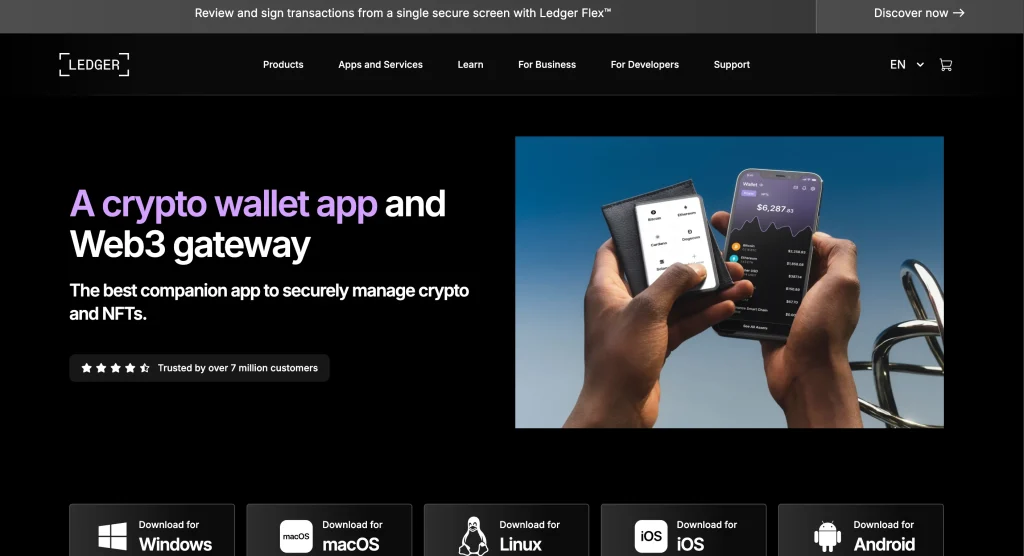
Paired with a Ledger hardware device, Ledger Live offers some of the strongest security available to everyday crypto holders. Your private keys stay on the device and never touch the internet. If you hold a large amount, that separation is what lets you sleep at night.
Key Features: | |
|---|---|
| Hardware security | Private keys never leave the secure hardware device |
| Comprehensive asset support | Supports thousands of cryptocurrencies and tokens |
| Staking capabilities | Direct staking for multiple proof-of-stake networks |
| Portfolio tracking | Complete overview of all holdings and performance |
| NFT management | View and manage NFT collections securely |
Why We Choose It
Ledger Live is the pick for serious investors who put security ahead of convenience and manage large crypto portfolios.
Earn passive income while holding your crypto: here’s where to start staking smart.
5. Trust Wallet, Best for Altcoin Diversity & Mobile Users
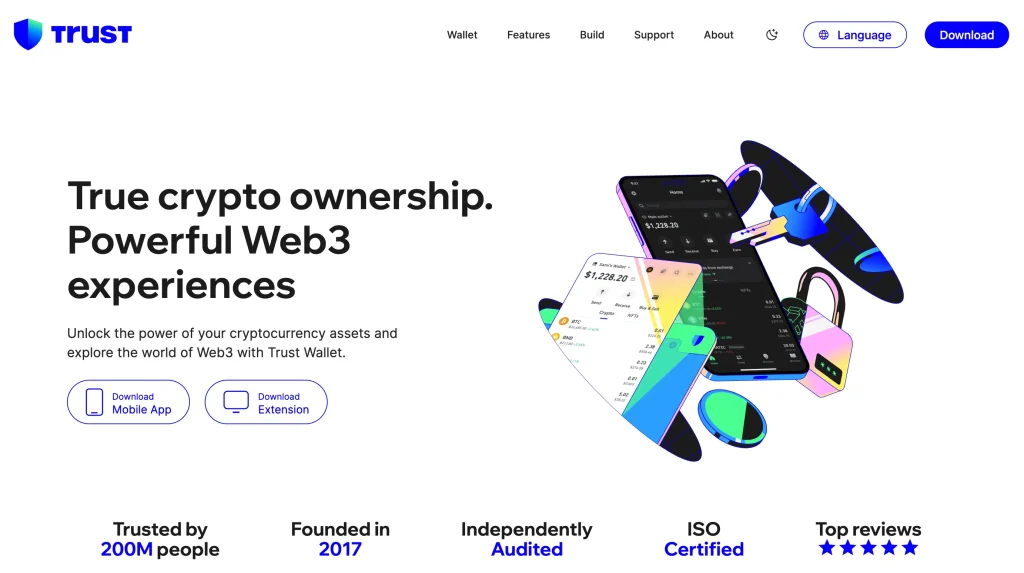
Trust Wallet is a mobile-first wallet that supports a wide range of cryptocurrencies and blockchain networks. Its clean interface and broad altcoin support make it a strong fit for people who manage varied portfolios from their phone.
Key Features: | |
|---|---|
| Extensive asset support | Supports over 100 different cryptocurrencies and tokens |
| Mobile-optimized | Designed explicitly for smooth smartphone usage |
| Built-in exchange | Swap between different cryptocurrencies directly within the app |
| Staking rewards | Earn rewards on supported proof-of-stake assets |
| dApp browser | Access decentralized applications from your mobile device |
Why We Choose It
Trust Wallet is the choice for mobile-first users who hold many altcoins and want a reliable, feature-rich wallet in their pocket.
6. Trezor, Best for Open-Source Transparency and User-Friendly Hardware
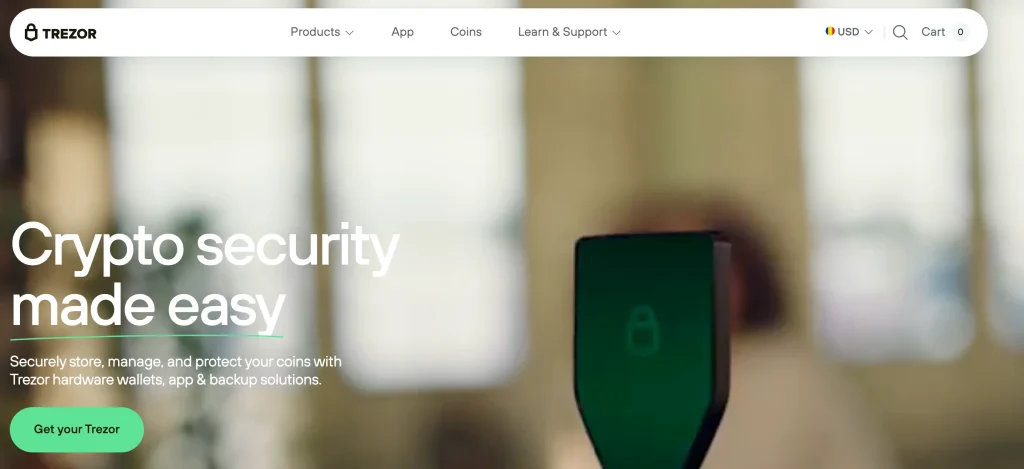
Trezor is a non-custodial hardware wallet that’s easy for beginners yet deep enough for experienced users. Its code is open source, so anyone can inspect it, and you don’t have to take the company’s word on security. That makes Trezor a strong pick if you want both protection and accountability.
Trezor Specifications | |
|---|---|
| Open-Source Firmware | Fully transparent code that the community can audit. |
| Pin Protection | Secure PIN entry system with randomized layout for added security. |
| Passphrase Support | An optional 25th word for an additional security layer. |
| Trezor Suite | User-friendly interface for wallet management on desktop and web. |
| Multi-Account Support | Create multiple accounts for better organization and privacy. |
| Coin Control | Advanced features for selecting specific UTXOs in transactions. |
| Shamir Backup | Split the recovery seed into multiple shares for enhanced security. |
| Password Manager | Built-in encrypted password manager functionality. |
Why We Choose It
Trezor’s open-source firmware and simple design make it a top choice for beginners and experienced users alike.
7. Zerion, Best for Managing Multi-Chain DeFi Portfolios on Mobile
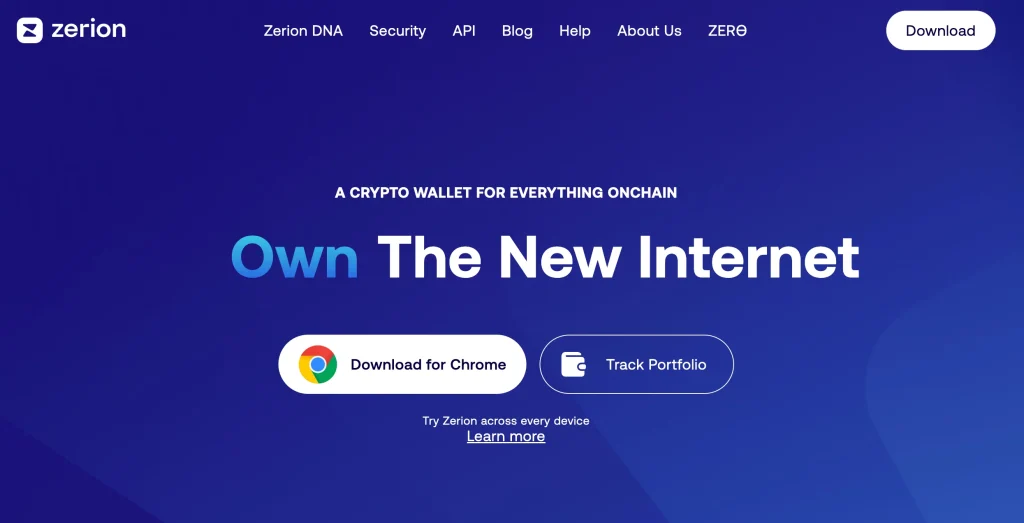
Zerion makes managing a DeFi portfolio easy on your phone. Many wallets were built for desktop and squeezed onto mobile later. Zerion was built for mobile from day one. Its clean interface turns messy DeFi data into numbers you can read at a glance, so you can check your positions on the go.
With full portfolio tracking and smooth protocol integrations, Zerion suits active DeFi users who want serious tools in a mobile-first app.
Zerion Specifications | |
|---|---|
| Portfolio Tracking | Real-time tracking of DeFi positions across multiple chains. |
| Multi-Chain DeFi | Support for Ethereum, Polygon, Arbitrum, Optimism, and BNB Chain. |
| Mobile-First Design | Optimized user experience specifically for smartphone usage. |
| DeFi Protocol Integration | Direct access to popular DeFi protocols like Uniswap, Aave, and Compound. |
| Yield Tracking | Monitor earnings from staking, lending, and liquidity provision. |
| Gas Optimization | Smart gas fee suggestions to minimize transaction costs. |
| Social Features | Follow other users’ portfolios and discover new opportunities. |
| Security Controls | Biometric authentication and transaction signing. |
Why We Choose It
Zerion stands out for its deep DeFi integration and multi-chain support inside an easy mobile app. It’s ideal if you actively manage a varied crypto portfolio from your phone.
Torn between it and Rabby? The Zerion vs Rabby comparison puts the two wallets against each other.
The full Zerion review looks at the app in more depth.
How to Choose the Best Crypto Wallets
The right wallet depends on what you hold, how often you transact, and how much experience you have. Here are the five things that matter most:
1. Security: Non-custodial, Private Key Control, or Hardware Options?
Security comes first. A non-custodial wallet means you hold your private keys, not a company. That is what real ownership of your crypto means: no one else can freeze it, lose it, or move it. Look for wallets that offer:
- Seed phrase backups;
- Two-factor authentication (2FA);
- Biometric login (fingerprint or face ID).
For the highest level of protection, choose a hardware wallet. It stores your private keys offline, where online hacks can’t reach them.
2. Asset Support: Bitcoin, Altcoins, NFTs?
Not every wallet supports every coin. If you only hold Bitcoin or Ethereum, most wallets will do. If you also trade altcoins or collect NFTs, check that your wallet handles them before you commit.
Bitcoin-only holders have their own shortlist in our best Bitcoin wallets guide.
Choose a wallet that supports a wide range of assets, so you don’t have to switch when your portfolio grows.
3. Ease of Use: Setup, Daily Use, or Mobile-Friendliness?
Some wallets are simple and suit beginners. Others pack in features for advanced users. Think about how you’ll use yours:
- New to crypto? Go for a simple interface with guides or tutorials.
- Using it every day on your phone? Choose a mobile-friendly wallet.
The best wallets balance power with simplicity.
4. Cross-Platform Support: Browser, Mobile, Hardware Integration?
Good wallets let you reach your crypto from your phone, desktop, and browser. Some also sync with hardware wallets, which adds security without giving up convenience.
If you switch between devices often, cross-platform support is a must.
5. Extra Features: Staking, DeFi, or Swaps?
Modern wallets do more than hold your coins. Some include:
- Staking: earn rewards on proof-of-stake coins
- Swaps: trade one crypto for another without leaving the wallet
- DeFi tools: connect to decentralized apps for lending, borrowing, or yield farming
These are worth having if you’re an active user, especially if you’re into DeFi or want your holdings to earn while you hold them.
If you’re serious about storing Bitcoin securely, Electrum remains a long-established, lightweight Bitcoin-only wallet worth a look.
Crypto Wallet Security: Best Practices
Crypto hacks totaled $1.63 billion in Q1 2025, up 131% from the year before. Money lost this way rarely comes back. Whether you’re a beginner or a seasoned investor, these habits are what stand between your funds and the next attack.
1. Always Back Up Your Recovery Phrase
Every non-custodial wallet (MetaMask, Trust Wallet, Ledger) gives you a recovery phrase, also called a seed phrase. It is the only way to restore your wallet if your device is lost, stolen, or broken. Lose the phrase and the device together, and your crypto is gone for good.
Best practice:
- Write it down on paper or store it in a secure offline location.
- Never share your recovery phrase with anyone.
- Don’t save it in cloud storage or on your phone.
2. Use a Hardware Wallet for Large Holdings
If you hold a significant amount of crypto, a hardware wallet like Ledger or Trezor is the most secure option. These devices keep your private keys offline, away from hackers and malware. Hot wallets (apps and browser extensions) are convenient, but they’re always online, and that makes them a target.
Pair a Ledger device with the Ledger Live app to get the convenience back without giving up the security.
3. Enable Two-Factor Authentication (2FA)
Many wallets and crypto exchanges support 2FA. It adds a second check beyond your password, so a leaked password alone isn’t enough to get in. Options:
- Use an app like Google Authenticator or Authy.
- Avoid SMS-based 2FA. It’s easier to break through SIM swapping.
4. Protect Your Devices
A wallet is only as secure as the device it runs on. Keep your smartphone, laptop, or hardware wallet safe by:
- Installing updates as soon as they’re available.
- Running antivirus software.
- Avoiding suspicious downloads and phishing links.
5. Be Wary of Phishing Attacks
Phishing is one of the most common crypto scams in 2026. It shows up as fake websites, emails, or even wallet popups asking you to approve a transaction that drains your funds. How to stay safe:
- Always check the URL before connecting your wallet.
- Bookmark official wallet websites (e.g., https://metamask.io or https://rabby.io).
- Never approve a transaction you don’t understand.
6. Use Wallets With Open Source or Audited Code
Choose wallets with a strong record of security audits or open-source code. When the code is public, the wider crypto community can spot bugs and vulnerabilities faster than any single team.
7. Avoid Reusing Wallets for Airdrops or Testing
Many scams pose as free airdrops or new dApps. If you’re trying an unfamiliar platform, use a separate wallet holding only a small amount. If it turns out to be a scam, you lose pocket change, not your savings.
People who claim drops often can compare the best wallets for airdrop farming in a separate guide.
Step-by-step tips for moving tokens between chains without overpaying on fees.
FAQ
What Is the Best Crypto Wallet?
The best crypto wallet is the one that fits how you use crypto. New to it? Coinbase Wallet gives you the easiest start. Active in DeFi? MetaMask or Rabby Wallet are the top picks. Security first? Ledger Live with a hardware device is the safest option on this list.
There’s no universal winner. Your ideal wallet depends on how you plan to use your crypto.
What Is the Best Bitcoin Wallet?
For Bitcoin-only users, a hardware wallet like Ledger or a mobile wallet like Trust Wallet both offer strong support and security. Choose based on how often you transact and how much BTC you hold.
Can I Recover My Crypto if I Lose My Phone or Device?
Yes, as long as you backed up your wallet’s recovery phrase (seed phrase). Enter it on a new device and your wallet comes back. Without it, recovery is impossible.
Can I Use the Same Crypto Wallet on Multiple Devices?
Most modern wallets allow this. MetaMask, Trust Wallet, and Coinbase Wallet all sync between mobile and desktop. Just keep your recovery phrase secure.
Are Hot Wallets or Cold Wallets Safer?
Cold wallets (such as Ledger) are safer because they keep your keys offline. Hot wallets are more convenient for daily use but more exposed to online threats.
What Are the Best Wallets for Staking Crypto?
Ledger Live, Trust Wallet, and MetaMask all offer staking. Trust Wallet is the easiest for mobile staking, while Ledger suits long-term holders best.
Final Thoughts
Choosing the right crypto wallet matters, whether you’re trading altcoins, collecting NFTs, or holding Bitcoin for the long term. With so many on the market, the one worth using is the one that fits your skill level, your security needs, and how you plan to use your crypto.
The top crypto wallets of 2026 each have their strengths. Rabby Wallet, MetaMask, Coinbase Wallet, Ledger Live, Trust Wallet, Trezor, and Zerion: some suit beginners, others suit DeFi power users or people who want maximum security. There’s no single “best” wallet for everyone. But now you know what to look for.
Take control of your crypto. Choose a wallet that’s safe, easy to use, and ready for whatever comes next. Whether you’re just starting or managing a large portfolio, the right wallet keeps your keys in your hands and lets you move through the crypto world with confidence.
How I review: Reviewed by Andrei B. I buy the hardware wallets I review, test every product myself and score it on security, UI/UX, ease of use, price and supported coins. Before I publish, I also check recent user reviews and any hack reports.
The whole process is explained on the How We Review page. You can read more about me, or contact me with corrections, from the links at the bottom of this page. For general safety advice, see the FTC guide to cryptocurrency scams.