
A wallet that only holds coins has an easy job. Once you start using DeFi, yours ends up approving token spending, signing swaps, bridging from one network to another and handing smart contracts permission to move your money, and its screen is the last thing you’ll see before any of that becomes permanent.
So we’ve ranked six wallets for people already using decentralized apps, or about to. What counted was how clearly a wallet spells out what a transaction does, how it treats risky approvals, which chains it reaches, what it charges, and how much of its code anyone can read.
Rabby came out on top. It runs every transaction through a simulation first, and it’ll switch off the Sign button if something looks wrong.
Every pick here is self-custodial. You keep the keys, and there’s no one to call if you make a mistake.
New to that idea? Our custodial vs non-custodial wallets explainer covers it.
Table of contents
The 6 DeFi Wallets at a Glance
Installing any of the five software wallets costs nothing, which leaves swap fees as the real difference between them. For the Ledger, we took the price from Ledger’s own store in September 2026.
DeFi Wallets We’d Use, Compared | |
|---|---|
| Rabby | Made for anyone signing DeFi transactions daily. It simulates each one and greys out the Sign button when it finds a risk. Free, and same-chain stablecoin swaps carry no Rabby fee. Released under the MIT license. |
| MetaMask | The wallet to have if you want to reach the most dApps. It works in five browsers, on iOS and Android, and with six hardware brands. Free to install, but swaps cost 0.875%. You can read the code, though its license isn’t an open-source one. |
| Phantom | Our choice for Solana DeFi, with Ethereum, Base, Polygon and Bitcoin in the same app. Scam detection and transaction previews come built in. Free, with 0.85% taken on select swap pairs. Its Connect SDKs are open source. |
| Zerion | Best at showing where your DeFi money sits across 58+ chains, realized and unrealized PnL included. Free, with a 0.67% fee on swaps and bridges. The browser extension’s code is open. |
| Ledger Flex | A secure screen for approving DeFi transactions. Clear Signing lays out the amount, the approval type and which dApp is asking. $249 at the time of writing (September 2026). Clear Signing is built on ERC-7730, an open standard. |
| Safe | Built for big or shared DeFi balances, where no transaction runs without several approvals. No AUM fees, though deploying one costs gas. Open source. |
1. Rabby, the DeFi Wallet That Reads the Contract for You
Rabby runs on EVM networks only, as a browser extension or a phone app, and the keys stay with you. Its help center can’t settle on a network count, which is a little sloppy: one page claims “over 90 networks” and another says “80+ networks”.
Bitcoin, Solana and Tron aren’t supported at all.
First place comes down to the moment before you sign. Rabby plays the transaction out ahead of time and lists the balance changes, so you see how many tokens will leave your wallet and how many should arrive. When a dApp labels its button “Claim” and the transaction really does something else, you’ll catch the difference right there on the confirmation screen.
What Rabby Checks Before You Sign
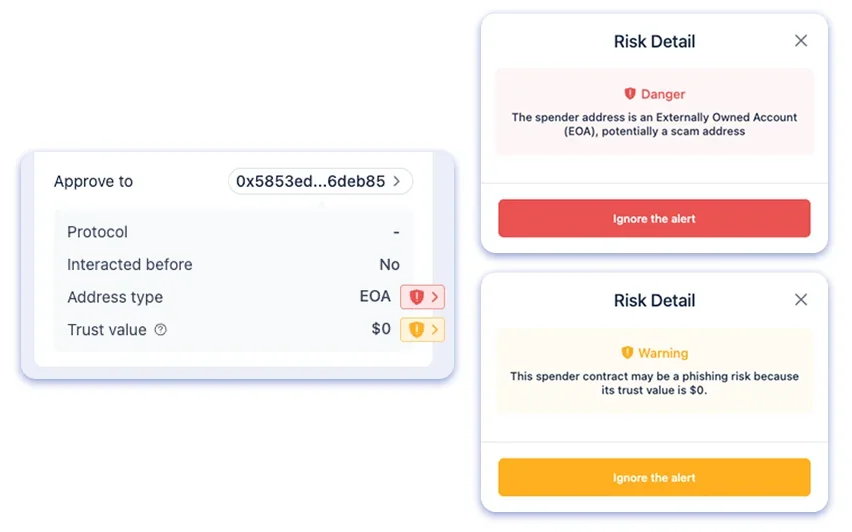
- Its security engine picks up risky approvals, like a spender that’s a personal account (an EOA) rather than a smart contract, a contract showing “Trust Value $0”, or one deployed less than 3 days ago.
- On swaps, you’ll get a warning about high price impact or about a token already known as a scam.
- Gasless signatures such as Permits get flagged too, since they’re free to sign and can still move your funds.
- Once a risk turns up, the Sign button stays dead until you click “Ignore All”, which is exactly the friction we want at that moment.
- Hardware support on the extension covers Ledger, Trezor, GridPlus, OneKey, Keystone, NGRAVE ZERO, BitBox02, CoolWallet, AirGap Vault and imToken imKey. On the phone app you get Ledger and Trezor over Bluetooth, along with Keystone and OneKey.
- Trade one stablecoin for another, or ETH for an ETH DeFi token like stETH or wstETH, and Rabby skips its fee, provided both tokens sit on the same chain.
Audit reports going back to 2021 live in Rabby’s GitHub repository, and 2025 added one from SlowMist in August and one from Least Authority in September. Haven’t swapped on-chain before? Read our guide on how to use a decentralized exchange before you start, then grab the wallet at rabby.io.
2. MetaMask, Because Nearly Every DeFi App Has Its Button
You can run MetaMask as an extension in Chrome, Firefox, Brave, Edge or Opera, as an iOS or Android app, or straight from the web. Beyond ETH and ERC-20 tokens, it handles ERC-721 and ERC-1155 NFTs, plus BTC, SOL and Solana tokens.
Reach is why it’s here. Nearly every DeFi app we’ve used puts a MetaMask button on its connect screen, and the built-in Swaps feature hunts through decentralized exchanges and swap protocols for a rate on 18 networks, Ethereum, Base, Arbitrum, Polygon and Solana among them.
What You Get With MetaMask
- Trezor, Ledger, Lattice, Keystone, NGRAVE ZERO and AirGap Vault devices all plug into the extension.
- A 0.875% MetaMask fee is baked into every swap quote, and network fees come on top.
- You can swap without paying gas on Ethereum Mainnet, BNB Smart Chain and Linea, while Arbitrum and Base get that only in the extension.
- Your Secret Recovery Phrase, passwords and private keys sit encrypted on your own device. Lose the phrase and MetaMask can’t get it back for you.
Anyone can read MetaMask’s code on GitHub. The license, though, is a ConsenSys copyright that permits non-commercial use only, a category covering projects with no more than 10,000 monthly active users.
Doing serious DeFi through it? Put a hardware wallet behind it; our best hardware wallets for MetaMask list walks through the choices, and MetaMask has the downloads.
3. Phantom, Our Pick for DeFi on Solana
Phantom keeps your keys with you and covers Solana, Ethereum, Base, Polygon, Robinhood Chain, Bitcoin and HyperEVM. By its own count it has “20+ million users”. The versions it recommends are the Chrome extension and the iOS and Android apps.
Rabby doesn’t touch Solana, so this is where Phantom earns its place. Its scam detection flags malicious transactions, and a simulation previews what’ll happen before you confirm.
Phantom Features Worth Knowing
- When Phantom can’t simulate a transaction, it warns “This dApp could be malicious” and tells you to carry on only if you fully trust the app. We’d take that advice.
- Select swap pairs cost you 0.85%.
- Gasless swaps on Solana kick in automatically if the swap is worth at least $0.30, the token you’re receiving is verified, and you’re in the standard swap flow.
- Ledger is the only hardware brand it supports, meaning the Nano X, Stax and Flex over Bluetooth on mobile, and the Nano S, Nano S Plus, Stax and Flex on the extension.
- Networks can be switched on and off under Settings > Active Networks.
The Connect SDKs are open source, but we couldn’t find Phantom saying the same about the wallet app, which bugs us a bit. Deciding between Solana and other chains for DeFi? Our Polygon vs Solana comparison sets out the differences, and phantom.com has the app.
4. Zerion, for Keeping Tabs on Your DeFi Positions
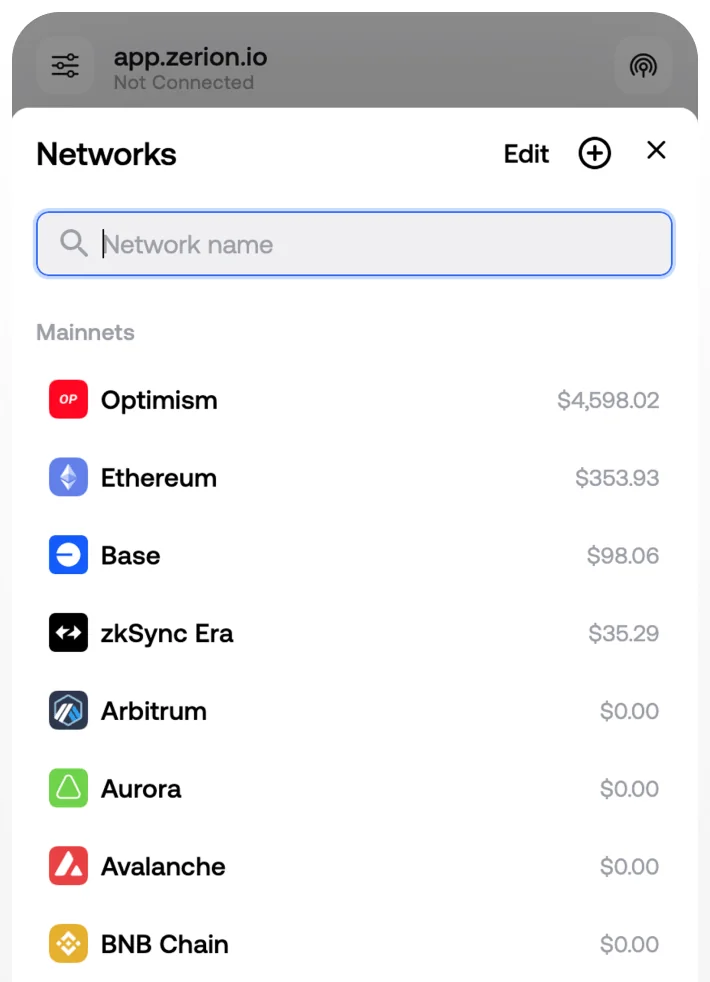
Zerion comes as a browser extension, an iOS and Android app, and a web app, and it’s self-custodial. The home page claims “58+ chains” and “4.5k+ DeFi Protocols”, and says it tracks tokens, perps and tokenized assets.
We picked it for tracking. Realized and unrealized PnL sit right there, which is a relief when your money’s scattered across lending pools, liquidity positions and a handful of networks.
What Zerion Brings to DeFi
- According to Zerion, independent firms audit every release, and the reports are public.
- Its browser extension’s code is open source.
- Swapping or bridging costs a 0.67% service fee, which drops to 0.25% on Premium, and Zerion Gold DNA holders don’t pay it at all.
- Every Ledger model connects to the extension by USB, and the Nano X and newer can use Bluetooth, but only on macOS.
- Mobile is stricter, with the Ledger Nano X over Bluetooth as the only option.
Maybe you mostly want to watch positions and trade somewhere else. In that case, weigh it against our list of the best free crypto portfolio tracker apps. You’ll find Zerion at zerion.io.
5. Ledger Flex, the Screen We’d Trust With a DeFi Signature
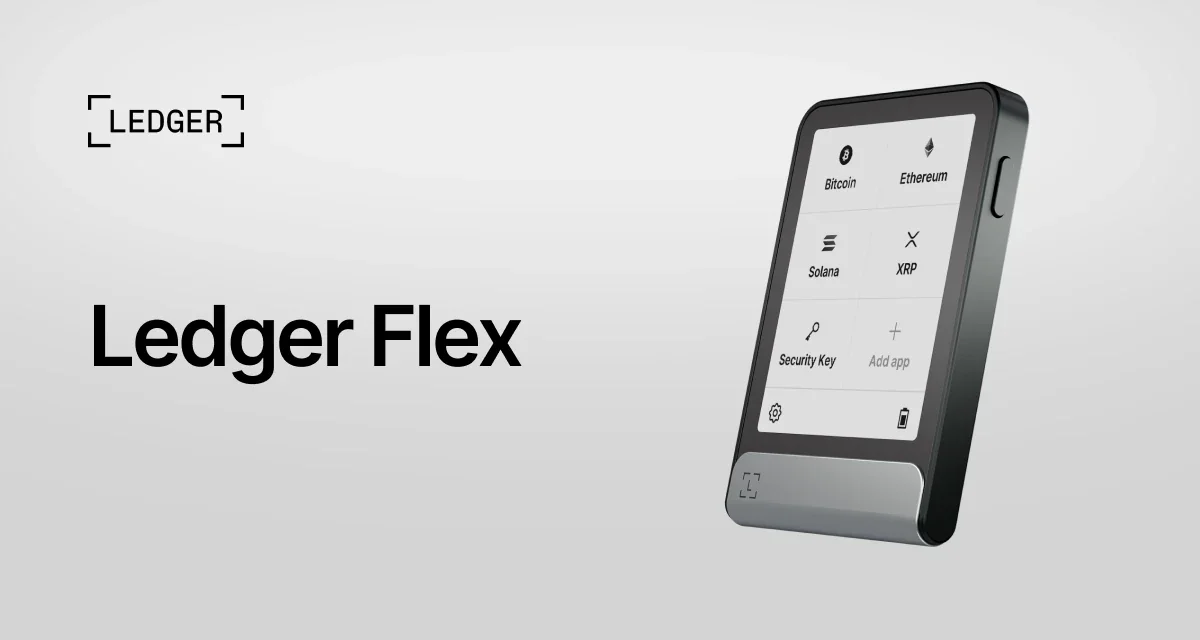
At the time of writing (September 2026), a Ledger Flex costs $249. Inside is an ST33K1M5 secure element with CC EAL6+ certification, a tamper-resistant chip that keeps your private keys on the device. Up front there’s a 2.8-inch E Ink touchscreen at 480 x 600 pixels, and it talks over Bluetooth, NFC and USB-C.
Clear Signing is the reason it’s here. On the Flex, Ledger spells out the recipient, the amount, the approval type and the dApp making the request, in plain words on the device itself. For DeFi, that’s the one thing we most want to read before approving anything.
The Ledger Flex in Detail
- ERC-7730, an open Ethereum standard, defines Clear Signing, and on May 12, 2026 Ledger handed its stewardship to the Ethereum Foundation.
- Rabby, MetaMask, Phantom and Zerion all list Ledger support, so the Flex fits behind any of them.
- Through the Ledger Wallet app it covers 500+ crypto assets, and third-party wallets add thousands more.
- Ledger rates the battery at 10 hours.
- On a tighter budget, the Nano Gen5 is $179 and the Nano X $99, both as of September 2026, though Phantom won’t connect to the Gen5.
That last con deserves a closer look. On December 14, 2023, Ledger detected malicious versions 1.1.5, 1.1.6 and 1.1.7 of its Connect Kit, a library that third-party dApps relied on. A fix went out within 40 minutes of Ledger finding out, funds were drained over a window shorter than two hours, and Ledger said its hardware and Ledger Live weren’t affected.
Want the bigger Ledger with the same Clear Signing screen? Our Ledger Stax review covers it, and Ledger vs Trezor tackles the brand question. Current prices are listed on the Ledger Flex store page.
6. Safe, When One Key Shouldn’t Guard Your DeFi Money
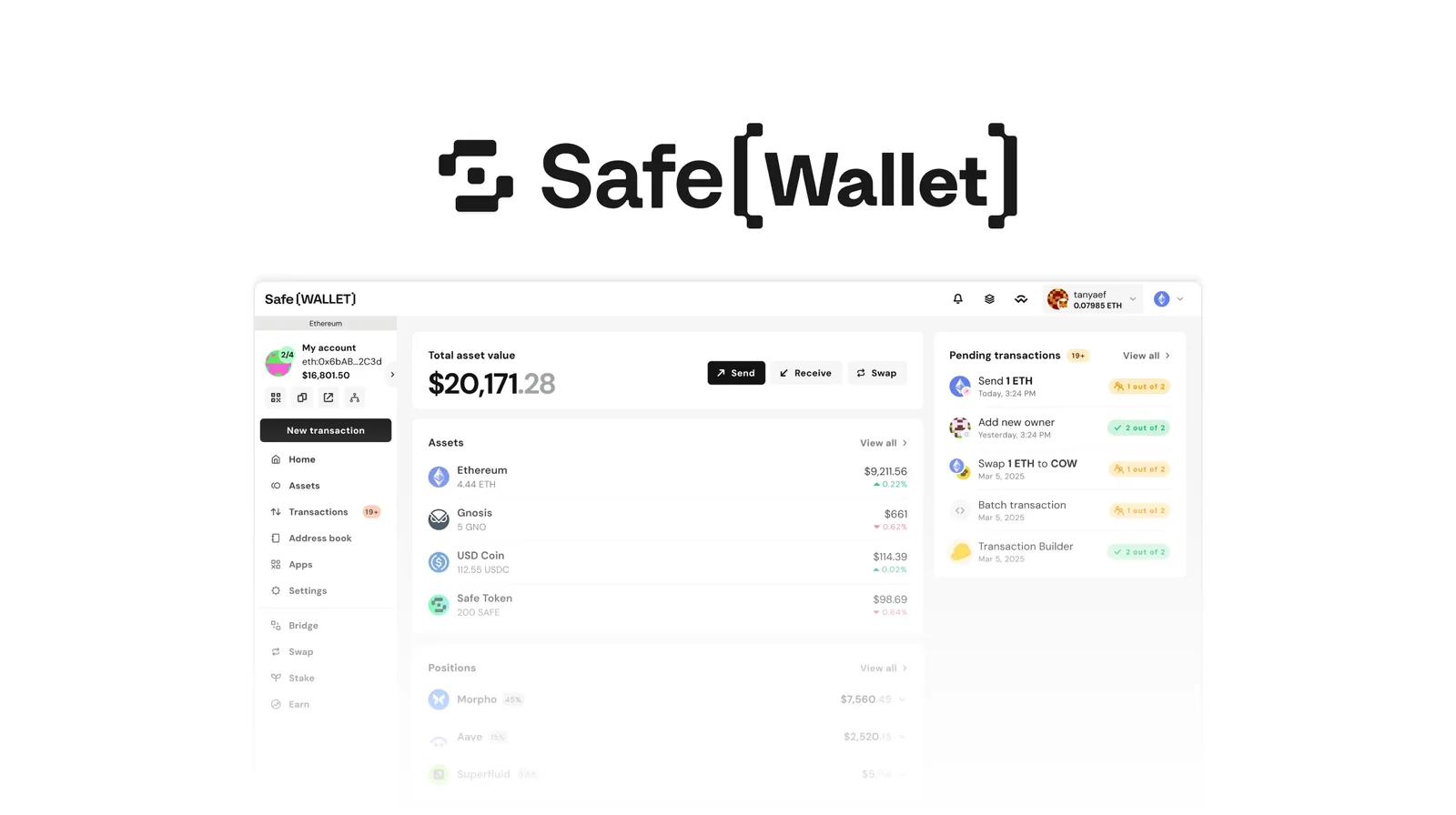
A Safe is a smart contract account, and it won’t run a transaction until a set number of signers approve. You pick who signs: MetaMask, a Ledger or Trezor, a mobile wallet that supports WalletConnect, or Safe’s own mobile app.
Safe’s published figures are $1 trillion+ in volume processed, 57M+ wallets deployed and $60B+ in value secured.
One stolen key can’t empty a Safe once the threshold is above 1. For DeFi money you can’t afford to lose, or money a team runs together, we’d call that the strongest protection on this page.
How a Safe Works in Practice
- Safe suggests a threshold above 1, so no single account can move funds, and below your total signer count, so losing one signer doesn’t lock you out.
- Safe calls 3 signers (1 MetaMask, 2 hardware wallets) with a threshold of 2 a common setup for individuals.
- Tenderly walks through each step of a transaction before it runs.
- Blockaid checks sites, addresses and transactions, raising a yellow alert for a possible risk and a red one for known malicious activity.
- Setting one up takes about 60 seconds. Deploying it costs gas, and a multisig Safe can’t be created gaslessly.
That Bybit point needs spelling out. According to Safe’s statement of February 28, 2025, the attack on Bybit’s Safe worked through a compromised Safe{Wallet} developer machine, which proposed a malicious transaction dressed up to look normal. Forensic review found no vulnerabilities in the Safe smart contracts or the front-end source code, and the team rebuilt its infrastructure and rotated every credential.
For alternatives, see our list of the best multisig wallets. You’ll find the web app at safe.global.
How We Ranked These DeFi Wallets
Security, Judged by What You See Before Signing
Most of the weight went to the screen you see before signing. Rabby, Phantom and Safe simulate transactions, while the Ledger Flex puts Clear Signing details on its own display. We also looked at how each company handled past incidents, and both Ledger and Safe published detailed accounts, which we trust more than a spotless marketing page.
Which Chains Each Wallet Covers
DeFi is scattered across a lot of networks, so reach counts. Rabby is EVM-only, Phantom is strong on Solana yet skips Arbitrum and Optimism, and Zerion claims 58+ chains. MetaMask’s Swaps feature reaches 18 networks, Bitcoin and Solana included.
Living With It Day to Day
How clearly does the wallet explain a transaction? How many taps does an ordinary swap take? Phantom and MetaMask were the easiest to pick up in our hands, and Safe is the slowest on purpose, because a second signer has to say yes.
What It Costs You
With the software free, swap fees decide the bill. MetaMask takes 0.875%, Phantom 0.85% on select pairs and Zerion 0.67%, and Rabby waives its fee on same-chain stablecoin and ETH-token pairs. The Ledger Flex is $249 as of September 2026, and Safe charges no AUM fees, though you’ll pay gas to deploy it.
Getting Back In After a Loss
Lose the recovery phrase and not one of these companies can restore your wallet. MetaMask says it outright. Only Safe survives a lost key, and only while the threshold stays below the number of signers.
How Much of the Code You Can Read
Rabby ships under the MIT license, Safe is open source, and so is Zerion’s browser extension. MetaMask publishes its code under a non-commercial license, and public code isn’t the same thing as open source. Phantom opens its Connect SDKs, but we didn’t find a statement that the wallet app is open.
So Which DeFi Wallet Should You Use?
Using Ethereum and layer 2 apps every day? Get Rabby. Between the simulation screen and the dead Sign button, it’s built to catch the kind of approval that empties wallets.
Phantom’s the one if your DeFi lives mostly on Solana. It won’t do Arbitrum, Optimism or BSC, though, so keep a second wallet around for those.
Is the balance getting big? Add a Ledger Flex and pair it with Rabby, MetaMask or Phantom. Team money, or amounts you truly can’t lose, belongs in a Safe with 3 signers and a threshold of 2.
Whichever you pick, look at the address and the network before every transfer. Send to the wrong network or the wrong address and the funds are gone, with nobody able to reverse it. Our explainer on what a wallet address is shows what to look for.
Don’t forget your token approvals either. ethereum.org warns that a platform holding an unlimited approval can still spend those tokens after you’ve withdrawn from it. Etherscan and Revoke.cash will cancel that access for the cost of a transaction fee, and revoking shouldn’t ever cost you your funds.
Questions We Get About DeFi Wallets
Which wallet is best for DeFi?
Rabby, if you’re on Ethereum and other EVM networks, since it simulates every transaction and switches off the Sign button when it spots a risk. On Solana, go with Phantom. Big balances deserve a Ledger Flex or a Safe on top.
Can I do DeFi safely from a hot wallet?
Sometimes. With small sums it’s fine as long as you read each approval, but once the amounts grow we’d connect a hardware wallet so a compromised computer can’t sign anything by itself.
What’s a token approval, exactly?
It’s permission for a smart contract to spend a token from your wallet. ethereum.org points out that an unlimited approval lets a platform keep spending those tokens even after you’ve pulled your funds out.
How do I cancel a token approval?
Open a revoke tool like Etherscan, Blockscout or Revoke.cash, connect your wallet, pick the contract and click revoke. It costs a transaction fee. Your funds shouldn’t be at risk from revoking.
Will a Ledger work with DeFi apps?
Yes. Rabby, MetaMask, Phantom and Zerion all support Ledger, and a Ledger can sign for a Safe too. On the Flex and Stax, Clear Signing puts the amount, the approval type and the requesting dApp on the device’s own screen.
Which DeFi wallet charges the least for swaps?
Rabby, for same-chain swaps between stablecoins or between ETH and ETH DeFi tokens, where it charges nothing. Beyond that, Zerion takes 0.67%, Phantom 0.85% on select pairs, and MetaMask 0.875%.
Is MetaMask open source?
No. You can read its code on GitHub, but the license only allows non-commercial use. Rabby, Safe and Zerion’s browser extension are the open-source ones here.
Where We Land
For most people doing DeFi on Ethereum and layer 2 networks, we’d pick Rabby. MetaMask gets you into the most apps, Phantom handles Solana, and Zerion is the best tracker of the bunch. Bigger sums belong behind a Ledger Flex or inside a Safe.
None of that helps if you don’t read what you’re signing. Keep the recovery phrase offline, cancel approvals you’ve stopped using, and check every address on a screen you trust. When you’re ready to put these wallets to work, our list of the best decentralized exchanges shows where we’d start.
This article is for general information only and is not financial, legal, or investment advice. Prices and features change; check the vendor’s official page before buying.