
Protecting your crypto with one private key isn’t safe anymore. Hacks, human error, and shared ownership make single-key wallets too risky.
If you run a DAO, hold Bitcoin long-term, or manage a shared treasury, one lost key or one compromised signer can cost you everything.
Multisig wallets fix this by requiring several people to approve every transaction. A hacker with one key gets nothing, and a lost key doesn’t lock you out. In this guide, we’ve picked the best multisig wallets for 2026, whether you need personal security or enterprise-level control.
Most multisig setups live on Ethereum. Our best Ethereum wallets guide covers the single-key options alongside them.
Table of contents
Key Takeaway
Multisig wallets add stronger security, shared control, and built-in redundancy. They suit:
- Long-term crypto investors;
- DAOs and Web3 startups;
- Institutions managing shared digital assets.
The global multisig wallet market was valued at $1.27 billion in 2024 and is projected to reach $4.37 billion by 2033, a 15% CAGR. As more money moves on-chain, so does the demand for wallets that can survive one compromised key.
Quick Summary: Top 5 Multisig Wallets | |
|---|---|
| Safe | Best For: DeFi users, DAOs, and Ethereum-focused teams. Supported Chains: 14+ EVM-compatible chains, including: Ethereum, Polygon, Arbitrum, Optimism, and others. Notable Features: Smart contract-based multisig, DeFi integrations, customizable policies. Price: Free (gas fees apply). |
| Casa | Best For: Bitcoin holders, families, and inheritance planning. Supported Chains: Bitcoin only. Notable Features: 3-of-5 multisig, inheritance planning, mobile apps. Price: Standard ($21/mo), Premium ($175/mo), Private Client Custom Pricing. |
| Electrum | Best For: Technical users and Bitcoin power users. Supported Chains: Bitcoin only. Notable Features: Open-source, hardware wallet integration, custom scripts. Price: Free. |
| Fireblocks | Best For: Institutions, enterprises, and high-volume traders. Supported Chains: 40+ blockchains including Bitcoin, Ethereum, and Solana. Notable Features: MPC technology, institutional custody, API access. Price: Essentials ($4,200/ year), Pro ($13,800/ year), and custom enterprise pricing. |
| Keystone 3 Pro | Best For: Security-conscious users wanting hardware-based multisig. Supported Chains: 5,500+ cryptocurrencies across major networks. Notable Features: Air-gapped security, QR code transactions, fingerprint authentication. Price: $149 (hardware device). |
1. Safe: Best Overall Multisig Wallet
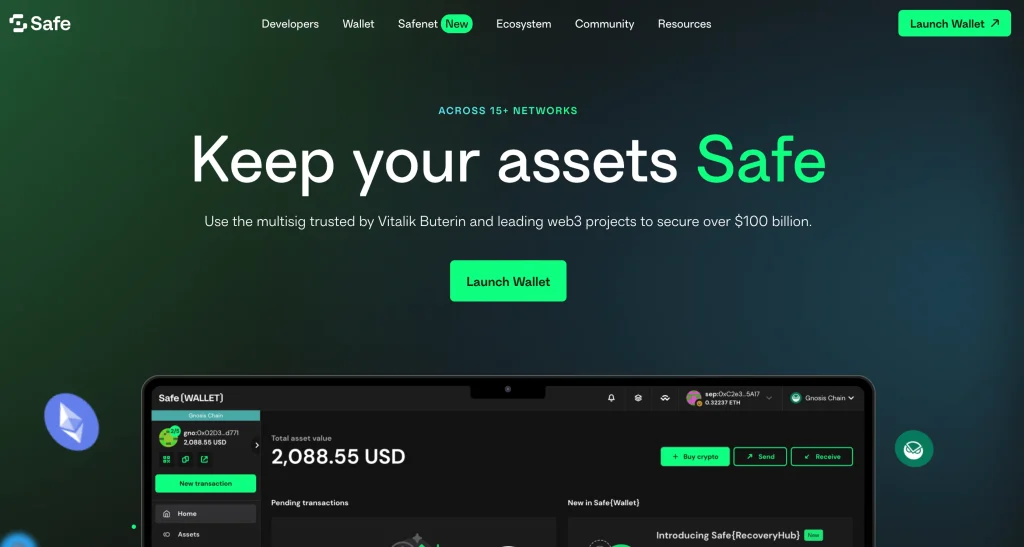
Safe (formerly Gnosis Safe) is a multi-signature smart contract wallet built for Ethereum and EVM-compatible chains. You choose how many owners the wallet has and how many must sign, then manage it from a clean web or mobile interface. Because it runs as a smart contract, it plugs straight into DeFi, which is why DAOs and DeFi teams tend to choose it.
The full Safe wallet review goes deeper into setup and its security record.
Specifications | |
|---|---|
| Multisig Setup | Flexible M-of-N (1-50 owners supported) |
| Architecture | Smart contract wallet on EVM chains |
| Transaction Batching | Multiple operations in a single transaction |
| Module System | Extensible with custom modules |
| Hardware Integration | Ledger, Trezor, Keystone compatibility |
| API Access | Safe Core SDK, REST APIs |
| Mobile Apps | iOS, Android with WalletConnect |
2. Casa: Best Bitcoin Multisig for Individuals & Families
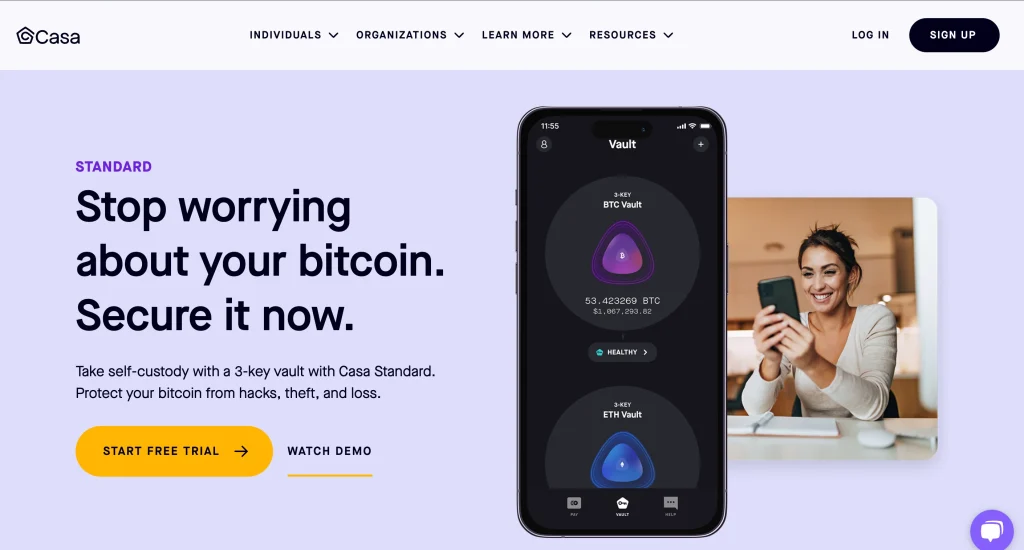
Casa makes Bitcoin multisig simple. It handles the hard parts of key management for you while you keep control of most of the keys. With inheritance planning and hands-on support, it suits people protecting long-term wealth, or a family’s savings.
Specifications | |
|---|---|
| Key Architecture | 3-of-5 multisig (fixed configuration) |
| Key Distribution | User: 2 mobile + 2 hardware, Casa: 1 server key |
| Hardware Wallets | Ledger Nano S/ Nano X, Trezor Model T |
| Mobile Security | Biometric authentication, PIN protection |
| Inheritance Setup | Beneficiary designation with a 6-month delay |
| Key Rotation | Automated key replacement service |
| Support Channels | Email, phone, and video calls included |
3. Electrum: Best Bitcoin Multisig for Power Users
Electrum is the go-to wallet for advanced Bitcoin users who want full control of their multisig setup. It is open source, runs on your own machine, and lets you build almost any M-of-N configuration with the hardware wallets you already own. There is no company in the loop and no fee to pay.
Specifications | |
|---|---|
| Multisig Options | Any M-of-N configuration (up to 15 cosigners) |
| Script Types | P2SH, P2WSH, P2SH-P2WSH support |
| Transaction Building | Partial signing with PSBT support |
| Hardware Support | 10+ hardware wallet brands |
| Server Options | Personal server, Tor support |
| Plugin System | Lightning Network, CoinJoin extensions |
| Operating Systems | Windows, macOS, Linux, Android |
4. Fireblocks: Best for Institutions, Staking & Cross-Chain Bridging
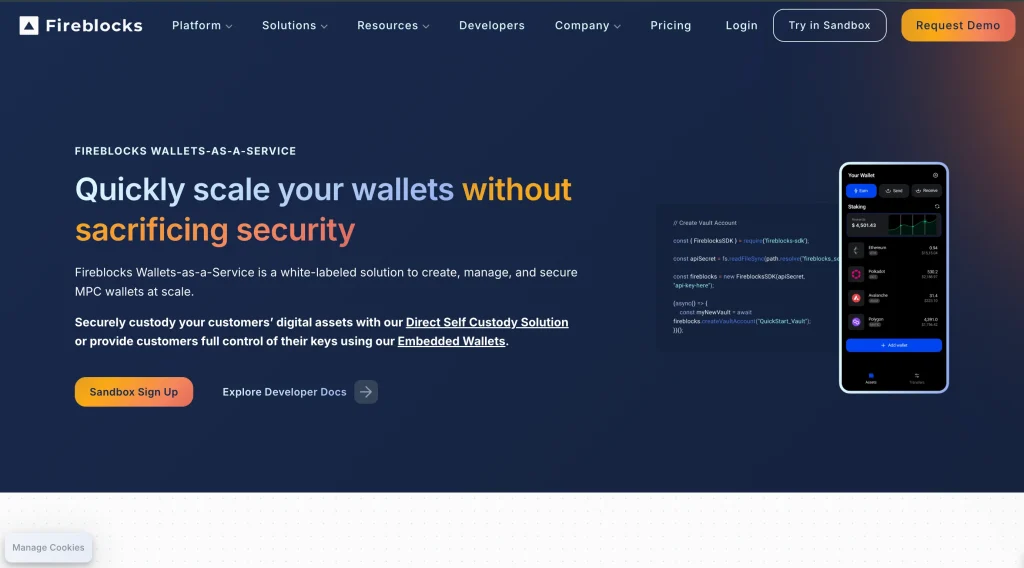
Fireblocks is an all-in-one platform for managing and securing digital assets at scale. It streamlines treasury operations, connects to exchanges and DeFi platforms, and supports secure trading. It is built for teams moving large volumes of crypto, not for individuals.
Specifications | |
|---|---|
| Security Model | MPC-CMP with secure enclaves. |
| Key Shares | 3-party computation (customer, Fireblocks, backup) |
| API Framework | REST APIs with webhooks. |
| Compliance | SOC 2 Type II, ISO 27001 certified. |
| Insurance Coverage | Lloyd’s of London policy. |
| Role Management | Granular permissions, admin controls. |
| Network Monitoring | 24/7 threat detection. |
5. Keystone 3 Pro: Best Hardware-Based Multisig Security
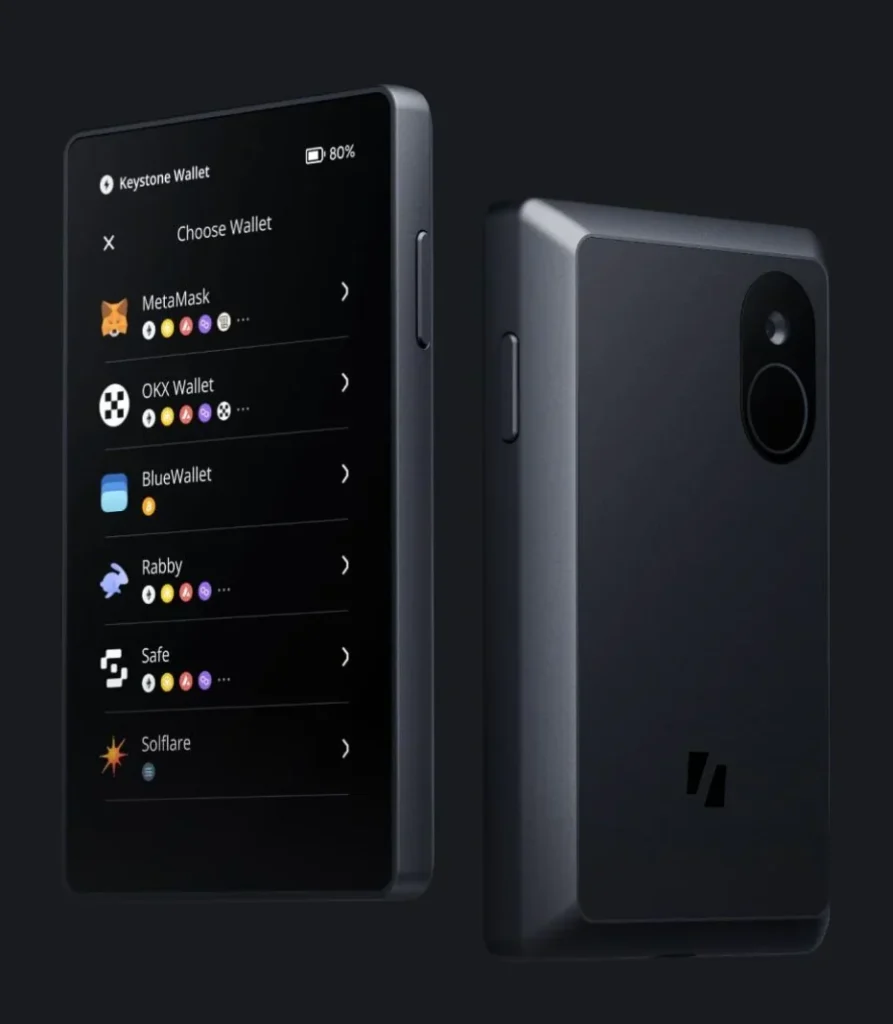
The Keystone 3 Pro is a fully air-gapped hardware wallet. It never connects to the internet; it talks to your phone or computer only through QR codes and a microSD card, so there is no cable for malware to travel down. It also holds up to three separate recovery phrases, so you can run several wallets from one device.
Specifications | |
|---|---|
| Processor | ARM Cortex-M33 secure element |
| Display | 4-inch IPS touchscreen |
| Biometrics | Fingerprint sensor with secure storage |
| Communication | Air-gapped, QR code only |
| Multi-Wallet | 3 independent wallet slots |
| Battery | 1800mAh rechargeable lithium |
| Build Material | Aircraft-grade aluminum body |
What is a Multisig Wallet?
A multisig (multi-signature) wallet is a crypto wallet that needs more than one signature to approve a transaction. A traditional wallet needs only one.
Ready to create one? The steps are in this guide on how to set up a multisig wallet.
Think of it as a bank vault that opens only when several key holders turn their keys together. No single person can move the funds alone.
How Do Multisig Wallets Work?
Multisig wallets use a system called “M-of-N”, where:
- M = the minimum number of signatures needed to approve a transaction.
- N = the total number of keys in the wallet.
Example: In a 2-of-3 setup, any 2 of the 3 key holders must approve a transaction before it goes through.
Set up and transaction process
- The owners create their private keys and set the signing threshold.
- The wallet generates one multisig address linked to all of the keys.
- To send funds, one key holder creates a transaction and signs it.
- The partially signed transaction goes to the other key holders.
- Once enough signatures are collected, the transaction is valid and broadcast to the blockchain.
Common multisig setups
| Setup | Use Case | Key Benefit |
| 2-of-3 | Personal backup, small teams | Access funds even if one key is lost. |
| 3-of-5 | Startups, DAOs | Higher security with redundancy. |
| 2-of-2 | Joint accounts | Mutual approval; no access without both. |
| 5-of-9 | Enterprises, treasury management | Strong governance and security control. |
How to Stake with a Multisig Wallet
Staking from a multisig wallet keeps your stake under shared control, but it takes coordination between signers. The exact process depends on the blockchain and the staking method.
Here are the most common approaches:
1. Direct On-Chain Staking
Some networks, such as Ethereum, let you stake directly from a multisig wallet.
Example: Using Safe with Lido or Rocket Pool. The wallet’s signers must approve the staking transaction and any validator-related updates.
Best for: Ethereum users, DAOs and teams, and anyone who wants non-custodial staking.
2. Delegated Staking
On networks like Cosmos, Solana, or Cardano, you can delegate tokens from a multisig to a validator.
Your funds never leave the wallet, and rewards are paid out automatically.
Key benefits: Funds stay under multisig control; easy reward collection; low maintenance once set up.
3. Liquid Staking with Multisig
Platforms like Lido or Marinade let you stake and receive liquid tokens (such as stETH or mSOL) that earn rewards while staying usable in DeFi.
Why it works for multisig: Staking still goes through your approval process, your assets stay liquid, and your treasury keeps its flexibility.
4. Enterprise-Grade Staking
Providers like Fireblocks offer staking infrastructure built for institutions.
They handle validator setup, compliance, and slashing protection, while your funds stay protected by MPC or multisig controls.
Best for: enterprises, custodians, and high-volume staking operations.
Important tips for multisig staking:
- Make sure every signer understands lock-up periods and staking risks;
- Choose audited validators and reputable platforms;
- Plan how you will coordinate signatures on time;
- Keep backup procedures in place for key loss or an unavailable signer.
How to Choose the Right Multisig Wallet
The right multisig wallet depends on what you hold, how much control you want, and which networks you use.
- Casa and Electrum are our top picks for Bitcoin users: one keeps it simple, the other gives you full control.
- If you focus on Ethereum or DeFi, Safe (formerly Gnosis Safe) is the standout choice.
- Running a business or managing institutional assets? Fireblocks offers enterprise-grade protection.
- Want maximum security? Keystone’s hardware-based multisig gives you air-gapped signing and real peace of mind.
Beyond that shortlist, here are the factors to weigh:
1. Supported Blockchains
Check which blockchains the wallet supports. If you mainly hold Bitcoin, Casa or Electrum fit well. Safe is the top choice for Ethereum and EVM-compatible chains. Institutions may prefer Fireblocks for its broad cross-chain support.
2. Security Features
Look for strong security: multi-factor authentication, hardware wallet compatibility, or air-gapped signing (like the Keystone 3 Pro). Also check whether the wallet is open source and audited. Code anyone can inspect is easier to trust.
3. User Experience
Judge how easy the wallet is to use. Beginners might prefer a simple setup and mobile apps, like Casa’s. Advanced users may want the full customization Electrum offers. DAOs and businesses need team features like built-in approval workflows.
4. Cost and Pricing Model
Some multisig wallets are free (apart from blockchain gas fees). Others charge monthly or yearly subscriptions. Enterprise platforms like Fireblocks cost more but include extra services and support. Hardware wallets need an upfront purchase.
5. Customization and Flexibility
Decide how much control you want over the setup. Some wallets use a fixed configuration (like Casa’s 3-of-5). Others let you build any “M-of-N” scheme, which suits organizations with complex needs.
6. Recovery and Backup Options
Good multisig wallets include key recovery or inheritance planning. That way you don’t lose access if a key is lost or a signer disappears.
7. Integration with DeFi and Staking
If you plan to stake or use DeFi apps, check that the wallet connects to the protocols or staking services you rely on. Safe and Fireblocks both offer strong DeFi and staking features, which makes them good fits for active users and institutions.
FAQ
Are Multisig Wallets Safe?
Yes. Multisig wallets are safer than single-key wallets because they need several approvals to move funds, which lowers the risk from a hack or a lost key. Your security still depends on storing each key properly and choosing a trustworthy wallet provider.
Base users have a shorter list to pick from, which we cover in our best Base wallets guide.
What Is the Difference Between Multisig and MPC Wallets?
Multisig uses several complete private keys to sign a transaction. MPC splits one key into encrypted shares, so no one ever holds the whole key. Multisig is transparent and visible on-chain; MPC offers more privacy and flexibility.
What Are the Advantages of Multisig Wallets?
Enhanced Security: Multisig removes the single point of failure. If one key is compromised, the attacker still can’t move funds without the others.
Shared Control: Several people share access, and no one person has complete control. This is ideal for teams, families, or organizations managing shared funds.
Recovery Options: If one key is lost, the others can still approve transactions, so you are far less likely to lose access to your assets for good.
Governance & Compliance: Approval workflows and a complete audit trail help organizations meet internal policies and regulatory standards.
Inheritance Planning: Distribute keys to trusted people so your assets stay accessible if you become unavailable. This makes secure estate planning practical.
How To Withdraw From a Multisig Wallet?
Withdrawing from a multisig wallet needs approval from enough key holders to meet the wallet’s threshold.
- Initiate Transaction: One key holder creates a withdrawal request.
- Collect Signatures: The request goes to the other key holders for approval.
- Broadcast Transaction: Once enough approvals are in, the transaction is sent to the blockchain.
- Confirmation: Funds move once the network confirms the transaction.
The exact steps vary slightly by wallet, but a multisig wallet always needs multiple approvals before it releases funds.
Final Thoughts
The best multisig wallet in 2026 comes down to control, coordination, and security. Whether you manage personal funds or a shared treasury, multisig gives you peace of mind through shared approvals and flexible governance.
As crypto grows, careful holders upgrade their wallets. With the right multisig setup, you’re not just protecting assets; you’re building a setup that can survive a lost key or a compromised signer.
How I review: Reviewed by Andrei B. I buy the hardware wallets I review, test every product myself and score it on security, UI/UX, ease of use, price and supported coins. Before I publish, I also check recent user reviews and any hack reports.
The whole process is explained on the How We Review page. You can read more about me, or contact me with corrections, from the links at the bottom of this page. For general safety advice, see the FTC guide to cryptocurrency scams.