
In 2024, crypto derivatives platforms made up a market worth about $10.5 billion. Analysts expect it to hit $30.2 billion by 2033. That works out to roughly 15.8% growth every year between 2026 and 2033.
The reason is simple. Traders keep turning to futures and other derivatives to bet on where crypto prices go next, and with the right futures platform you can make money whether the market climbs or falls, while leverage lets you open positions far larger than your deposit.
Platforms differ, though. You’ll find gaps in margin requirements, execution speed and risk tools. Below, my five favorite futures platforms go head to head on features, fees, ease of use, security and reliability.
A crypto futures contract is a derivative that tracks the price of a coin, so you can profit from a move up or down without owning the coin itself.
Table of contents
My five favorite futures platforms for 2026 at a glance | |
|---|---|
| Binance | Best for: traders who already know futures well Leverage: as high as 125x Assets: altcoins plus BTC, ETH and BNB Fees: 0.02% maker and 0.04% taker, less if you pay in BNB UX: packed with features and best for seasoned traders Mobile App: strong, with the full set of trading tools |
| Gate | Best for: smaller coins and fresh listings Leverage: as high as 100x Assets: niche tokens galore, across 1,000+ pairs Fees: the more you trade, the less you pay UX: detailed, with a technical feel Mobile App: complete, though it can feel busy if you’re new |
| Bybit | Best for: smooth trading and strategy tools Leverage: as high as 100x Assets: the big coins plus a growing list of altcoins Fees: makers pay 0.01%, takers pay 0.06% UX: tidy and easy for beginners Mobile App: quick to respond and great for fast trades |
| OKX | Best for: futures across chains at low cost Leverage: as high as 125x Assets: a wide range, from BTC, ETH and SOL to cross-chain assets Fees: makers start at 0.02% and takers at 0.05%, with promotions cutting that further UX: simple enough for newcomers and deep enough for pros Mobile App: fast and easy to find your way around |
| Kraken | Best for: security at an institutional level Leverage: 50x at most, depending on your region Assets: only the major coins, such as BTC and ETH Fees: 0.02%-0.05%, cheaper as your volume grows UX: tidy, built for professionals Mobile App: you get safety and stability, but fewer advanced tools than elsewhere |
1. Binance: my choice if you trade futures seriously
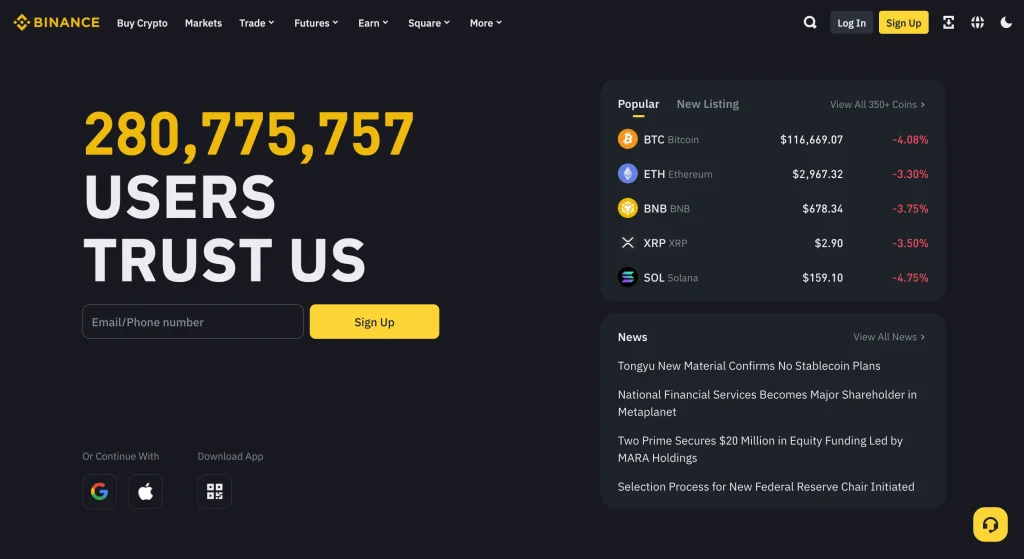
No crypto exchange trades more volume than Binance, and few futures offerings are as complete. Beginners may find the screen overwhelming. For serious futures traders, though, the depth of tools and the low fees make it the obvious home.
Specifications | |
|---|---|
| Leverage Options | You get leverage of up to 125x, in cross or isolated margin. |
| Trading Pairs | Over 200+ standard contracts, from BTC, ETH and BNB to altcoins. |
| Order Types | Orders come in every common flavor: market, limit, stop-limit, OCO, post-only and conditional. |
| Risk Management | An insurance fund sits behind you, and a calculator helps you size positions and set initial margin. |
| API Access | Bots and automated systems can connect through REST and WebSocket APIs. |
| Mobile Trading | The mobile app does everything the desktop does, with charts you can customize. |
| Fee Structure | You pay 0.02% as a maker and 0.04% as a taker, and BNB brings that down. |
| Funding Rates | Competitive 8-hour funding intervals. |
2. Gate: my choice for altcoins and fresh listings
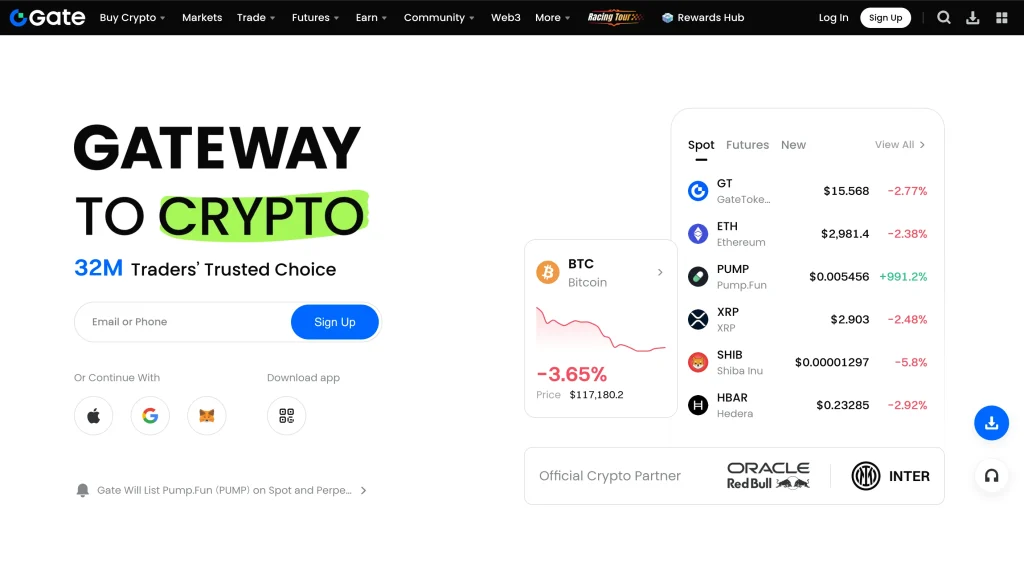
For altcoin futures, my choice is Gate.io. If you want exposure to small coins and brand-new projects through futures, this is where to look.
Speed of listing is what sets Gate apart. New tokens show up fast, which means you can often catch a coin’s futures while people are still talking about it rather than once the move is over.
Specifications | |
|---|---|
| Altcoin Selection | More than 1,000+ futures pairs, micro-caps and new tokens included. |
| Leverage Range | Leverage reaches 100x on the big pairs, and less on others. |
| New Listings | New tokens appear quickly in both spot and futures markets. |
| Copy Trading | You can follow top traders and copy what they do. |
| Dual Investment | A fixed-price product mixes futures with options. |
| Grid Trading | Bots that trade automatically when the market moves sideways. |
| VIP Program | Discounts and extra features unlock as your volume grows. |
| Multi-Asset Support | Futures on forex and stocks as well as crypto. |
3. Bybit: the pick for easy trading and strategy
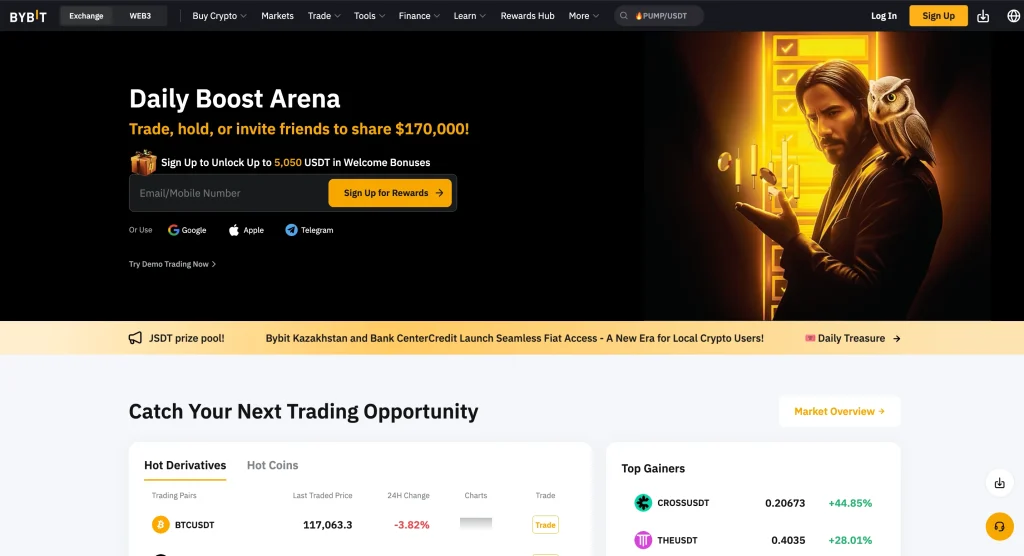
Few exchanges are as friendly to use as Bybit, and it still comes with serious trading tools. You can learn day trading and margin strategies with its lessons and demo account before you put real money on the line.
Specifications | |
|---|---|
| User Interface | A clean layout with live market data. |
| One-Click Trading | Placing orders and managing positions is quick. |
| Risk Tools | Indicators, calculators and position sizing built in. |
| Mobile Excellence | The mobile app has won awards and does everything the desktop does. |
| Copy Trading | Pick successful traders and copy their trades automatically. |
| Demo Account | A demo account lets you practice with no extra money. |
| Educational Hub | Lots of lessons and step-by-step tutorials. |
| Customer Support | Support in several languages around the clock (24/7), and it answers fast. |
4. OKX: my choice for low fees and cross-chain futures
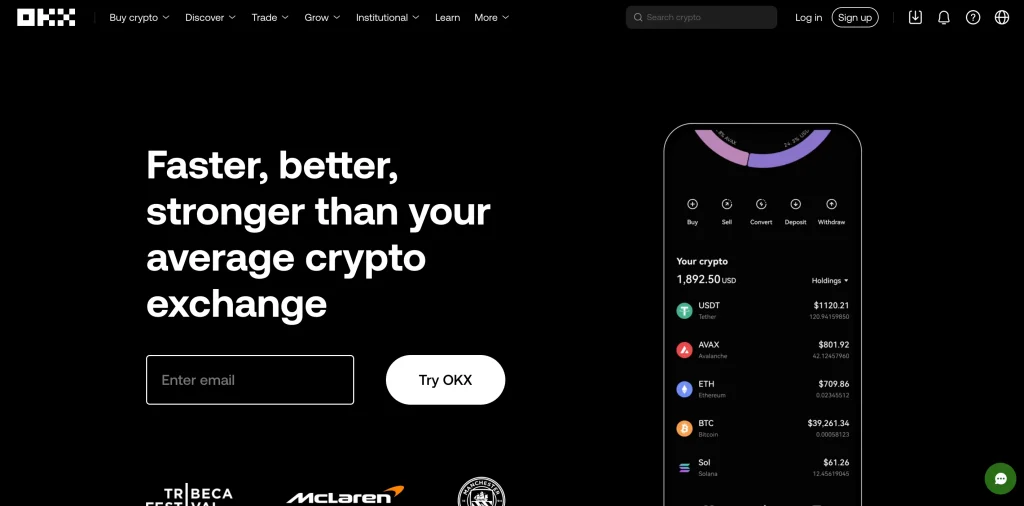
Think of OKX as a full trading ecosystem more than a single exchange, with futures spread across several blockchains and asset types. Its fees are low and promotions come often. You handle spot, futures and options from one screen and one account.
Its fees, security and features are covered in the full OKX review.
Specifications | |
|---|---|
| Cross-Chain Support | Contracts on Solana, Ethereum, Bitcoin and more. |
| Unified Trading | Spot trading, options and crypto futures all together. |
| Fee Promotions | Zero-fee periods come up regularly, and bigger volume earns discounts. |
| DEX Integration | Built-in decentralized exchange functionality. |
| Wallet Services | A self-custody wallet that connects to DeFi apps. |
| Options Trading | Products that follow Commodity Futures Trading Commission rules, alongside the rest. |
| Institutional Tools | Custody and prime brokerage for larger clients. |
| Web3 Features | An NFT marketplace plus blockchain data tools. |
| Pros | Cons |
| Fees among the lowest, with promotions often on offer; | So many products can overwhelm a newcomer; |
| Cross-chain trading opportunities; | Not many lessons for beginners; |
| A fast platform that fills orders quickly; | The rules are still unclear in some markets; |
| You can do far more here than trade futures; | Support quality depends on where you live; |
| Strong tools for big and institutional traders; | All those features make the screen busier; |
| Regular new product launches. | Liquidity differs a lot from pair to pair. |
5. Kraken Futures: the pick for top-level security
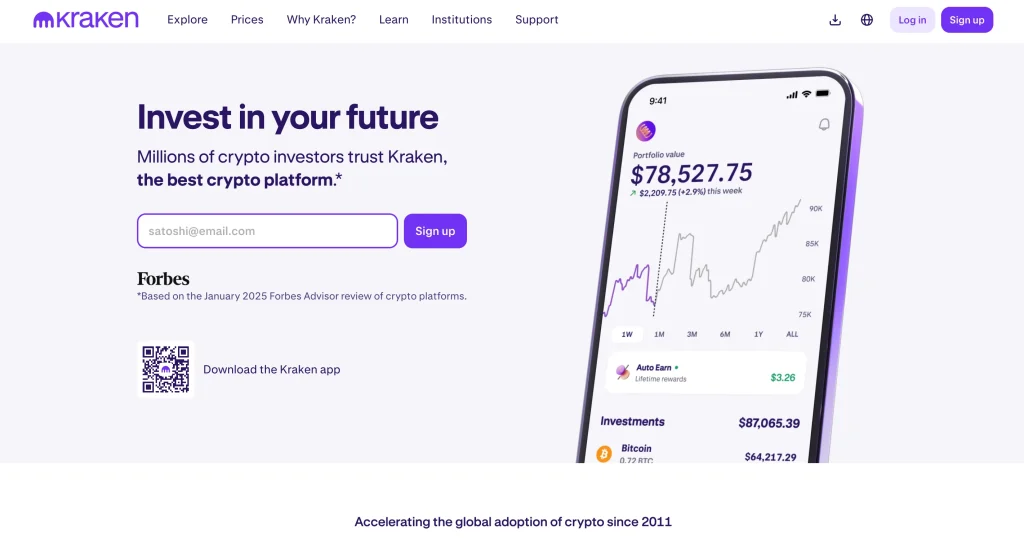
Kraken is known for running a transparent, compliant and secure exchange. That makes it most attractive to institutions and to futures traders who care about safety above all.
You’ll find fewer altcoins here than on the others. What you get instead is steady infrastructure, public proof of reserves and some of the best security habits of any big exchange.
Specifications | |
|---|---|
| Security Standards | Cold storage and insurance, with security on a par with banks. |
| Regulatory Compliance | Licenses in several countries, with full audit trails. |
| Institutional Services | OTC trading, custody and prime brokerage. |
| Transparent Operations | Reserves and financial reports published live. |
| Professional Tools | Advanced orders and tools for managing risk. |
| Global Reach | Local support in more than 190+ countries. |
| Fiat Integration | Several currencies, and fees shown clearly each month. |
| 24/7 Support | Professional support that sorts problems out quickly. |
Picking the right futures platform
Your platform affects your results almost as much as your strategy. Before you fund an account, check these seven things:
1. Leverage and margin
With leverage, a small amount of money controls a much bigger position. Some platforms offer up to 125x, but if you’re a beginner, treat that as a limit rather than a goal. Look for leverage you can adjust, so the risk matches your experience.
Tip: leverage multiplies your losses as fast as your profits. Even a small dip, the kind a spot holder shrugs off, can liquidate you when you’re heavily leveraged. If you’re new, start small.
2. Asset Selection
Good futures platforms give you plenty of trading pairs. Want to trade more than BTC and ETH? Pick somewhere like Gate.io or Bybit, both of which list altcoin and new-market futures.
Prefer platforms that keep adding coins and cover both the big names and smaller tokens.
3. Fees and trading costs
Fees can eat your profits fast, above all if you trade often. Compare maker and taker fees and funding rates. Look for hidden costs too, like withdrawal or inactivity charges.
You’ll find some of the cheapest fees on Binance and OKX, especially if you pay with their own tokens (BNB or OKB) to get a discount.
4. Slippage and Liquidity
When a platform has deep liquidity and little slippage, you get the price you aimed for even while the market races. Busy platforms like Binance tend to fill orders better.
5. Security and regulation
Security isn’t optional. Make sure the platform keeps funds in cold storage, offers two-factor authentication (2FA) and has a clean record with regulators. Kraken has a reputation for security and compliance at an institutional level.
Be careful: local rules block some platforms in certain countries, so confirm yours is available before you deposit.
6. Ease of use and the mobile app
A clean, quick interface lets you trade faster and make fewer mistakes. Bybit and OKX both feel smooth, even on a phone. That counts if you trade away from your desk.
Choose for your style: detailed dashboards if you’re a pro, a simpler screen if you’re starting out.
7. Strategy tools and integrations
The best futures platforms build in tools such as:
- Charting software;
- Risk calculators;
- Trading bots;
- API access or copy trading.
For automated and strategy-based trading, Bybit and OKX lead the pack.
Plenty of platforms now bundle automatic orders, copy trading and margin controls to make strategies easier to run. To go further with automation, see our guide to the best crypto trading bots for strategies that run by themselves, around the clock (24/7).
Is crypto futures trading still worth it in 2026?
Yes. In 2026, futures are still a popular and effective way to trade crypto. These are the reasons traders keep using them:
Volatility Creates Opportunities
Crypto prices swing hard both ways. With futures you can make money whether prices rise or fall, a good fit if you trade short-term moves.
Leverage Boosts Potential Gains
Binance and OKX let you use up to 125x leverage, so a small deposit controls a big trade. The flip side is that the bigger your leverage, the bigger your risk.
More Assets to Trade
You’ll find hundreds of coins and tokens on today’s platforms. Majors, altcoins, DeFi tokens and cross-chain assets can all be traded from one account.
Friendlier tools, easier to get started
Platforms now put effort into simple design, risk controls and mobile apps. Whether you’re new or experienced, trading futures has become simpler and safer.
Safer platforms and clearer regulation
As the rules mature, many platforms have tightened security and compliance, so you can feel more confident your funds are safe.
Bring a sound plan and tight risk control, choose your platform well, and futures can still grow your crypto in 2026 and beyond.
FAQ
Where can I trade BNB with the least slippage?
Binance Futures is the top spot for BNB, thanks to its deep liquidity and fast order fills. For a runner-up, OKX offers low fees and fills major pairs quickly.
Do I need $25,000 to day trade futures?
No. That $25,000 rule for pattern day traders (PDT) belongs to US stock margin accounts and has nothing to do with futures. You can start on many crypto futures platforms with far less.
Which platform is best for paper trading futures?
Bybit’s demo account and the Binance Testnet are the best options. Either one lets you try out strategies in real time with no money at stake.
How many hours a day can I trade futures?
On most platforms, including Binance and OKX, crypto futures trade around the clock (24/7). Regular futures markets, by contrast, stay open nearly 24 hours on each of the five weekdays.
Is there a free futures trading platform?
Bybit and OKX sometimes run zero-fee promotions or give you a free demo account. Binance lets you practice for free on its testnet too. Real trading still costs fees and funding, so check the fee schedule before you deposit anything at all.
Final Thoughts
Crypto futures move quickly, and your choice of platform matters.
Look for strong security, tools that are easy to use and flexible trading options, because they help you ride out the market’s swings. Keep learning, keep your leverage under control and be ready to adjust, since that’s how you last in futures trading.
How I review: Reviewed by Andrei B. I buy the hardware wallets I review, test every product myself and score it on security, UI/UX, ease of use, price and supported coins. Before I publish, I also check recent user reviews and any hack reports.
The whole process is explained on the How We Review page. You can read more about me, or contact me with corrections, from the links at the bottom of this page. For general safety advice, see the FTC guide to cryptocurrency scams.