
Think of a wallet drainer as phishing rebuilt for crypto. Chainalysis describes the category as “a phishing tool designed for the web3 ecosystem”, one that talks you into linking your wallet and waving a request through. From there the operator helps themselves.
What makes it work is how ordinary the click feels. Nobody asks for your password, and nobody asks for your seed phrase, the 12 or 24 words that let you rebuild a wallet from scratch. You grant a permission, and there’s no undo button on a chain.
Below I’ll go through what these kits are, which permissions they abuse, how much they’ve taken, and the small routines that keep you off the victim list.
Table of contents
What a wallet drainer actually is
Strip away the story and you’re left with a bundle of code parked behind a convincing website. According to Chainalysis, kits like these dress up as real web3 projects, which is a change from the old business of harvesting logins. Connect, sign, and the signature does the rest.
Picture the version I hear about most. An airdrop shows up in your feed, the claim page loads, your wallet connects, and you wave through something that looks exactly like claiming. Buried in it was a token approval: permission for some other address to carry a token out of your wallet.
Your screen shows nothing at all. Then the balance empties.
Chainalysis files this under approval phishing, where a victim’s signed transaction hands the scammer’s address the right to spend particular tokens, leaving them free to pull those tokens whenever they feel like it. Software is the drainer. The approval is the unlocked door.
Two more bits of vocabulary will help. Blind signing covers any approval you give without being able to see the data underneath it, and Ledger’s comparison is a blank check. That data is the calldata, the part spelling out which function gets called and with which arguments.
How a wallet drainer empties a wallet
Nearly every one of these runs the same five beats.
- Traffic gets bought, or taken. Scam Sniffer’s 2024 write-up counted hijacked Discord and X accounts belonging to real projects, airdrop hunters chasing expired project links, and ads paid for on Google Search, X and Telegram.
- A page arrives wearing the colors of something familiar, and you hit connect.
- Up comes a signature prompt. Sometimes it’s an approval that lands on-chain, sometimes an off-chain message costing zero gas, which is the fee a network charges for doing anything.
- Signed. A permission over some or all of your tokens now sits with the drainer.
- Tokens leave, typically in seconds, and whoever rents out the kit gets paid. Ledger reported that in the Connect Kit case 85% went to the exploiter and 15% to the drainer service.
Beat three settles everything, because that prompt comes in more than one flavor. A few of them sit on the chain in plain sight and take one transaction to cancel. Others leave no footprint whatsoever until the moment they’re cashed in, and that gap is what catches people.
| The request | What signing it hands over | Does an approval checker see it? |
|---|---|---|
| approve or increaseAllowance on an ERC-20 token | Spending rights up to the cap, whenever the holder wants. Your balance doesn’t limit that cap, and MetaMask warns it often runs far past it. | Yes, it’s recorded on-chain |
| setApprovalForAll on ERC-721 or ERC-1155 | Every NFT you own inside that single contract | Yes |
| A Permit message, signed off-chain under ERC-2612 | An allowance you never sent a transaction for. Anyone at all can submit it while the deadline in the message still holds. | No. As Revoke.cash puts it, a checker “can never determine which signatures you’ve signed” |
| Permit2 AllowanceTransfer | transferFrom, called over and over, until the allowance empties or its expiry passes | Only partly |
| An authorization under EIP-7702 | Code attached to your own account. Per the spec, a badly built delegate can end up with “near complete control over a signer’s EOA”, meaning the everyday account you sign with. | No |
| An ordinary transfer | Your tokens, there and then | Too late to revoke anything |
| An SPL Token delegate on Solana | Moves up to the delegated amount out of one token account | Yes, and a Revoke instruction from the owner clears it |
Those off-chain permits are why victims insist they approved nothing. On screen it reads like signing in somewhere. Revoke.cash has seen scammers fire off a signed permit almost immediately.
Wallet warnings get routed around, too. Kits caught by Scam Sniffer lean on CREATE2 to work out a brand new contract address ahead of every malicious signature, then deploy into that address once the victim has signed. All a security alert can inspect is a spender that looks completely empty.
Scam Sniffer logged a case where that trick cost one person $927,000 in GMX tokens, to a contract that only came into existence as the assets left.
Anyone who’s swapped on a decentralized exchange has signed the honest twin of these prompts. My walkthrough of how to use a decentralized exchange points out where an approval turns up mid-swap.
What wallet drainers have cost people
Quiet years still run into tens of millions. Scam Sniffer’s 2025 annual report tallied $83.85 million taken from 106,106 wallets, which was 83% and 68% below the year before. For 2024 the same team counted $494 million and 332,000 victims.
Per victim, 2025 worked out at $790, against $1,488 a year earlier. Averages flatten the tail, though. Eleven incidents cleared $1 million during 2025, and the worst of them, a single Permit signature in September 2025, took $6.5 million.
Big losses skew heavily toward permits. Their share of large-case losses came to 38% in 2025, after 56.7% in 2024. Topping that earlier year was $55.48 million in DAI, lost to a setOwner signature that quietly reassigned proxy ownership.
Reaching further back, Chainalysis put roughly $1.0 billion in approval phishing thefts between May 2021 and November 2023, with $516.8 million of it during 2022. It tied 1,013 addresses to targeted campaigns, and one of them alone accounted for an estimated $44.3 million, or 4.4% of everything.
Actual cases show how thin the window can be. Ledger’s disclosure of 14 December 2023 explained that doctored builds of Ledger Connect Kit numbered 1.1.5, 1.1.6 and 1.1.7 went up on NPMJS, slipping Angel Drainer code into any dapp that pulled the library in.
Behind it was an ex-employee who got phished, holding NPMJS access that offboarding had left in place. An API key was enough for the attacker to sidestep two-factor authentication.
Once Ledger’s security teams were alerted, a clean version shipped inside 40 minutes. The bad code sat there for about 5 hours, and Ledger’s own estimate of the active draining window is “less than two hours in total”. Among the fixes it committed to was ending blind signing and taking the option away entirely.
Experienced hands get caught by unreadable transactions as well. A Safe Ecosystem Foundation statement dated 28 February 2025 traced the Bybit Safe attack to a Safe{Wallet} developer machine that had been compromised and used to propose a transaction in disguise. Reviewers found nothing wrong with the Safe contracts, nor with the source behind the frontend and services.
Here’s the part I’d underline. Approve a hostile contract, or fire tokens at the wrong address, and that money is gone with nobody able to claw it back. Trezor states it without hedging: a blockchain transaction can’t be reversed, so what you lost stays lost.
What Ledger, Trezor, MetaMask and Phantom do about it
All the big names have built defenses by now, and not one of them amounts to a promise.
Hardware wallets and the clear signing fix
Device makers landed on clear signing as the answer. Two ingredients make it work, says Ledger: the intent of a transaction has to be clear, and its fields have to be readable by a human being.
The Clear Signing Initiative started at Ledger back in 2024, followed in 2025 by a Generic Parser that reads ERC-7730 metadata without needing a separate plugin per dapp. By 2026 ERC-7730 was on version 2, and its governance had moved to the Ethereum Foundation.
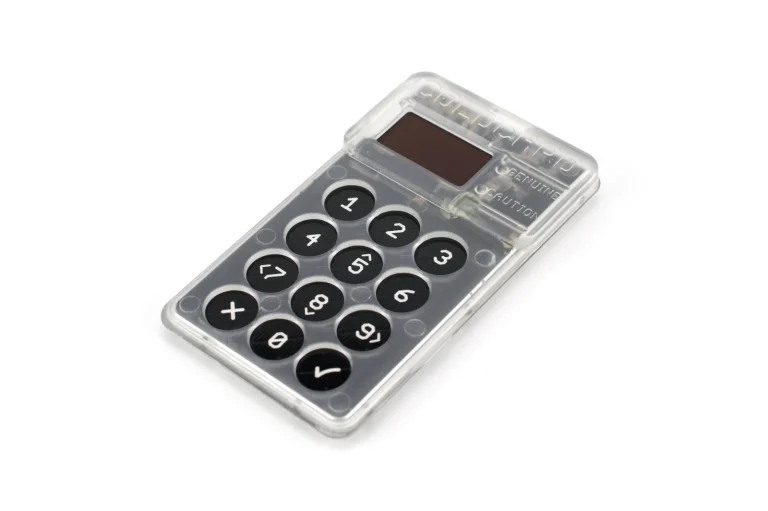
Ledger’s touchscreen signers add Transaction Check, which studies a transaction for threats and flags it to you first. Devices with secure screens, per Ledger Academy, include Ledger Stax and Ledger Flex.
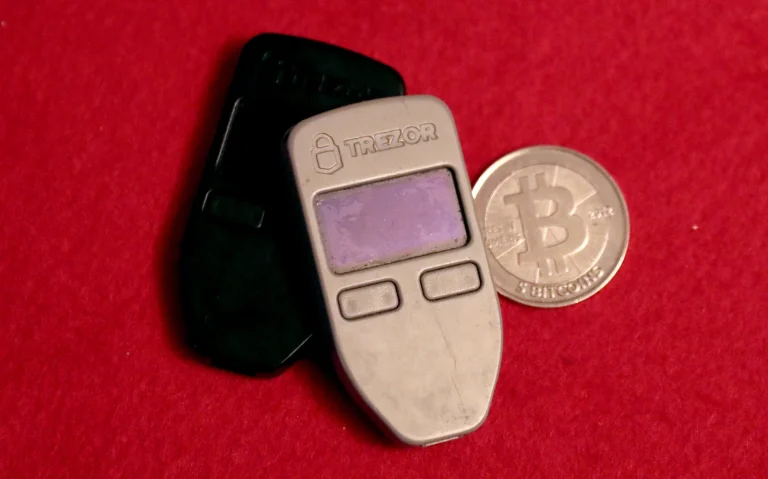
Over at Trezor, Clear Signing arrived on 7 September 2026, covering Trezor Safe 7, Trezor Safe 5, Trezor Safe 3 and Trezor Model T. Trezor Model One misses out. What it can decode comes from the ERC-7730 registry, and the launch list ran to 1inch, Aave, Lido, Tether, LiFi and Hyperliquid.
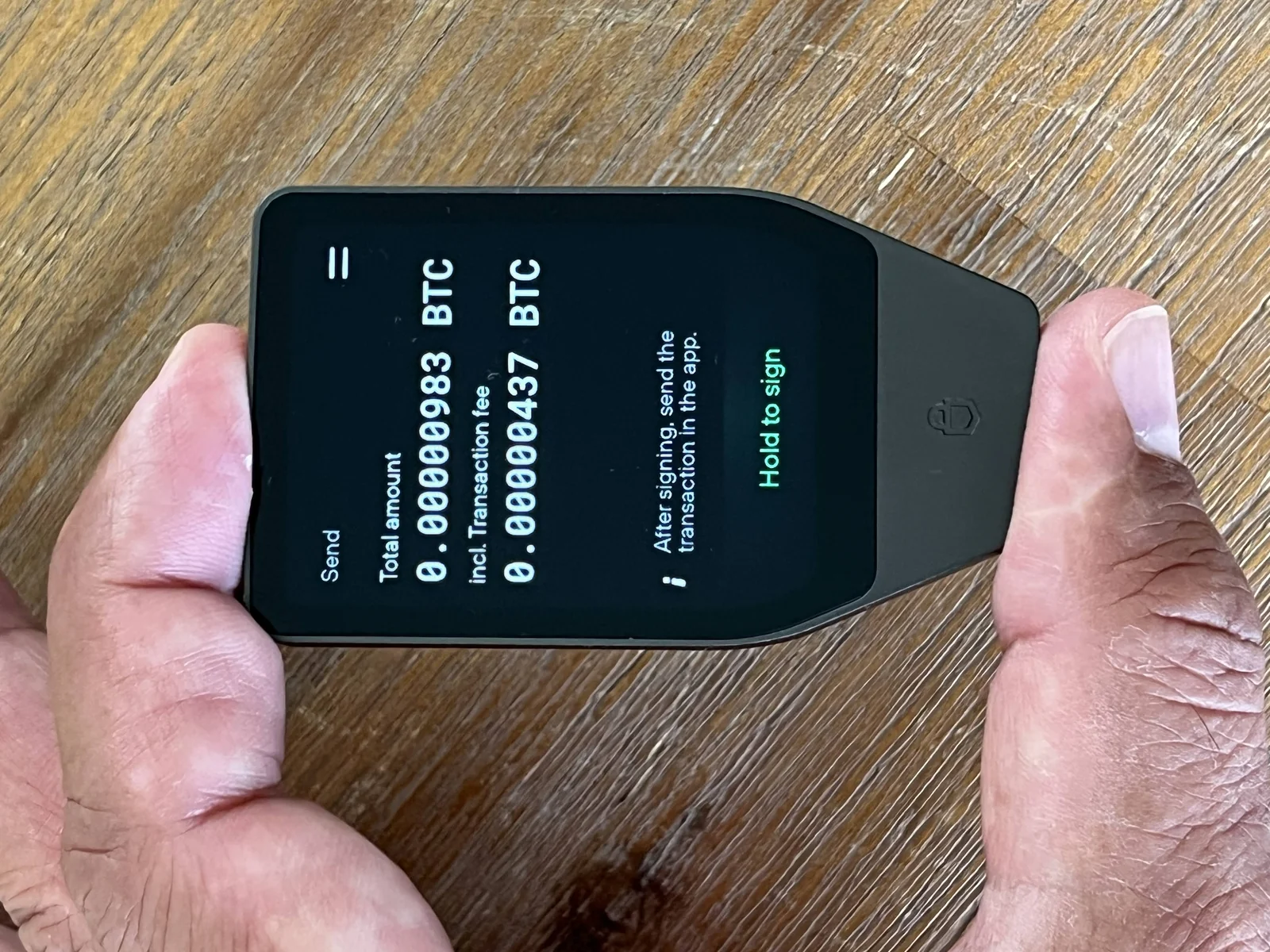
Why bother? Because the source of the description is the whole argument.
As Trezor notes, that friendly summary on your computer sits on the one layer malware, phishing or a faked frontend can rewrite. Believe the screen on the device instead.
Credit to Trezor for naming the ceiling too: “Social engineering scams and malicious smart contracts can bypass even the best hardware security if you aren’t careful.” Screens and firmware differ between the two ranges, and my Ledger vs Trezor comparison goes through the differences.
Browser and phone wallets: alerts that only warn
Install MetaMask and its security alerts are already running, in the extension and the phone app alike, fed by on-chain analysis, ecosystem intelligence and security partners that include Blockaid. What they weigh up is a mix: phishing domains and scam reports already on file, how a contract behaves and what its transactions look like, signs of impersonation, on-chain activity tied to known campaigns, plus reports from other users.
MetaMask doesn’t oversell it either: “you can still confirm the transaction if you choose to.” Spotting the threat is the job. Stopping the loss isn’t.
Layers look much the same at Phantom. Blowfish powers its Transaction Previews, which raise a hand at malicious transactions, phishing and DNS hijacking aimed at a dapp, and there’s an open-source blocklist of bad domains kept up by the community.
Phantom also spells out a difference that catches almost everyone. Disconnect and an app loses its view of your wallet. Revoke and it loses the right to move your tokens.
Put a hardware wallet behind a browser wallet and every signature has to clear the device screen. Which pairings actually work is what my roundup of the best hardware wallets for MetaMask is for.
Habits that keep a drainer out
- Actually read a signature request, and if you can’t sum up what it does in a sentence, hit cancel. Neither a permit nor an EIP-7702 authorization is a login, whatever the page implies.
- Put approvals on a calendar. Monthly is what MetaMask suggests, through the approval checker on whichever explorer you use, and Etherscan’s Token Approval Checker will show you how many approvals you’ve handed out and the value sitting behind them.
- Cut loose anything you’ve finished with. Etherscan, Blockscout, Revoke.cash and Unrekt all appear on Ethereum.org’s revoke guide, which also reminds you an approval only exists on the network where you granted it.
- Expect to pay for the cleanup. Approvals live on-chain, as MetaMask notes, so every revocation is its own transaction with its own fee.
- Keep two piles. Ledger’s advice is to park the serious holdings in an account you never use for anything experimental.
- Sign on hardware with a secure screen and a certified secure element, then switch clear signing on so the device can tell you in words what you’re about to authorize.
- Look at the URL first, take apps from official stores only, and go slow whenever a stranger is in a hurry. Chainalysis boils its advice down to roughly that.
- Holding a lot? Share out the signing power. How several keys can be made to sign one transaction is covered in my guide to the best multisig wallets.
Mistakes I see again and again
- Hitting disconnect and calling it done. Phantom says outright that an approved app or contract keeps moving your tokens long after you’ve disconnected, so pull the permission itself.
- Handing over setApprovalForAll for an airdrop. Any dapp needing it to give you an NFT is probably a scam, MetaMask reckons, and that one signature reaches every NFT you keep in the contract.
- Deciding a free signature must be a safe one. An ERC-2612 permit costs you nothing and can be submitted by any address on your behalf, which is precisely the problem.
- Reading an empty approval list as all-clear. Potential signatures are all the signatures tab at Revoke.cash can display, which means a permit you signed might stay invisible right up until it’s spent.
- Carrying on with the wallet that got drained. Where the recovery phrase, private key or device might be compromised, Phantom’s line is to retire it and carry across only the assets you trust.
- Handing money to a recovery service. No transaction gets reversed by Phantom or by anybody else, and Phantom flags the people who ask for a fee or your wallet access as scammers in their own right.
Questions people ask about wallet drainers
What is a wallet drainer, in plain English?
Phishing code hiding behind a fake crypto site. Your wallet connects, you approve something, and that permission is what lets the operator carry your tokens away.
Will a hardware wallet stop a wallet drainer?
Partly. Your keys stay off the computer and the transaction shows up on the device’s own screen, which is a real advantage. Trezor is blunt about the rest, though: social engineering and malicious contracts get past even the best hardware security when you aren’t paying attention.
How do I look at my token approvals and cancel them?
Open the approval checker on the block explorer for your network, Etherscan’s Token Approval Checker being one, or pick a tool from the list on Ethereum.org. Connect while you’re on that same network, revoke the contracts you’ve finished with, then reload and check they’ve disappeared. Each revocation goes on-chain, so budget a gas fee for every one.
I only signed a message, so why is my wallet empty?
Odds are that message was a permit. Under ERC-2612 a signature alone can hand out an allowance without any transaction from you, and until the deadline expires any address is free to submit it.
How much money do wallet drainers take?
Scam Sniffer’s count for 2025 was $83.85 million from 106,106 victims, an 83% drop from the $494 million lost in 2024. Averaged out, that’s $790 per victim.
Is there any way to get the crypto back?
No. Holding none of your keys, Phantom can’t reverse a transaction or retrieve anything, and finality is the point of a blockchain. File a report at chainabuse.com, send one to the FBI through ic3.gov, and get a case number from your local police.
Are Solana wallets drained the same way?
They are. A delegate in the SPL Token program can move up to the delegated amount out of a token account, and Associated Token Accounts are a favorite target of Solana scams, according to Phantom. Clearing a delegate takes a Revoke instruction from the owner.
The short version
One signature is all a drainer is after. Fake site, paid ads, hacked account pushing the link: that’s just wrapping.
You protect yourself with routine, not with a purchase. Read what’s in front of you, fence off the account that holds real money, and sweep out approvals you’ve stopped using. Go and open an approval checker while everything’s fine, so the list holds no surprises on a bad day.
Still piecing together how keys and addresses relate? My explainer on what a wallet address is is the place to begin. For most people, moving to a device that displays the transaction on its own screen is the biggest single step up available.
This article is for general information only and is not financial, legal, or investment advice. Prices and features change; check the vendor’s official page before buying.