

Finding the best perpetual DEX is hard in a crowded market. Many platforms lack daily trading volume, fill orders poorly, or expose you to unpredictable price impact and unreliable perpetual prices.
In fast-moving decentralized finance, the wrong DEX means slippage, liquidations, and missed trades. Some platforms offer weak incentives to reward traders. Others have poorly designed governance token models or never attract enough liquidity.
We’ve researched and picked the top 5 perpetual DEXs. Each one combines liquidity, efficient leveraged trading, security, stable asset prices, and proven on-chain infrastructure. If you want serious performance in perpetual trading, start here.
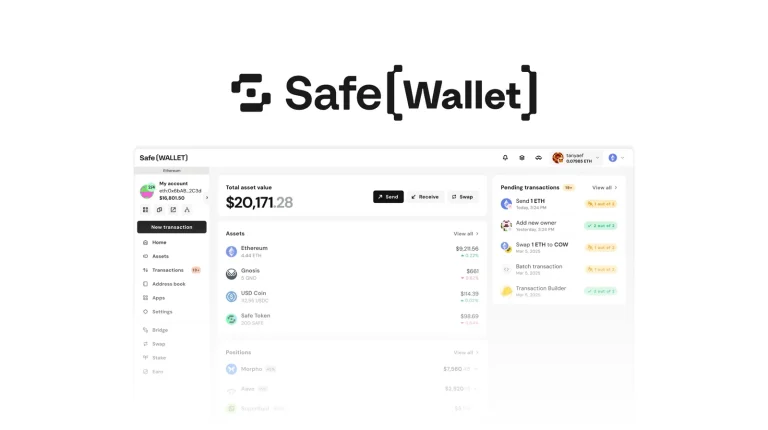
Perpetual DEXs run without intermediaries, so you need a secure non-custodial wallet before you trade. We’ve reviewed the best decentralized crypto wallets that give you full control of your keys and work smoothly with DeFi.
Table of contents
Quick Summary: 5 Best Perpetual DEXs | |
|---|---|
| Hyperliquid | Best for: Seamless Onboarding & High-Speed Trading Leverage: Up to 40x Assets: 100+ crypto perpetual pairs Fees: 0.02% maker / 0.05% taker Daily Trading Volume: ~$10B UX: Ultra-fast execution, non-custodial, no gas fees |
| AvantisFi | Best for: DeFi-Native Perpetuals & Real-World Assets Leverage: Up to 50x leverage on cryptocurrencies, and 100x on forex and commodities Assets: 100+ crypto, forex, RWAs, volatility indices Fees: 0.01% maker / 0.05% taker Daily Trading Volume: ~$195M UX: Composable with Ethereum/Arbitrum, modular vaults, advanced UI |
| dYdX v4 | Best for: Decentralized Liquidity Depth & Trading Volume Leverage: Up to 25x Assets: 50+ major crypto perpetuals Fees: 0.02–0.05% taker / up to -0.015% maker rebates Daily Trading Volume: ~$215M+ UX: High liquidity, Cosmos-based, requires Keplr or compatible wallets |
| Drift Protocol v2 | Best for: Dynamic Liquidity & Advanced On-Chain Trading Leverage: Up to 101x (perps), 5x (spot & swaps) Assets: 30+ crypto perpetual contracts Fees: 0% maker / 0.01%–0.04% taker Daily Trading Volume: ~$424M UX: Built on Solana, Just-in-Time liquidity, fast & efficient interface |
| Aster | Best for: Modular Risk Engine & Capital Efficiency Leverage: Up to 50x Assets: Crypto, forex, synthetic volatility products Fees: 0.015% maker / 0.05% taker UX: Custom appchain logic, flexible collateral, geared for advanced users |
Also see our Best Decentralized Exchanges guide.
1. Hyperliquid – Best for Seamless Onboarding and High-Speed Trading
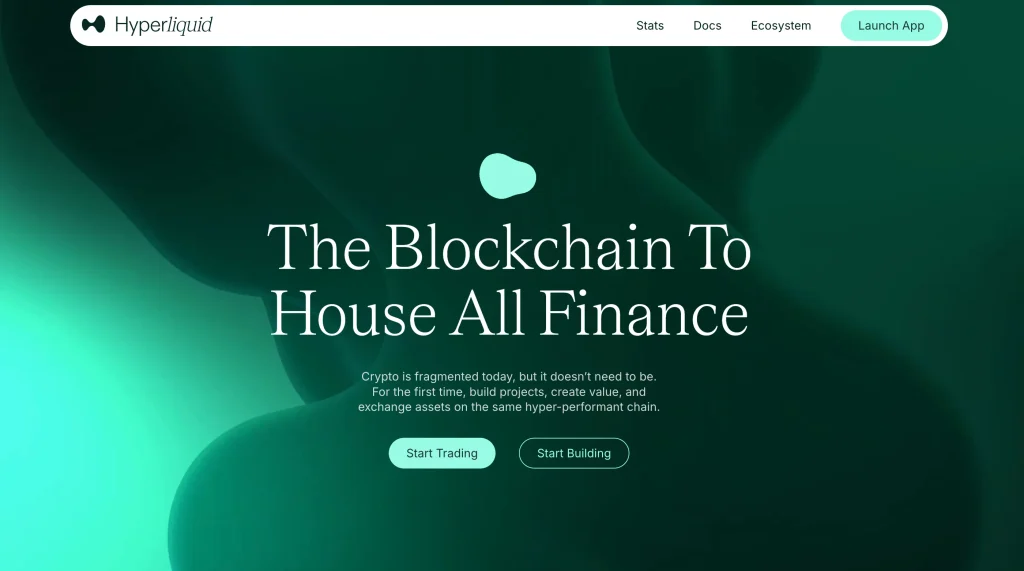
Hyperliquid is a fully on-chain perpetual DEX launched in late 2022 by a pseudonymous team working under the name “Hyperliquid Labs.”
It does not run on Ethereum or any existing layer 2. Instead, it runs on its own purpose-built L1 chain designed for high throughput and very low latency. For you, that means a trading experience close to a centralized exchange without handing over custody.
Security is a core focus. The protocol has passed third-party audits (by Zellic) and uses ZK-proofs for data availability and verification. Hyperliquid is non-custodial by design, so you keep full control of your funds through your own wallet.
There are no gas fees for trading on the Hyperliquid chain, and trading fees are fixed at 0.02% for makers and 0.05% for takers. You know your cost before you click.
On Reddit, Hyperliquid gets praise for its smooth UI, low fees, and responsiveness. Users often note that orders fill fast and, in most cases, without slippage. The criticism centers on the anonymous founding team and occasional UI glitches when new features ship. Some traders also worry that the insurance fund is small compared to larger platforms.
Main Key Features of Hyperliquid | |
|---|---|
| Order Book Type | Fully on-chain order book and matching engine; |
| Base Infrastructure | Runs on a custom-built L1 optimized for speed and scalability; |
| Security Mechanism | ZK-proof enabled state verification; |
| Supported Markets | Supports perpetual contracts for 100+ assets; |
| Incentive Model | Native points and incentive systems for active traders; |
| Margin Options | Cross-margin and isolated margin support; |
| Trading Fees | No gas fees on trades. |
2. AvantisFi – Best for Innovative DeFi-Native Perpetuals
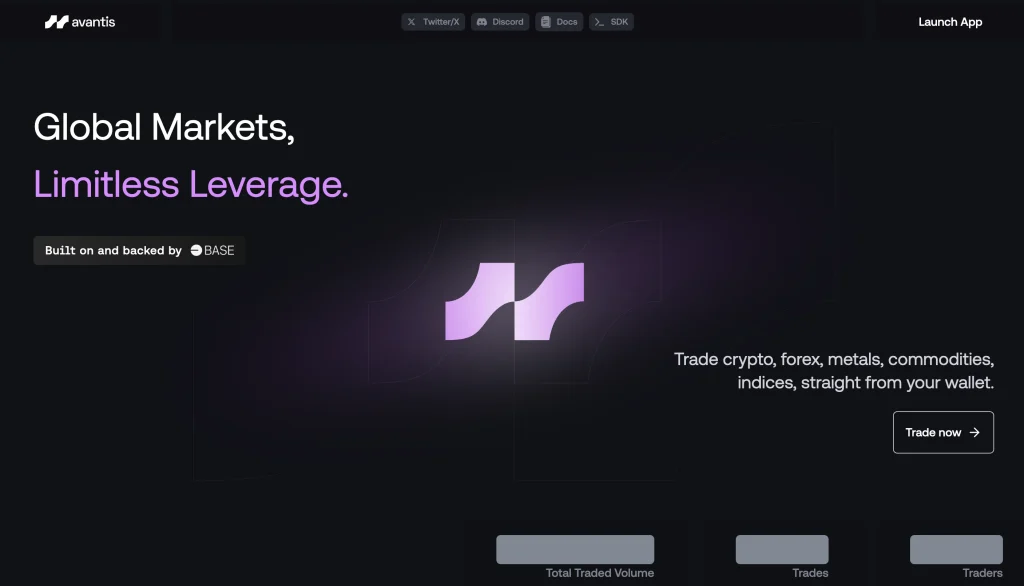
AvantisFi is a decentralized perpetual trading protocol launched in 2023. It is built on Ethereum and Arbitrum and gives DeFi-native traders exposure to a wide range of synthetic and real-world asset perpetuals. A public founding team with backgrounds in quant trading and smart contract development leads the project. It has gained traction quickly thanks to features like on-chain risk management and tokenized vaults.
AvantisFi puts modular security first. It has been audited by firms such as Zokyo and Zellic and uses battle-tested contract frameworks. Real-time risk monitoring and isolated vaults contain the damage if one market fails. You trade through a non-custodial wallet and keep full control of your assets.
Trading fees are competitive: 0.01% maker and 0.05% taker, with no gas fees on Arbitrum and optional rebates based on trading volume.
Reddit users praise the platform for its transparency, real-world asset support, and well-designed UI. The main complaints are thinner liquidity during off-peak hours and occasional oracle lag on newer assets.
Main Key Features of AvantisFi | |
|---|---|
| Deployment Networks | Deployed on Ethereum and Arbitrum, ensuring high composability; |
| Market Coverage | Supports perpetual contracts on crypto, forex, commodities, and real-world assets; |
| Leverage Options | Up to 50x leverage on cryptocurrencies, and 100x on forex and commodities; |
| Liquidity Provision | Smart vaults for passive LPs with customizable risk exposure; |
| Supported Assets & Deposits | Supports USDC, ETH, and ARB deposits from wallets or bridges; |
| Reward Mechanism | Native staking and points system for community rewards; |
| Security Audits | Audited by Quantstamp and Nethermind; |
| Oracle System | Oracle aggregation from Chainlink and RedStone for real-time pricing. |
3. dYdX (v4) – Best for Decentralized Liquidity Depth and Trading Volume
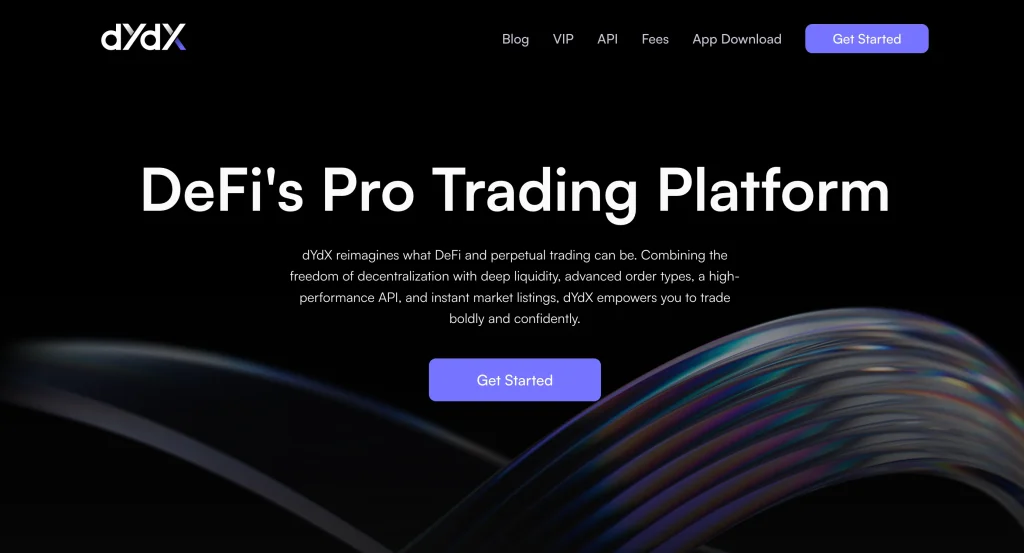
dYdX v4 is the fully decentralized version of the dYdX protocol, launched in late 2023. It marks the protocol’s full migration from Ethereum Layer 2 (StarkEx) to its own custom-built Layer 1 blockchain based on the Cosmos SDK and CometBFT consensus. This version decentralizes the order book, matching engine, and governance, with validators and stakers securing the network.
Founded by Antonio Juliano and first incubated by Paradigm, dYdX is one of the most liquid perpetual DEXs in the world. With v4, the protocol removed every centralized dependency, including off-chain order books. It has been audited by multiple firms, including Informal Systems and Certora, and its smart contracts and core chain modules continue to receive third-party formal verification.
Fees are tiered by 30-day volume, with taker fees from 0.05% down to 0.02% and maker rebates up to -0.015%. There are no gas fees for trading, because the protocol’s treasury subsidizes transactions on the dYdX Chain.
Reddit traders rate dYdX v4 as one of the most reliable platforms for high-volume trading, praising its liquidity, depth, and performance. The complaints: Cosmos wallet onboarding is complex, and cross-chain asset access is limited.
Main Key Features of dYdX (v4) | |
|---|---|
| Blockchain Infrastructure | Runs on a sovereign Layer 1 chain built using Cosmos SDK; |
| Order Book Type | Fully decentralized order book and matching engine; |
| Market Coverage | Supports perpetuals for 50+ major crypto pairs; |
| Leverage Options | Offers up to 25x leverage on most listed assets; |
| Collateral Support | Accepts USDC as the native collateral (IBC-based bridging supported); |
| Governance Model | Protocol governance through DYDX token staking and voting; |
| Validator Network | Open validator set with staking rewards and slashing; |
| Security Measures | Audited by multiple security firms with real-time monitoring integrations. |
4. Drift Protocol v2 – Best for Dynamic Liquidity and Advanced On-Chain Trading

Drift Protocol v2 is a Solana-based perpetual DEX that launched its upgraded version in late 2023. Built to match centralized exchanges on speed and efficiency, it blends automated market makers with an on-chain order book through a “Just-in-Time” liquidity mechanism. Liquidity providers supply deep liquidity at the moment a trade happens, which cuts slippage and makes capital work harder.
Security rests on battle-tested smart contracts, frequent audits (including by Trail of Bits), and Solana’s low-latency infrastructure. Drift is fully self-custodial and requires no identity verification or intermediaries.
Fees are low: maker fees are 0%, and taker fees range from 0.01% to 0.04%, depending on your volume tier.
Reddit discussions strongly back Drift’s liquidity design and user experience. Active traders praise the fast execution and composability with the wider Solana DeFi ecosystem. The main worry is liquidation risk: high leverage plus sudden price swings on thin pairs, especially when the Solana network is congested. Real-time price feeds, cross margin, and built-in risk controls go a long way toward offsetting that.
Main Key Features of Drift Protocol v2 | |
|---|---|
| Blockchain Infrastructure | Built on Solana, offering near-instantaneous execution; |
| Liquidity Model | Hybrid order book + virtual AMM model with “Just-in-Time” liquidity; |
| Leverage Options | Offers up to 101x leverage on supported perpetual futures contracts; |
| Market Coverage | Supports perpetual contracts for 30+ crypto assets; |
| Collateral Support | Accepts USDC and SOL for collateral and deposits; |
| Margin Options | Supports cross margin and isolated margin; |
| Security Measures | Audited smart contracts with integrated real-time price feeds; |
| Trading Fees | No gas fees on Solana transactions; |
| Staking & Governance | Offers staking rewards through DRIFT governance. |
5. Aster – Best for Modular Risk Engine and Capital Efficiency
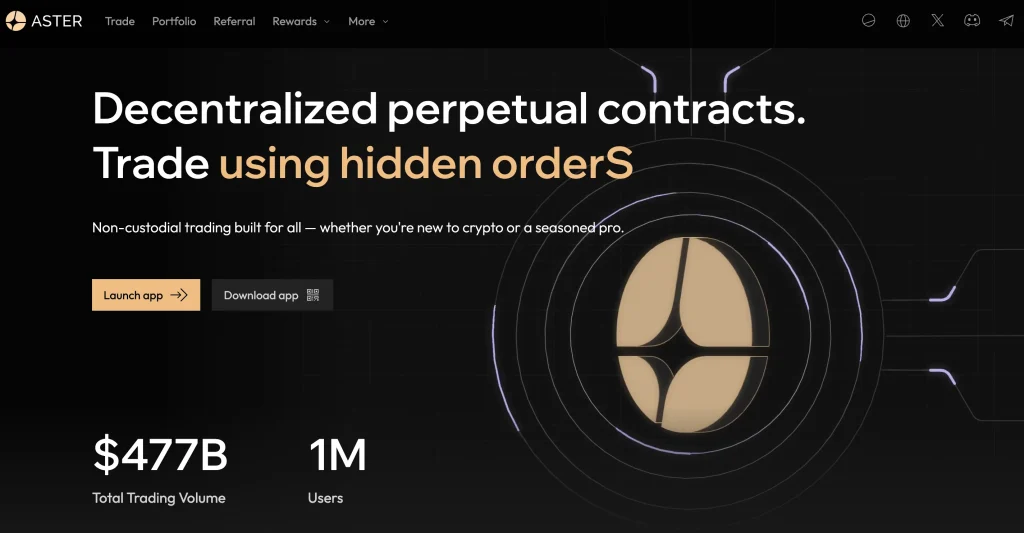
Aster is a newer entry among decentralized perpetual exchanges. It launched in early 2024 and runs on a modular appchain framework built for perpetual futures.
Built on the Celestia DA layer with custom execution environments, Aster targets serious traders and protocols that need programmable risk management, composable smart contracts, and flexible collateral.
Security is designed in from the start. Each market runs as its own isolated contract module, which limits cross-market liquidation risk and contagion. The non-custodial platform uses ZK-verified price feeds and bonded oracle relayers to prevent oracle manipulation. Salus Security and Zellic audited the code before launch, and ongoing bug bounties keep white-hat researchers looking for flaws.
Aster supports perpetual trading across synthetic crypto, forex, and volatility index assets, with up to 50x leverage and fully modular funding rates per market. Trading fees are competitive at 0.015% maker and 0.05% taker, and gas fees are negligible thanks to efficient rollup settlement.
Reddit sentiment is cautiously optimistic: advanced users like Aster’s risk primitives and flexibility, while others criticize its niche UX and thin onboarding resources for non-technical users.
Main Key Features of Aster | |
|---|---|
| Infrastructure Stack | Modular appchain built with Celestia + Cosmos SDK; |
| Smart Contract Support | Custom market deployments using programmable smart contracts; |
| Market Coverage | Supports perpetual contracts for crypto, forex, and synthetic indices; |
| Leverage Options | Up to 50x leverage with adaptive funding rates; |
| Collateral Support | Accepts collateral in USDC, USDT, ETH, and protocol-native AST token; |
| Trading Features | Supports limit orders, cross margin, and sub-account trading; |
| Risk Management | Isolated markets reduce liquidation risks and increase capital efficiency; |
| Security Measures | Audited by Spearbit and Zellic with continuous monitoring; |
| Fee Structure | Near-zero gas fees with rollup settlement. |
Methodology: How We Selected the Best Perpetual DEXs
To build this list of the 5 best perpetual DEXs, we ran an in-depth evaluation of over 30 platforms across key technical and trading dimensions. We focused on measurable performance, user experience, and system design.
Key criteria included:
- Liquidity and Market Depth: We analyzed each platform’s open interest and historical daily trading volume, and checked whether it could absorb large orders without wider spreads or higher slippage.
- Leverage Options and Trading Tools: We favored DEXs that support up to 50x leverage, with advanced order types, margin systems, and virtual AMMs that improve capital efficiency.
- Fees and Cost Efficiency: We compared trading fees, gas fees, and hidden costs that eat into real trader P&L. We also looked for incentives that reward traders fairly.
- Security and Infrastructure: We only included protocols with audited smart contracts, proven uptime, and risk management systems. We gave preference to modular or appchain designs that reduce single points of failure.
- User Accessibility and Wallet Support: We rated ease of use on onboarding flow, UI clarity, and support for wallets like Coinbase Wallet, Keplr, or MetaMask.
By combining technical metrics with user sentiment and audit records, this method makes sure each DEX on the list can handle modern perpetual trading at scale.
FAQ
What is a Perpetual DEX?
A perpetual DEX (decentralized exchange) is a non-custodial trading platform where you trade perpetual futures contracts without intermediaries. These exchanges run 24/7 markets for crypto and synthetic assets, mirroring traditional futures but with no expiry date.
How Does a Perpetual DEX Work?
Perpetual DEXs use smart contracts and price feeds to run perpetual markets. You can open long or short positions with leverage, settle directly on-chain, and rely on automated market makers or order books for pricing and liquidity.
How Do Perpetual DEXs Differ From Traditional DEXs?
Traditional DEXs handle spot trading, where you swap one asset for another. Perpetual DEXs let you trade perpetual futures contracts, which are synthetic positions with no expiry. They support leverage, funding rates, and long or short positions, so the focus is derivatives rather than asset swaps.
Why Are Perpetual DEXs Popular Among Leverage Traders?
Perpetual DEXs give you leveraged, real-time exposure to asset prices without holding the underlying asset. Platforms with high open interest and deep books can absorb large positions with minimal slippage, even in volatile markets.
Do Decentralized Perpetual Exchanges Require Identity Verification (KYC)?
No, most decentralized perpetual exchanges do not require identity verification. You trade from a self-custodial wallet with no KYC, keeping full control over your funds and your privacy.
What are the Advantages Of Perpetual DEXs Over Centralized Exchanges?
Perp DEXs offer self-custody, no KYC, transparent smart contracts, and permissionless access. They reduce risks like fund seizure or fraud, and you no longer depend on a centralized exchange for execution or custody.
How To Perform Leverage Trading On DEXs?
To start leverage trading, connect a Web3 wallet, deposit collateral (e.g., USDC), choose your leverage level (e.g., 5x–50x), and open a perpetual position. The DEX handles liquidation automatically through smart contracts, so know your liquidation price before you enter.
How to Choose a Reliable DEX?
Look for strong security audits, deep liquidity, low fees, transparent teams or governance, and sound funding rate mechanisms. Check for cross-margin support, limit orders, and consistent uptime.
Final Thoughts
You now have the best perpetual DEXs to explore, chosen on real performance metrics: liquidity, fees, leverage, and the ability to handle market volatility with speed and efficiency.
Whether you care most about low-cost execution, capital-efficient design, or earning protocol-native yield, each DEX on this list makes a strong case.
But remember: in decentralized finance, you don’t rely on intermediaries; you’re in control. You own the opportunity, and you own the risk. Nobody can freeze your funds, but nobody can reverse a bad trade or a liquidation either.
Also, this content is not financial advice. Perpetual trading is high risk, especially with leveraged positions. Do your own research, manage your risk, and never trade more than you can afford to lose.
How I review: Reviewed by Andrei B. I buy the hardware wallets I review, test every product myself and score it on security, UI/UX, ease of use, price and supported coins. Before I publish, I also check recent user reviews and any hack reports.
The whole process is explained on the How We Review page. You can read more about me, or contact me with corrections, from the links at the bottom of this page. For general safety advice, see the FTC guide to cryptocurrency scams.