
Both of these are quick proof-of-stake chains chasing the same prize, which is being the place people actually pay each other. If most of your day already happens in Telegram and you’d like the least fuss when holding or sending crypto from inside a chat, TON is the one I’d point you to. If you care more about having lots of wallets, apps and hardware wallet options to choose from, go with Solana.
There’s a naming wrinkle first. TON’s coin isn’t Toncoin anymore, because a community vote turned it into Gram, ticker GRAM, on June 15, 2026. The chain itself kept the TON name, and nobody’s balance or address moved.
Below you’ll find how each network is built, what has gone wrong on both, how easy they are to use, what they charge, how fast they settle, what staking costs and which wallets carry them. I took every number from official docs or from each project’s own status posts in September 2026.

Table of contents
TON vs Solana at a Glance
TON and Solana side by side | |
|---|---|
| <strong>Coin</strong> | TON’s coin is Gram (GRAM), and it was Toncoin (TON) until June 15, 2026. <br> Solana’s coin is SOL. |
| <strong>How blocks get agreed</strong> | TON runs proof of stake on Catchain 2.0, its take on the Simplex protocol. <br> Solana runs proof of stake on Proof of History plus TowerBFT, and Alpenglow should arrive in Q3 2026. |
| <strong>Pace</strong> | TON has made a block roughly every 400ms since April 9, 2026. <br> Solana has run 300ms slots since August 25, 2026. |
| <strong>Time to final</strong> | TON settles in roughly 0.6 to 1 second. <br> Solana needs roughly 12.8 seconds under TowerBFT, and Alpenglow is aiming for 150ms. |
| <strong>Sending cost</strong> | TON charges about 0.00039 GRAM a transfer, a level validators vote on (September 2026). <br> Solana charges 5,000 lamports for each signature, and an optional priority fee on top follows demand. |
| <strong>Handling growth</strong> | TON splits its workchains into shards that multiply or merge as traffic changes. <br> Solana lifted its block limit to 100M compute units in July 2026. |
| <strong>Contract code</strong> | TON contracts are written in Tolk, with FunC now legacy, and run on the TVM. <br> Solana programs are written in Rust and run on the SVM. |
| <strong>How big</strong> | TON reports 389 validators and 2.3M wallets active each month (ton.org). <br> Solana reports 50M addresses active each month (solana.com). |
| <strong>Bad days lately</strong> | TON halted in August 2024 and June 2025, then its shardchains slowed in July 2026. <br> Solana hasn’t had an outage since February 2024. |
| <strong>Where to hold it</strong> | TON works in Wallet in Telegram, Keeper (which used to be Tonkeeper) and Ledger. <br> Solana works in Phantom, Solflare and Ledger. |
| <strong>Who it fits</strong> | TON fits Telegram regulars making lots of small payments. <br> Solana fits DeFi users, traders and anyone who wants the most apps. |
So What Is TON?

The Open Network, or TON, is a layer 1 chain. According to ton.org, Telegram and the open-source community develop it, and Gram was the name the network’s founders gave its coin back in the original TON White Paper.
For years people called it Toncoin. Then in June 2026 a vote went 81.22% in favor of reviving Gram, and the switch happened at 12:00 UTC on June 15, 2026. Nobody had to swap or migrate anything, and the official channel said plainly that any site telling you to “claim GRAM” or “migrate TON” is a scam, a warning I’d take seriously.
Scaling out is the whole design idea. Coordination lives on a masterchain, ordinary accounts live on a basechain, and that basechain breaks into shards whenever traffic climbs. Even your wallet is a smart contract here rather than a bare account, which isn’t how most chains do it.
What Stands Out About TON
- Blocks have come roughly every 400ms since Catchain 2.0 went live on April 9, 2026, where they used to take about 2.5 seconds.
- One masterchain block is enough for finality, usually in under a second.
- Sending costs about 0.00039 GRAM, and ton.org says the fee is fixed and ignores how busy the network gets.
- Plenty of Telegram runs on it: Mini Apps, collectible usernames, gifts you can turn into NFTs, and Stars you can buy with Gram.
- Contracts get written in Tolk and executed by the TON Virtual Machine (TVM).
And What Is Solana?
Solana is a layer 1 chain built for raw throughput. Solana Labs switched on Mainnet Beta on March 16, 2020, and it’s been tuning for speed ever since.
Proof of History is the trick behind that pace. It works like a shared clock, so validators spend less time arguing about which transaction came first, although it’s being phased out: Alpenglow swaps in a new consensus layer, aims for finality in roughly 150ms and should land in Q3 2026.
Curious how Solana stacks up elsewhere? I’ve also run it against Polygon in our Polygon vs Solana comparison and against Polkadot in Polkadot vs Solana.
What Stands Out About Solana
- Slot time fell from 400ms to 300ms on August 25, 2026, and 200ms is where it’s headed.
- You pay 5,000 lamports for each signature, and half of that gets burned.
- By Solana’s own count, 50M addresses are active each month and 3.5B transactions go through.
- Developers use Rust, and programs run on the Solana Virtual Machine (SVM).
- Frankendancer, a second validator client, is already live on mainnet-beta.
TON vs Solana on Security and Outages
Each of these networks has stalled at least once. To their credit, both explain in public what broke, and that makes the risk far easier to size up.
February 6, 2024 was Solana’s last big outage. Finalization stopped at 09:53 UTC and didn’t come back until 14:55 UTC, roughly five hours, because a bug in the LoadedPrograms function sent validators into an infinite loop. Since then, the home page claims the network “has maintained 100% uptime since February 2024, including when a routing failure took nearly 29% of network stake offline.”
TON’s trouble is fresher. On August 28, 2024, the status channel explained that over 20 million transactions in two days had swamped garbage collection on many validators until they fell out of consensus with each other, so validators restarted in unison at 04:00 UTC and had block production “restored and stable” by 06:21 UTC.
It happened again on June 1, 2025. A fault in the masterchain dispatch queue stopped block creation, with the halt posted at 12:51 UTC and the fix at 13:32 UTC.
Then came July 13, 2026. A planned mainnet benchmark pushed TON beyond four shardchains, and shard block production crawled from about 09:30 UTC to 11:12 UTC. The masterchain kept going, and validators have since voted to limit the network to 4 shardchains rather than 16 for the time being.
Solana has the edge on client diversity. Frankendancer blends Firedancer, a new client written in C, with the existing Agave client, and it’s already on mainnet-beta, so a single bad bug is less likely to freeze everything.
Who runs TON is also in flux. The official channel said in May 2026 that Telegram would take over from the TON Foundation as the network’s driving force and become its largest validator. You might read that as stability or as concentration, and I don’t think either view is unreasonable, so decide for yourself.
Which Is Easier to Use, TON or Solana?
For Telegram users, TON is the easier start. Wallet in Telegram lives right inside the app and comes in two halves: the Crypto Wallet, which is custodial so the service looks after your keys, and the DeFi Account, which is self-custodial and handles staking, apps and NFTs on TON.
There’s a catch with the custodial half. By Wallet in Telegram’s own account, the Crypto Wallet “is not available in the US, UK, and other Restricted Jurisdictions.” Not sure what custodial really means for you? Our explainer on custodial vs non-custodial wallets walks through who controls the keys.
Wallet choice is where Solana pulls ahead. Most people land on Phantom or Solflare, and Ledger suggests pairing its hardware with one of those two. Phantom covers Solana, Ethereum, Bitcoin, Base, Polygon and a handful more, though TON isn’t among them.
Newcomers to TON often get caught by the comment field, also called a memo. Lots of exchanges share one deposit address between customers and sort payments by that comment, and TON’s own docs warn that a deposit without the right identifier “may be lost.” Some wallets can’t even add a comment, so check yours before sending anything.
One rule holds on either chain. Choose the wrong network or paste a wrong address, and your funds are gone for good, with nobody able to reverse it. If you’re shaky on how addresses work, start with our piece on what a wallet address is.
TON addresses don’t look like most. In the friendly format you’ll see 48 characters, frequently beginning with UQ, and the workchain is baked in. Copy and paste them every time.
TON vs Solana Fees and Speed
On both networks, fees are small enough that you’ll rarely think twice about sending. How each one arrives at its fee is another story.
On TON, validators vote the fee levels in, and ton.org says those fees “are fixed and do not depend on network load.” Following a 6x cut in spring 2026, sending Gram costs about 0.00039 GRAM and sending USDt about 0.001 GRAM (September 2026), and when the cut was announced the official channel pegged a transfer at about $0.0005.
Solana’s base charge is 5,000 lamports a signature. A lamport is 0.000000001 SOL. On top of that you can attach a priority fee, worked out from a compute unit price and limit, and that portion climbs when things get busy, so I’d treat any Solana fee you see quoted as a rough guide and check it on the day.
Speed is closer than people assume. TON turns out a block about every 400ms and ton.org lists about 0.6 seconds to finality, whereas Solana’s 300ms slots sit alongside roughly 12.8 seconds of TowerBFT finality. Alpenglow is meant to bring that down to about 150ms, but it isn’t live yet.
Big throughput numbers deserve a pinch of salt. TON did hit 104,715 transactions per second on October 31, 2023, but that ran on a separate test network of 256 servers, not on mainnet.
Your wallet matters too. TON’s docs tell apps to move to streaming APIs before sub-second updates show up, so an older wallet can still feel sluggish on a fast chain.
What TON and Solana Really Cost You
There are three costs to think about. You pay transaction fees, you pay to keep data on chain, and you lock up capital when you stake.
Storage is billed in opposite ways. Solana wants each account to hold a rent-exempt deposit, calculated as (account_size + 128) x 3,480 lamports per byte-year x 2 years, and you get it back when the account closes; TON bills storage as time passes, freezes an account that falls behind, and deletes it once the debt reaches a set limit.
Small holders can stake on both. Running your own TON validator needs 300,000 GRAM as a technical minimum and about 1,000,000 GRAM in practice, which is why ordinary holders use liquid staking (from 1 Gram, says ton.org) or a third-party service instead.
Over on Solana, staking is available in the Ledger Wallet app through third-party providers. SOL inflation began at 8%, drops by 15% each year and levels off at 1.5%. For options on either coin, see our roundup of the best crypto staking platforms.
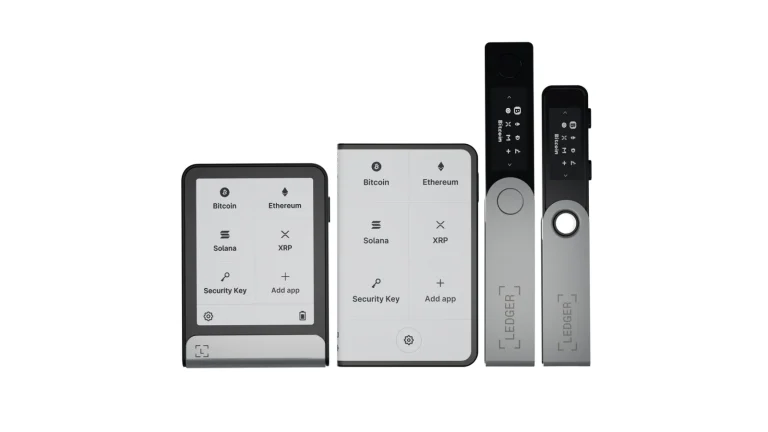
Hardware support is good on both sides. Ledger’s app handles TON and SOL, with buying, sending, receiving, swapping and staking all routed through third-party providers, and our Ledger Nano X review looks at the device in detail.
Keeper, the app you may still know as Tonkeeper, has grown to cover TRON, Ethereum, Arbitrum, Base, BNB Chain and Bitcoin. Solana isn’t on that list, which annoys me a little. Hold both coins and you’ll likely end up with two wallets, or one Ledger plus two companion apps.
TON and Solana: Pros and Cons
The Good and Bad of TON
The Good and Bad of Solana
TON or Solana: Which One Suits You?
Chatting in Telegram all day and sending friends small sums? Go with TON, since the wallet is already sitting in the app and the fees don’t budge.
Solana is my pick if you’re after DeFi, trading or the biggest range of wallets. It has the older ecosystem, and Phantom, Solflare and Ledger all back it.
Planning to sit on a large balance for years? A Ledger device handles either chain fine. I’d still lean Solana for that job, given its longer outage-free stretch and that second validator client.
TON vs Solana FAQ
Are Toncoin and Gram the same coin?
Yes. At 12:00 UTC on June 15, 2026, TON’s native coin changed its name from Toncoin (TON) to Gram (GRAM), once 81.22% of the vote had come out in favor. Your balance and address stayed exactly as they were, and you didn’t need to swap or migrate anything.
Does TON settle faster than Solana?
Right now, yes. TON gets to finality in about a second, while Solana under TowerBFT needs roughly 12.8 seconds. Alpenglow is supposed to close that gap with a target of about 150ms, but Solana hasn’t switched it on yet.
Is TON or Solana cheaper to use?
Neither will hurt your wallet. Sending on TON costs about 0.00039 GRAM (September 2026) no matter how busy things are, and Solana takes 5,000 lamports per signature plus an optional priority fee that grows with demand.
Has the TON network ever stopped?
Yes, a few times. Blocks stopped on August 28, 2024, and June 1, 2025, and its shardchains slowed down on July 13, 2026, with the TON status channel posting the cause and the fix on each occasion.
Will one Ledger hold both TON and Solana?
It will. Ledger’s app supports both TON and SOL, and for Solana apps Ledger suggests pairing the device with Phantom or Solflare.
Does sending GRAM to an exchange need a memo?
Usually. Plenty of exchanges run one shared deposit address and match your payment by its comment, so if that comment is missing or wrong the deposit may be lost. Copy it exactly.
My Verdict: TON or Solana?
TON takes the prize for finality, predictable fees and an easy way in for anyone on Telegram. What you give up is a recent string of incidents, a shard cap that’s still in place since July 2026, and a network where Telegram’s say keeps growing.
Solana comes out ahead on the size of its ecosystem, the number of wallets and a tidier uptime record since February 2024. Keep your crypto mostly outside Telegram and I think Solana is the safer default; if what you want is quick, cheap payments inside Telegram, TON is the better fit.
This article is for general information only and is not financial, legal, or investment advice. Prices and features change; check the vendor’s official page before buying.