
Ethereum is growing fast, and so are its limits. Gas fees spike, transactions queue up, and both developers and users feel the squeeze. Optimistic rollups ease some of that pressure, but they assume transactions are valid until someone proves otherwise. That delays finality and leaves risk on the table in decentralized exchanges and beyond.
As more capital moves onto blockchain networks, the case for scaling solutions with real-time validation, stronger data integrity, and lower costs only gets stronger. Users want platforms that run existing Ethereum smart contracts, keep data available, and prove every transaction with validity proofs instead of assumptions.
In this guide, we’ve picked the best ZK rollup projects of 2026: networks that execute transactions, bundle them off-chain, and deliver on security, cost, and scalability.
Whether you’re building in DeFi or scaling infrastructure, these are the top ZK rollup projects reshaping blockchain technology.
Table of Contents
Quick Summary: 5 Top ZK Rollup Projects List | |
|---|---|
| Linea | Best For: Overall ZK-rollup project in 2026 Native Token: Not yet launched TVL: ~$578 million |
| Immutable zkEVM | Best For: Blockchain gaming ecosystem Native Token: IMX TVL: ~$13.1 million Market Cap: ~$3.93 billion |
| zkSync Era | Best For: Universal EVM-compatible scaling Native Token: ZK TVL: ~$55 million Market Cap: ~$456 million |
| Polygon zkEVM | Best For: Ethereum-like developer experience with ZK security Native Token: POL TVL: ~$306 million Market Cap: Part of broader Polygon (POL, ex. MATIC) ecosystem |
| Taiko | Best For: Decentralized Ethereum-equivalent rollup technology Native Token: TAIKO TVL: ~$2.83 million Market Cap: ~$73 million |
1. Linea, Best Overall ZK-Rollup Project in 2026
Linea ranks first as the best overall ZK rollup project. It was built by ConsenSys, the Ethereum-native company Joseph Lubin founded in 2014 and the team behind MetaMask and Infura.
Linea is a Type 2 zkEVM, which means existing Ethereum smart contracts run on it without code changes. Since its mainnet alpha in July 2023, it has reached 6,200 transactions per second (TPS), against Ethereum’s 15 to 30, and has cut gas fees by 15 to 30 times. Its sharded ZK-rollup design targets 100,000 TPS down the line.
Security is the core focus. Linea uses zk-SNARK proofs through its custom Arcane and Vortex systems, adds quantum-resistant cryptography, and runs Multi-Prover redundancy so a single prover failure can’t take the network down. The project has not suffered any hacks, and the full L2 state can be rebuilt from Ethereum (L1) data. In practice, your funds and history don’t depend on Linea’s own servers staying online.
As of August 2025, Linea secured over $578 million in total value, hosted more than 350 live applications, and plugged straight into MetaMask, Infura, and Truffle. For users, that means the wallet you already have works on day one.
Governance and prover infrastructure remain partly under ConsenSys control, so decentralization is still a work in progress. Even so, developer adoption is strong and the community is active. Reddit users praise its smooth contract migration, low fees, and solid tooling.
2. Immutable zkEVM, Best for Blockchain Gaming Ecosystem
Immutable zkEVM ranks second, and it’s our pick for gaming. Founded in 2018 in Sydney, Australia, by Robbie Ferguson, James Ferguson, and Alex Connolly, Immutable first gained traction with Immutable X, a StarkWare-based Layer-2 for NFTs and games.
Optimistic rollups are the other half of this story. We set two of them against each other in Base vs Optimism.
Immutable zkEVM launched in early access in January 2024. It’s a gaming-focused ZK rollup built with Polygon technology, offering full EVM compatibility, low costs, and Ethereum-level security. Studios also get Immutable’s own toolkit (Passport, Orderbook, Checkout) and ready-made smart contract templates, so they can ship a game without building wallet onboarding and a marketplace from scratch.
During early access, 200+ well-funded games, including Guild of Guardians and Cool Cats, committed to the chain. By early 2025, Immutable opened permissionless smart contract deployment, so any developer can deploy without waiting for approval.
In April 2025, Immutable announced the consolidation of Immutable X into Immutable zkEVM. Moving hundreds of millions of dollars in assets and games onto one chain gave Web3 gaming a single home, with players, liquidity, and tooling in one place.
3. zkSync Era, Best for Universal EVM‑Compatible Scaling
zkSync Era takes third place as the best general-purpose ZK rollup. Matter Labs (co-founded by Alex Gluchowski) started the project in 2020, rebranded zkSync 2.0 to zkSync Era in February 2023, and has since delivered full EVM compatibility. Nearly all existing Ethereum smart contracts run on it unmodified.
Throughput is high. Early benchmarks cited about 2,000 TPS with block times near 1.3 seconds, and the architecture is evolving into an “Elastic Chain” so individual apps can scale on their own chains.
The 2025 roadmap targeted 10,000 TPS and sub-$0.0001 fees on ERC-20 transfers. In March 2025, version 4.0 added batch proof optimizations that cut ZK rollup gas costs by up to 40%, a real saving at a time when Layer-2 fees were climbing.
Governance and security matter here. zkSync Era migrated to a new Gateway settlement layer, though the team has manually paused the proof system on occasion (late July 2025, for example). ChonkyBFT, its committee-based BFT consensus protocol, shows the project’s focus on low latency and simpler consensus.
On Reddit and developer forums, users highlight zkSync Era’s smooth smart contract migration, strong security model, and improving batch efficiency.
4. Polygon zkEVM, Best for Ethereum-Like Developer Experience with ZK Security
Polygon zkEVM earns fourth place as the best ZK rollup for replicating the Ethereum developer experience while keeping the performance and security benefits of zero-knowledge proofs.
Built by Polygon Labs and launched in March 2023, it was the first ZK rollup to offer full EVM equivalence: smart contracts, tooling, and infrastructure built for Ethereum run with no code changes (zkSync Era, by contrast, needed minor compatibility tweaks). For a team moving off Ethereum, that means less rewriting and fewer surprises.
The rollup combines zk-SNARKs, zk-STARKs, and custom zkASM logic to generate validity proofs efficiently. Those proofs batch and verify multiple transactions off-chain with Ethereum L1 finality. The result: gas fees over 90% lower than Ethereum, with average transaction costs around $0.005 as of mid-2025. Polygon zkEVM publishes transaction data and ZK proofs on-chain for data availability, backed by a governance system of multi-sigs and timelocks.
On Reddit, some community members question the marketing: “Polygon lied about being EVM-equivalent, their zkEVM is actually EVM-compatible.” The distinction matters. “EVM equivalence” means perfect parity with Ethereum, while “EVM-compatible” leaves room for subtle differences. That’s worth knowing before you port a complex contract.
5. Taiko, Best for Decentralized Ethereum-Equivalent Rollup Technology
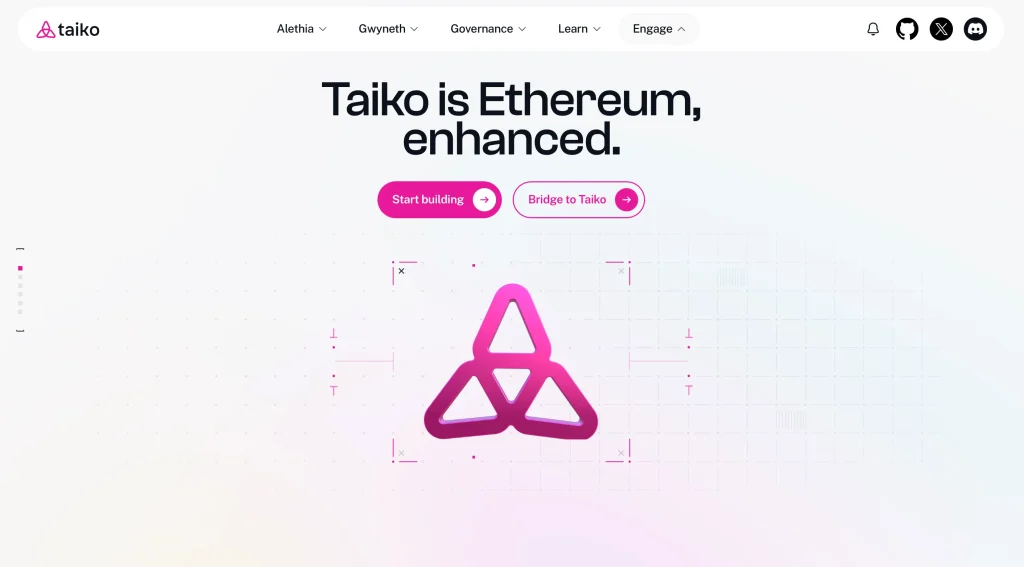
Taiko is the best pick for true decentralization with full Ethereum equivalence. Most Layer-2 networks rely on a centralized sequencer. Taiko instead runs a based, permissionless rollup where Ethereum Layer-1 validators sequence the blocks. That strengthens data integrity and censorship resistance, and it keeps Taiko aligned with Ethereum’s own sequencing logic.
Founded by Daniel Wang in March 2022, Taiko moved quickly through public testing, starting with Alpha-1 in December 2022 and finishing four major testnet phases in 2023. It introduced the Based Contestable Rollup (BCR) and Based Booster Rollup (BBR) frameworks, designed to improve fairness, throughput, and protocol safety.
On security, Taiko runs a multi-proof architecture. It started with TEE-based validity proofs and has been adding zkVM-based cryptographic proofs from partners like Succinct and RISC Zero. As of late 2024, about 3% of rollup blocks used ZK proofs. The roadmap projected 10 to 25% ZK coverage by March 2025, and Taiko hit it: roughly 21% of all rollup blocks are now validated with zero-knowledge proofs, steady progress toward full ZK-rollup status.
On Reddit, community sentiment praises Taiko’s blend of decentralization and integrity. One user noted: “Taiko stood out for eliminating centralized sequencers, preserving Ethereum’s core ethos.”
ZK Rollups vs. Optimistic Rollups: How They Differ and What to Choose
Layer-2 scaling is central to Ethereum’s future, so the choice between ZK rollups and Optimistic rollups matters more than ever.
Both cut transaction costs, raise throughput, and scale the chain by processing transactions off-chain. But they differ in how they prove correctness, how fast you get finality, and which apps they suit best.
ZK Rollup | Optimistic Rollup | |
|---|---|---|
| Proof Mechanism | Validity proofs (e.g., zk-SNARKs or zk-STARKs) are used to verify every batch of transactions instantly. | Uses fraud proofs, where transactions are assumed valid unless challenged during a dispute window. |
| Security | High. Each batch is cryptographically verified before being accepted on Ethereum. | Medium. Relies on honest actors to challenge invalid transactions during 7 days. |
| Scalability | High. Supports bundling thousands of transactions off-chain into a single proof. | High. Also supports batching, but dispute resolution adds overhead. |
| Speed / Finality | Medium. Finality is immediate, but proof generation introduces some delay. | High. Faster transaction speeds for users, but finality is delayed (typically 1 week). |
| Cost Efficiency | Medium. Gas fees are significantly lower than L1, though proof generation is resource-intensive. | Low cost. No ZK proof generation, so fees are even lower in many cases. |
| Complexity | High. Requires advanced ZK rollup technology, which is harder to implement. | Medium. Simpler architecture and more mature tooling. |
| Data Availability | Strong. Transaction data and validity proofs are published on-chain. | Strong. It also posts data on-chain, but it depends on challenge-response games. |
| Privacy Potential | High. Supports private transactions and advanced use cases like identity and shielding. | Low. Primarily designed for public execution without privacy layers. |
Not sure which one fits your project? Here’s how the two stack up against real-world needs:
| ZK Rollups | Immediate transaction finality without waiting periods. Strong data integrity and provable correctness. Better suited for apps needing privacy, identity layers, or sensitive data. To reduce gas fees while preserving security guarantees. Ideal for DeFi protocols, stablecoins, and apps that require guaranteed validity and instant settlement. |
| Optimistic Rollups | Faster user experience with near-instant transaction execution. Lower development complexity and mature tools. Best for building decentralized exchanges or automated market makers with minimal overhead. Suitable for broader blockchain networks that tolerate delayed finality. When building dApps that do not rely on zero-knowledge proofs or enhanced transaction privacy. |
Methodology: Our Criteria for Selecting the Best Zero-Knowledge Rollups in 2026
To pick the top ZK rollup projects in 2026, we judged each one on real, measurable impact: security, scalability, decentralization, and actual adoption. We applied the same criteria to every project:
- Off-chain transaction execution: We favored networks that execute transactions off Ethereum Layer-1 while proving correctness with validity proofs.
- Support for existing Ethereum smart contracts: Full compatibility with existing contracts lets developers move over without rewriting, so those projects scored higher.
- Gas fees and cost-efficiency: Solutions that cut transaction costs and gas fees while keeping Ethereum-level security ranked higher.
- Transaction speed and throughput: We looked at speed, throughput, and time to finality, especially when bundling high volumes of transactions off-chain.
- Security and cryptographic integrity: Strong cryptographic proofs (zk-SNARKs or zk-STARKs) and resistance to centralized control or censorship were key.
- Data availability and transparency: We checked whether rollup blocks include full transaction details and whether the rollup publishes data availability proofs on-chain.
- Decentralization and trust assumptions: Rollups that don’t depend on a single entity, or on challenge-based security (where optimistic rollups assume transactions are valid), scored higher.
- Scalability and efficiency of rollup layers: We favored projects that help scale broader blockchain networks, support many off-chain transactions, and improve efficiency.
- Real adoption and developer ecosystem: We considered support for automated market makers, decentralized exchanges, and other high-impact use cases already running in real-world blockchain apps.
FAQ
What are ZK rollups?
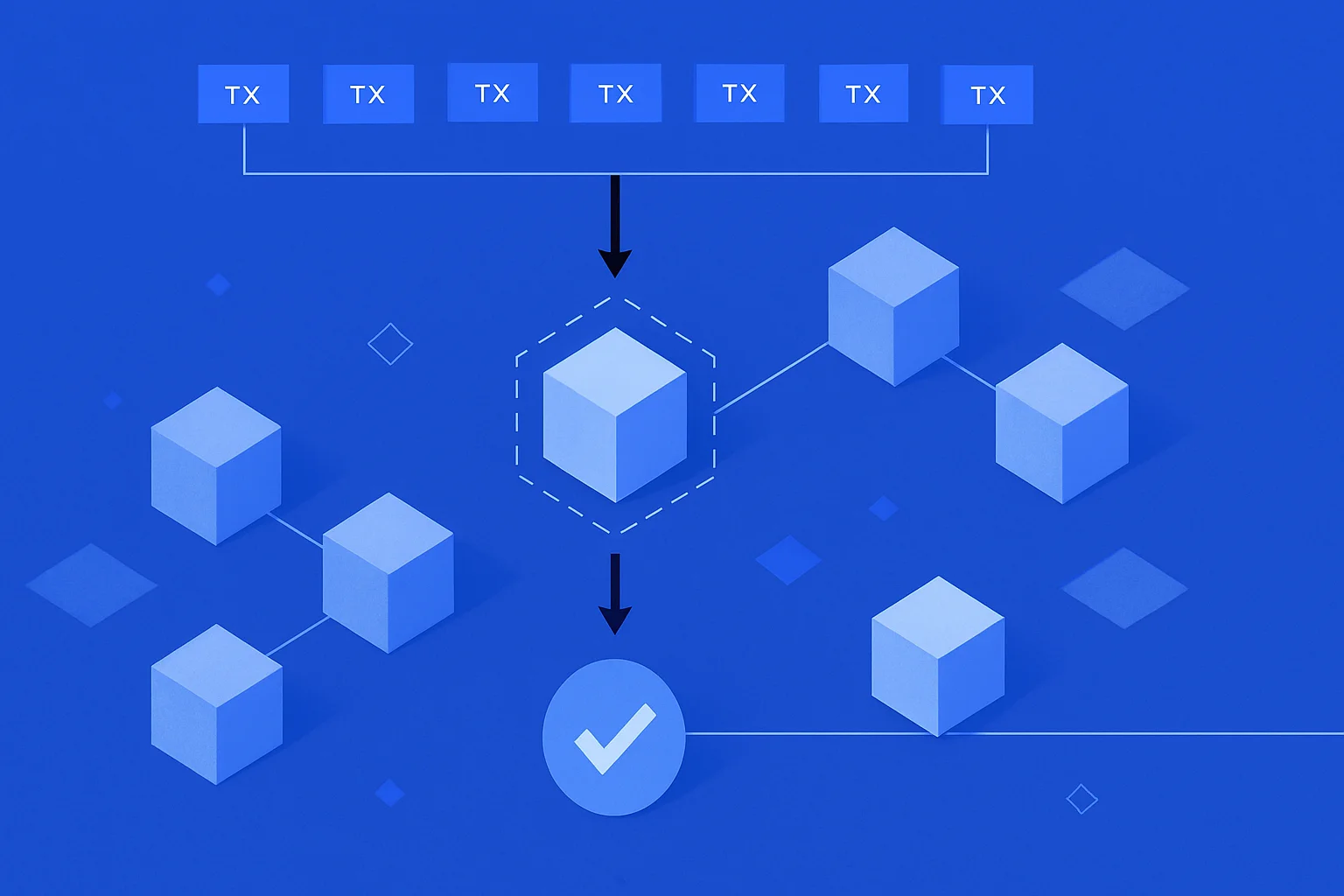
ZK rollups are scaling solutions that bundle many transactions off-chain, generate zero-knowledge proofs (ZK proofs), and submit a single validity proof to the main blockchain. That cuts transaction costs, raises throughput, and guarantees data integrity without exposing sensitive data.
Which blockchain uses ZK-rollups?
Ethereum supports ZK rollups through networks like zkSync Era, Polygon zkEVM, Linea, and Scroll. These systems process transactions off-chain and verify them on Ethereum with ZK proofs. Ethereum’s smart contract support is what makes wide ZK rollup adoption possible.
How do ZK rollups verify transactions off-chain while maintaining security?
ZK rollups generate zero-knowledge proofs that mathematically confirm a batch of transactions was processed correctly. The proofs are created off-chain and submitted to Ethereum Layer-1, which verifies the batch without re-executing every transaction. The result is faster finality, more efficient transactions, and stronger security, with no need to trust a single central party.
Why are ZK rollups critical for scalable and fair blockchain applications?
ZK rollups cut transaction fees, support fair trade execution, and enable efficient cross-chain communication by moving transactions off the Ethereum mainnet. Some use a custom virtual machine or familiar programming languages so users and developers can work with them easily. Because every transaction is validated, ZK rollups help build efficient, private, and future-proof applications.
What coins use ZK rollups?
Coins like IMX, ZK, and TAIKO are native to top ZK rollup projects. ETH is also widely used for gas and transactions across ZK rollups.
Are ZK rollups possible on Bitcoin?
In theory, yes. In practice, ZK rollups aren’t feasible on Bitcoin because of its limited smart contract functionality. Bitcoin has no native support for ZK rollup contracts or validity proofs. Some experimental research explores sidechains or external ZK integrations, but none are live.
Final Thoughts
We hope this guide helped you find the top ZK rollup projects shaping the next wave of Ethereum scaling. These platforms don’t just promise improvements on paper. They deliver immediate transaction finality, lower gas fees, and smooth support for existing Ethereum smart contracts today.
By using ZK rollup contracts, batching off-chain transactions, and advancing how transactions execute, these projects set the new standard for performance and blockchain scalability. Whether you’re building DeFi apps, enabling private transactions, or comparing ZK rollup options, zero-knowledge rollups are already powering the next chapter.
How I review: Reviewed by Andrei B. I buy the hardware wallets I review, test every product myself and score it on security, UI/UX, ease of use, price and supported coins. Before I publish, I also check recent user reviews and any hack reports.
The whole process is explained on the How We Review page. You can read more about me, or contact me with corrections, from the links at the bottom of this page. For general safety advice, see the FTC guide to cryptocurrency scams.