
Two quick chains, one decision. Solana and Sui are after the same crowd, and they reach their speed in ways that barely resemble each other. Go with Solana when you want the biggest selection of apps, wallets and places to trade, and go with Sui when transfer latency and getting a beginner started matter more to you than choice.
Solana has been running since Mainnet Beta went live on March 16, 2020, which is a long stretch in this business, and the tooling shows it. Sui only arrived on May 3, 2023, and it threw out the account model almost everyone else uses, so your tokens and collectibles sit on chain as objects with an owner attached rather than as numbers inside an account.
What follows runs through consensus, the cost of a transaction, how quick each chain feels in the hand, what has gone wrong on both, and which wallets actually carry them. Every number here comes from official documentation or from a network’s own incident write-up, checked on September 17, 2026.
Still holding Sui in Phantom? Start with the wallets section. Phantom switched Sui off on September 24, 2026. The coins are still yours. You just can’t reach them through that app any more.

Table of contents
Solana vs Sui, Side by Side
Solana vs Sui at a glance | |
|---|---|
| <strong>Live since</strong> | Solana opened Mainnet Beta on March 16, 2020. <br> Sui followed on May 3, 2023. |
| <strong>How the network agrees</strong> | Solana pairs Proof of History with TowerBFT, and Alpenglow will take over. <br> Sui runs Mysticeti, a graph-based engine on top of delegated proof of stake. |
| <strong>Pace of blocks</strong> | Solana now moves in 300ms slots, trimmed from 400ms, and it is aiming at 200ms. <br> Sui has no fixed block beat, and a transfer of something you own never touches consensus. |
| <strong>Time until it is settled</strong> | Solana takes roughly 12.8 seconds with TowerBFT, and Alpenglow aims for about 150ms. <br> Sui clocked in around 0.40s on full nodes based in Europe after the Mysticeti v2 rollout. |
| <strong>Cost of a plain transaction</strong> | Solana asks 5,000 lamports for each signature, and you may add a priority fee. <br> Sui bills computation and storage separately, starting from a 2,000 MIST floor, which is 0.000002 SUI. |
| <strong>Paying to keep data around</strong> | Solana parks a rent-exempt deposit in every account and hands it back when you close it. <br> Sui takes the storage money up front and refunds 99% of it once the data goes. |
| <strong>Language for contracts</strong> | Solana developers write Rust and C against the SVM. <br> Sui developers write Sui Move, a version of Move rebuilt around objects. |
| <strong>Shape of the data</strong> | Solana keeps balances and program state inside accounts. <br> Sui gives each asset its own object, complete with an ID and an owner. |
| <strong>Epoch</strong> | Solana counts an epoch as however many slots one leader schedule covers. <br> Sui runs roughly a day per epoch on mainnet. |
| <strong>Node software</strong> | Solana has Agave and Frankendancer live, with the full Firedancer client still being built. <br> Sui leans on a single main client out of Mysten Labs. |
| <strong>Hardware wallets</strong> | Solana works in the Ledger app for SOL and SPL tokens, and pairs with Phantom or Solflare. <br> Sui sends and receives through the Ledger app, and Slush covers the rest. |
| <strong>Who it suits</strong> | Solana suits anyone who wants the most apps, wallets and liquidity to pick from. <br> Sui suits quick transfers and first-timers who would rather not deal with a seed phrase. |
So What Is Solana, Exactly?
Solana is one big blockchain where every application reads and writes the same shared state. Solana Labs switched on Mainnet Beta back on March 16, 2020, and the project has chased raw throughput more or less continuously since then.
Proof of History is what unlocked that pace. The documentation defines it as “a stack of proofs, each of which proves that some data existed before the proof was created and that a precise duration of time passed before the previous proof”, which is a mouthful for what amounts to a shared clock. Give validators a clock they all trust and they waste far less effort haggling over which transaction came first.
That clock is being retired. Alpenglow swaps out the consensus layer while leaving execution untouched, so the SVM, your transactions, the programs and the fee model all carry on unchanged. Nothing to relearn, in other words, and a far shorter wait before a payment is locked in.
What Stands Out About Solana
- Slots on mainnet came down to 300ms during August 2026, having started at 400ms, and 200ms is the number Solana keeps pointing at.
- With TowerBFT you wait roughly 12.8 seconds for finality, since the votes need 32 slots to pile up.
- Alpenglow is penciled in for mainnet in Q3 2026 and shoots for something near 150ms.
- Rust and C are the languages here, and there are now two validator clients carrying real traffic.
- Solana’s own front page puts activity at 50M monthly active addresses against 3.5B monthly transactions.
Weighing up more than two networks? We’ve put Solana head to head with its neighbors before, in Polygon vs Solana and in Polkadot vs Solana.
And Where Does Sui Fit?

Mysten Labs built Sui, a proof-of-stake network that has been live since May 3, 2023. Everything interesting about it flows from one design call, which the docs state flatly: “everything on the Sui blockchain is an object that has metadata, a type of ownership, and a referencing scheme”.
Abstract, until the moment you move a token. An object already carries the name of its owner, so a straightforward send doesn’t need every validator to line up and agree on ordering first. The wording in Sui’s documentation is refreshingly blunt here: “address-owned objects skip consensus, so transactions against them have the lowest latency”.
Shared things behave differently. A liquidity pool or a marketplace listing belongs to nobody in particular, so those transactions do go through consensus, which is Mysticeti. It orders work as a graph instead of a single chain, and it has been carrying mainnet since July 2024.
The Bits of Sui Worth Knowing
- Sending something you own bypasses consensus, whereas anything shared queues up behind Mysticeti and pays for it in latency.
- After Mysticeti v2, full nodes in Europe measured roughly 0.40s where they used to see roughly 0.55s, a drop of 25%.
- Sui Move is the contract language, and an address there points at an object ID and stretches to 32 bytes instead of 16.
- Through zkLogin your address can come from an OpenID Connect account, Google or Apple say, so nothing needs writing down.
- An app can foot the gas bill itself, gas being the small charge a network levies to process a transaction, meaning a newcomer needs no SUI at all.
Solana vs Sui on Security, Bad Days Included
No consensus failure on either chain has cost anyone their coins. Both have ground to a halt, though, and both wrote up what happened afterwards.
February 6, 2024 was Solana’s ugliest recent day. Finalization stopped at 09:53 UTC and didn’t come back until 14:55 UTC, about five hours of nothing, after a bug in the LoadedPrograms function trapped validators in an infinite loop. The report says funds stay safe throughout an outage, and that squares with what holders actually experienced.
Things have been quiet ever since. Solana’s front page claims the network “has maintained 100% uptime since February 2024, including when a routing failure took nearly 29% of network stake offline”. We’d also note the older reports from 2021 and 2022 are still sitting there in public, which is more than some projects manage.
Sui’s turn came on November 21, 2024, roughly 1:15 to 3:45 am PT, two and a half hours down because an assertion buried in congestion control code crashed the validators. Another stall followed on January 14, 2026, closer to six hours that time, traced to an edge-case bug in how consensus commits were handled. The foundation’s write-ups say no certified state forks happened, nothing certified got rolled back, and user funds were never exposed.
A second question hangs over Sui, and code isn’t the subject. A Sui DeFi protocol was hacked in May 2025, validators froze what the attacker held, and the Sui Foundation then shipped code for an onchain vote. Stake amounting to 90.9% voted yes to a protocol upgrade that clawed the frozen money back with no signature from the hackers.
From there the money sat in a trust wallet behind a 4 of 6 multisig: two keys at the protocol, two at the Sui Foundation, two with the auditor OtterSec. Everyone got paid, which is obviously the ending you want. It also proved that enough stake, acting together, can reach in and move coins nobody on that side of the table owns, and we’d think hard about that before parking a serious balance on Sui.
Client diversity is a clearer win for Solana. Frankendancer, part new C client Firedancer and part existing Agave, is already taking mainnet-beta traffic, so a single rotten codebase is less likely to freeze everything. Sui depends on one main client from Mysten Labs, which happens to be precisely the failure shape behind both of its stalls.
Living With Solana vs Sui Day to Day
Anyone who already owns crypto will have a smoother time on Solana. There are simply more wallets, more exchanges, more apps, and a much larger pile of people who have already documented the fix for whatever just broke.
Come at it with no crypto at all and Sui is the kinder front door. Its zkLogin accepts providers built on OpenID Connect over OAuth 2.0, with Facebook, Google, Twitch, Apple, AWS, Karrier One and Credenza3 switched on. Log in with Google, get a permanent Sui address, and never copy out a seed phrase, that string of words a wallet uses to restore itself.
That doesn’t hand your coins to Google, either. Sui calls the arrangement two-factor, because someone who steals the OAuth account still can’t touch the funds without your user salt.
New to all of this? Start with our piece on what a wallet address is.
Then there are sponsored transactions, which Sui says “reduce onboarding friction because users can execute transactions without owning SUI or understanding gas mechanics”. Solana gives you no such courtesy, since SOL has to be sitting in the account before you can lift a finger, and that trips up plenty of first-timers.
Bridging is the part that bites newcomers on both chains. Four routes are documented for Sui, namely Sui Bridge, Wormhole Connect, Wormhole Portal Bridge and ZetaChain, with the first of those native to the network and pointed at Ethereum. Pick the wrong network or paste the wrong address and the funds are gone, and nobody can reverse it.
Worth repeating Sui’s own warning as well: don’t treat a bridge transfer as finished just because the source chain shows it. Nothing lands on the far side until the bridge validators finalize it, so sit tight until the destination wallet actually displays the balance.
What Solana and Sui Cost, and How Fast They Feel
Fees on either chain are low enough that they rarely change your behavior. The routes there look nothing alike.
On Solana the base charge is 5,000 lamports per signature, a lamport being 0.000000001 SOL. Half of that gets burned, half lands with the validator. Bolt on a priority fee, derived from a compute unit price and a compute unit limit, and the validator keeps all of it.
Busy hours are when priority fees turn into the actual bill. Because they track demand, any figure you see quoted is approximate, so check it on the day you plan to move money. Compute is capped at 1,400,000 units for a transaction, 200,000 is the default for an instruction, and the per-block ceiling went up to 100M compute units in July 2026.
Sui divides the bill between computation and storage. Gas budgets start at 2,000 MIST, which works out to 0.000002 SUI, and stop at 50 SUI. Computation comes in buckets running from 1,000 units at the bottom to 5,000,000 at the top, and anything hungrier than the top bucket simply aborts.
Here’s a touch we genuinely like. Validators set Sui’s reference gas price once per epoch, at the boundary, using the 2/3 percentile by stake, and an epoch on mainnet lasts about a day, so whatever the base price is at breakfast it’s still that at dinner. Solana hands you nothing comparable when the network is under load.
Comparing speed is genuinely awkward, because each chain is measuring a different thing. Slots on Solana are 300ms, while full TowerBFT finality runs near 12.8 seconds and falls to something around 150ms after Alpenglow lands. Mysticeti v2 on Sui measured about 0.40s from European full nodes and about 0.65s from Asian ones, and a simple owned-object send never queues for consensus in the first place.
You’ll also see huge Sui numbers quoted, 200,000 TPS at roughly half a second to commitment, 400,000 TPS across 50 nodes. Those come from controlled tests, not from mainnet, and the documentation says as much. Planning around them would be a mistake.
Wallets for Solana and Sui, Plus the Price of Storage
Here the gap yawns widest, and a single date outweighs every benchmark above.
Phantom dropped Sui on September 24, 2026. The help center left no wiggle room. After that date “you will no longer be able to view, send, swap, or interact with Sui assets in Phantom”. What stayed on the list is Solana, Ethereum, Robinhood Chain, Arc, HyperEVM, Bitcoin, Base and Polygon.
Was your Sui still sitting there on the day? Nothing is lost. The coins never left the Sui chain. Phantom just stopped showing them. Its help page says they “remain on the Sui blockchain and can be accessed using a compatible wallet with the same credentials”. Export your recovery phrase from Phantom’s settings. Import it into a Sui wallet. The same addresses come back, balances and all.
Slush is the natural landing spot. Mysten Labs builds it, and Phantom’s help page sends people there. You can sign in with a Google or Twitch account if you’d rather skip the phrase. One thing worth saying plainly. Phantom will never message you first. It will never ask for your recovery phrase. It will never offer to move your assets for you. A migration deadline is exactly when fake support accounts crawl out. Type the wallet address yourself rather than following a link someone sent you.
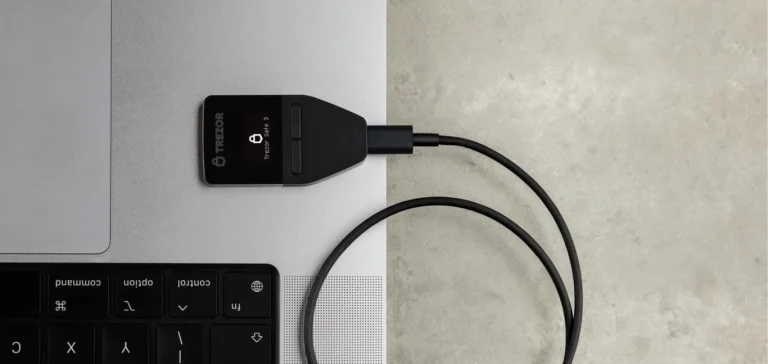
Both chains work with hardware, though Solana’s support goes further. The Ledger app handles SOL alongside SPL tokens, with buying, sending, receiving, swapping and staking routed through third-party providers, and Ledger suggests pairing the device with Phantom or Solflare.
On the Sui side, Ledger describes having “started with sending and receiving $SUI in Ledger Wallet, but there is much more coming soon”, which reads as an honest work in progress. Our Ledger Nano X review walks through how that pairing behaves.
Keeping assets anywhere costs something, and the two chains bill for it differently. Every Solana account carries a rent-exempt deposit, worked out as (account_size + 128) x 3,480 lamports per byte-year x 2 years. Close the account and the deposit comes back to you.
Sui takes the money first and returns most of it later. You’re buying storage in perpetuity, 99% of that fee is rebateable, and the leftover 1% stays behind in the storage fund. A linear schedule turns each byte into 100 storage units.
Staking works similarly on both, funded by new issuance, with delegation available either way. Solana’s issuance opened at 8%, drops 15% a year, and lands on 1.5% for the long run. Sui uses delegated proof of stake and only applies stake changes at an epoch boundary, so budget for up to a day of waiting, and our roundup of the best crypto staking platforms covers where to do it.
Worth spelling out for anyone new: staking from a wallet whose keys you hold is a different thing from leaving coins with an exchange. Who actually controls the keys in each case is covered in our guide to custodial vs non-custodial wallets.
The Good and the Bad of Each
Solana: What We Like, and What We Don’t
Sui: The Case For and Against
So, Solana or Sui for You?
Want the broadest spread of wallets, applications and exchange listings? Solana, without much hesitation. It’s the older ecosystem, its hardware wallet story is more complete, and when something goes wrong you’ll find somebody who has already solved it.
Building a product that has to bring in people who own no crypto whatsoever? Sui. Nothing on Solana currently handles those opening minutes as gracefully as zkLogin plus sponsored transactions.
Sitting on a meaningful balance for the long haul? Solana again, with the keys living on a hardware wallet. A second validator client and a longer public record of incidents are worth more to us than a quicker benchmark, and that May 2025 vote on Sui showed exactly what a stake supermajority is capable of.
Solana vs Sui FAQ
Is Sui quicker than Solana?
Usually, for an ordinary transfer. Anything address-owned on Sui goes around consensus completely, and European full nodes clocked roughly 0.40 seconds once Mysticeti v2 was in place. Solana’s slots run at 300ms, but waiting for TowerBFT finality means about 12.8 seconds, a figure that collapses to something near 150ms the moment Alpenglow switches on.
Does Solana or Sui cost less to use?
Neither is expensive. A Solana signature costs 5,000 lamports, and whatever priority fee you add on top rises and falls with demand. Sui starts at a 2,000 MIST gas budget, or 0.000002 SUI, and pins its reference gas price for an entire 24-hour epoch, which makes the bill much easier to see coming.
Will a Ledger device handle both Solana and Sui?
It will. SOL and SPL tokens are supported inside the Ledger app, and Ledger points you at Phantom or Solflare for pairing. Sui support currently covers sending and receiving in the app, with Ledger saying more is on the way.
Phantom has dropped Sui. Can I still get to my coins?
You can. Phantom stopped supporting Sui on September 24, 2026. It no longer shows or moves Sui assets. The coins stayed on the Sui chain the whole time. Export your recovery phrase from Phantom’s settings and import it into a Sui wallet such as Slush. The same addresses come back with their balances. Phantom will never message you first or ask for that phrase.
Have Solana and Sui ever stopped working?
Both networks have. Solana sat down for around five hours on February 6, 2024, and reports for its 2021 and 2022 outages remain published. Sui went dark for about two and a half hours on November 21, 2024, then stalled again for roughly six hours on January 14, 2026. Nobody lost funds in any of those events.
Can I use Sui without a seed phrase?
You can. zkLogin builds your address from an OpenID Connect login such as Google, Apple or Twitch, and Sui treats it as two-factor, on the grounds that the OAuth account by itself gets an attacker nowhere without your user salt. Nothing stops you using a conventional seed phrase wallet instead.
What if I send SOL or SUI over the wrong network?
Gone. Nobody can reverse it, so confirm the network and the address before you approve anything, and when you bridge, never treat the source chain transaction as proof the transfer finished.
Our Verdict: Solana or Sui?
For anybody whose main job is holding value and moving it around, Solana takes this. It carries more wallets, stronger hardware support, a second validator client, and a longer unbroken run stretching back to February 2024. Yes, its finality lags today. Alpenglow is next, with feature activation set to begin on September 28, 2026 and about 150ms in its sights.
Sui takes the developer experience and those crucial opening minutes with a new user. Objects make ordinary transfers properly quick, zkLogin deletes the seed phrase problem, and sponsored transactions delete the need to buy gas before you start. Against that sit one client, two stalls and Phantom’s exit on September 24, 2026. That is why we wouldn’t make Sui the main place we keep coins.
This article is for general information only and is not financial, legal, or investment advice. Prices and features change; check the vendor’s official page before buying.