
Ask which bridge to use for Solana and, for years, you’d have been told Portal, the token bridge that runs on Wormhole. We wouldn’t start there now. deBridge puts its median settlement at 1.96 seconds, and what turns up in your wallet is real SOL or real USDC instead of a wrapped stand-in you then have to trade away.
Portal isn’t finished, mind you.
Wormhole plugs into 45+ chains, Portal itself advertises 30+, and plenty of tokens have nowhere else to go.
Want it in one line? Reach for deBridge on the everyday moves, meaning SOL, USDC and ETH, where native delivery and a locked quote count for more than anything else. Reach for Portal when Wormhole happens to be the only thing that touches your token or your chain.
Below we go through how each one shifts your money, what stands behind it, what it costs, and the job we’d hand to each. Mayan, Allbridge and Circle’s CCTP turn up later on, because leaving them out of a Solana piece would be daft.
Table of contents
deBridge vs Portal, side by side
deBridge vs Portal: Solana Bridge Comparison Chart | |
|---|---|
| <strong>Where the money comes from</strong> | deBridge pays you out of a solver’s own balance sheet <br> Portal locks your token on the source chain, then mints a wrapped twin on Solana |
| <strong>What shows up in your Solana wallet</strong> | deBridge sends the real token <br> Portal’s token bridge route hands over a Wormhole-wrapped version |
| <strong>How quickly it lands</strong> | deBridge puts its median at 1.96 seconds <br> Portal Swap leans on Mayan Swift, which can finish in as little as 2 seconds |
| <strong>How many networks</strong> | deBridge says 25+ blockchains <br> Portal advertises 30+, and Portal Swap stretches to 40+ |
| <strong>What it costs you</strong> | deBridge takes 0.015 SOL flat when you leave Solana, plus 4bps of whatever you send <br> Portal publishes no fee table, and a relayer takes a cut on automatic transfers |
| <strong>What stands behind it</strong> | deBridge keeps nothing pooled, a design it calls 0-TVL <br> Portal depends on 19 Guardians, 13 of whom have to sign |
| <strong>Audit count</strong> | deBridge claims 26+, naming Halborn, Zokyo, Ackee and Neodyme <br> Wormhole lists 29, among them Trail of Bits, OtterSec and Zellic |
| <strong>Anything gone wrong before</strong> | deBridge says nothing has, since launch <br> Wormhole saw 120,000 wrapped ETH minted on Solana back in February 2022 |
| <strong>When an order sits unfilled</strong> | deBridge lets you cancel and take back every last fee <br> Portal expects you to redeem it yourself, ideally inside 24 hours |
| <strong>Work left once it arrives</strong> | deBridge leaves you nothing to do <br> Portal can leave you holding a wrapped token that still wants swapping |
| <strong>Who each one suits</strong> | deBridge for quick native moves of SOL, USDC and ETH <br> Portal for the tokens and chains nothing else gets to |
So what is deBridge?

deBridge describes itself as a non-custodial execution layer covering both cross-chain and same-chain actions, which tells you very little until you watch one go through. Strip the language away and it’s this: you say what you’d like to be holding on Solana, and a professional trader known as a solver pays you from their own pocket.
They call the design 0-TVL, which is a clumsy way of saying nothing is parked inside the bridge. No shared pools exist, so there’s no heap of money sitting in a contract for somebody to drain.
By its docs, $20 billion has gone through it, spread over 25+ blockchains. The claim of 100% uptime and no security incidents since launch comes from deBridge’s own site, so treat it as marketing rather than an audited result.
What deBridge does well
- Its dashboard shows a 1.96 second median, which in practice means the transfer is finished before you’ve switched tabs.
- Real tokens land rather than wrapped copies, leaving nothing for you to unwrap or trade afterwards.
- Whatever number the quote showed you is the number that arrives, because the rate is locked in.
- Cancelling an order nobody has filled is always possible, and it releases your tokens along with the fees.
- Auto-cancellation will do that job for you once a timeout passes, usually somewhere between 5 and 15 minutes.
And what’s Portal Bridge?
Portal is the app ordinary users see sitting on top of Wormhole. Its own pitch is bridging USDC, ETH, SOL and 100+ tokens over Ethereum, Solana, Sui, Base, Arbitrum and 30+ chains.
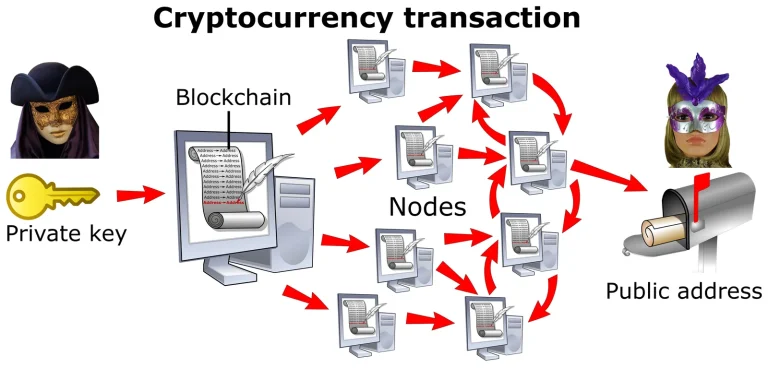
Lock-and-mint is the old route, and it works in three beats. Your token goes into a custody account on the chain you’re leaving, the Wormhole Guardians sign an attestation confirming as much, and Solana gets a wrapped version minted for it.
Since then the product has turned into something else. Portal Swap arrived on 15 October 2025 running on Mayan, which made Portal a decentralized exchange reaching 40+ chains.
That old interface has gone, by the way. Wormhole retired legacy.portalbridge.com on 30 June 2026, warned people to redeem anything pending beforehand, and points the address at the main site now.
Where Portal stands out
- Wormhole’s own figure for lifetime transfer volume is $68 billion, over 45+ connected chains.
- Wrapped token transfers cover Solana on mainnet, sitting alongside Ethereum and the Move chains.
- Mayan’s intent-based machinery drives Portal Swap, Mayan Swift included.
- There are 29 third-party audits behind Wormhole, plus a bug bounty hosted on Immunefi.
- Projects that want a token to stay native everywhere can use native token transfers, sidestepping the wrapping headache altogether.
How safe are deBridge and Portal?
Each asks you to trust something different. Pick deBridge and your faith goes into a solver network plus contracts that only hold your money for a moment.
Its argument runs like this: over $2 billion has been stolen from conventional bridges by attacking the liquidity they lock up, and a 0-TVL setup simply removes the target. Halborn, Neodyme and Zokyo have all been through the contracts, and Immunefi hosts a $200,000 bounty.
Portal asks for faith in the Wormhole Guardian network instead. Nineteen nodes run it, and a message only counts once 13 of them have signed.
Wormhole, unlike deBridge, has already been through the worst kind of test. An attacker on 2 February 2022 found a hole in signature verification and minted 120,000 Wormhole-wrapped Ether on Solana with no deposits on Ethereum behind it.
From there, 93,750 of those tokens went across to Ethereum and the unwrapped Ether came out. Node operators halted message relaying, the contract got patched, and Jump Crypto put fresh capital in so every wrapped Ether stayed fully backed.
By 13:29 UTC the following day it was running again, about 16 hours from start to finish. A $10 million reward was also put up for anything leading to an arrest or the money coming back.
Four years have passed and 29 audits have happened since, so we’re not treating it as a live wound. It does still colour our preference for routes that give us the actual asset.
One habit applies no matter which app you open. Look at the destination network and the address twice, then send a small test amount before the real one. Money that goes to the wrong network or the wrong address is gone, nobody can undo it, and if you’re not certain what you’re staring at, our explainer on what a wallet address is will help.
Living with deBridge and Portal
The two screens look much alike. Hook up a wallet, set the chain you’re coming from and Solana as where you’re going, choose a token and an amount, sign.
With deBridge, you’re done there.
A solver settles up on Solana, and since the rate was pinned at quote time, what you saw is what you keep.
Portal’s older token bridge wants more from you. Run it manually and you’re collecting the signed attestation yourself, then pushing it through on Solana, which burns gas, the fee a network charges to process anything.
A clock runs on that. Guardian sets stay valid for a guaranteed 24 hours at minimum, so leave the redemption too long and the signatures may want refreshing before it’ll go.
Choosing the automatic version spares you all of it, since a relayer pushes the attestation through and bills you for doing so. Wormhole Connect will even hand you a little native gas at the far end by converting part of what you sent.
Then there’s the bit everyone forgets about wrapping. Arrive with a Wormhole-wrapped asset and you may have another swap ahead of you before anything on Solana will accept it, which is precisely the annoyance our guide to using a decentralized exchange walks through.
Which tokens and chains each Solana bridge covers
Only a handful of reserve assets sit on a deBridge solver’s books. You’re looking at ETH on Ethereum, Arbitrum, Base and Linea, wETH over on Avalanche, BNB Chain and Polygon, Circle’s USDC everywhere it’s supported, and USDT on TRON.
Anything else liquid can still make the trip. deBridge trades it into a reserve asset where you started, carries that across, then trades again into whatever you wanted on Solana.
How many chains, though, depends on which page of its docs you happen to open. The prose says 25+ blockchains while the table underneath lists 17, including Ethereum, Solana, Arbitrum, Base, BNB Chain, Polygon, TRON, HyperEVM and Monad.
Breadth is what Portal sells.
Its own numbers are 100+ tokens over 30+ chains, Wormhole talks about 45+ connected chains, and Portal Swap lands at 40+.
Keep it bookmarked for exactly that reason. Should your token live somewhere deBridge has never heard of, Wormhole is usually the only route that exists at all.
deBridge vs Portal on cost and speed
Credit where it’s due, deBridge writes its pricing down. A flat fee comes out in the gas token of wherever you started, and on top of that sits 4bps, four hundredths of a percent, shaved off the token you handed over.
Leaving Solana, that flat charge is 0.015 SOL at the time of writing (September 2026). Ethereum, Arbitrum, Base, Optimism and Linea each cost 0.001 ETH, while BNB Chain asks 0.005 BNB.
Watch for two things here. Cancel an order and deBridge gives the flat fee back whole, and the company warns the figure can move, which is why it should be read off the contract rather than taken on trust.
Pricing on Portal is murkier, which bugs us. Nothing resembling a fee table showed up on portalbridge.com or anywhere in the Wormhole docs we read, so your cost is gas plus whatever the relayer takes on an automatic transfer.
Solana’s own gas is the least of your worries either way. Every signature costs a base 5,000 lamports, split evenly between burning and the validator, with a priority fee optional on top.
| Route | How fast | The cost | What you end up with |
|---|---|---|---|
| deBridge | A median of 1.96 seconds | 0.015 SOL flat leaving Solana, plus 4bps | The real token |
| Portal token bridge | Guardians sign, then you redeem | Gas, and a relayer cut if it’s automatic | A Wormhole-wrapped version |
| Portal Swap (Mayan) | Swift can manage 2 seconds | Swift charges no protocol fee | Whatever token you asked for |
The other Solana bridges you should know about
Start with Mayan, since it’s the engine humming away inside Portal Swap. Its own tally is $20 billion moved over 9M+ swaps for 3M+ users, and it runs the swap screens inside MetaMask, Phantom and OKX Wallet.
Three routes sit behind that one interface. Swift can settle in as little as 2 seconds with no protocol fee attached, MCTP does it in as little as 5 seconds by riding Circle’s CCTP, and Wormhole Swap comes in under a minute.
Got nothing but USDC to move? Circle’s CCTP is worth going to directly, since it burns your USDC on one chain and mints it on another, Solana among them, with Fast Transfer attestation landing in roughly 8 to 20 seconds.
A caution goes with Allbridge. Allbridge Classic has been deprecated and gets shut off in November 2026, so put anything new through Allbridge Core.
And sometimes the best bridge is none at all. Coins already sitting on an exchange can be withdrawn straight onto Solana, dodging the whole question, though our piece on a crypto wallet vs an exchange spells out what you give up by leaving them there.
deBridge and Portal: the good and the bad
deBridge: what we like and what we don’t
Portal: what we like and what we don’t
Which Solana bridge fits your situation?
Shifting USDC or ETH onto Solana so you can trade? Take deBridge. Native delivery, a guaranteed quote, and 0.015 SOL is cheap for never touching an unwrap screen.
Got a token that lives on some chain deBridge has never listed? Portal, then. Wormhole’s 45+ chains is the broadest reach on offer here, and Portal Swap sends you through Mayan regardless.
Only USDC on the move? CCTP, every time. Burning and minting the genuine article beats any wrapped copy, and Solana is one of the chains it reaches.
Off to somewhere other than Solana? Our best Arbitrum bridge roundup ranks the choices there, and if it’s Polygon you’re after, we’ve written up bridging tokens from Ethereum to Polygon as well.
Solana bridge questions people ask
Which Solana bridge is best in 2026?
deBridge, for most people. A median of 1.96 seconds, native tokens at the far end, and fees it actually publishes. Portal wins the argument only when your chain or token can’t be reached any other way than through Wormhole.
Is there an official Solana bridge?
No. Nothing first-party comes from Solana itself, so every option in this piece was built by an outside team.
How much does bridging to Solana cost?
Leaving Solana on deBridge costs a flat 0.015 SOL plus 4bps of what you send. Portal keeps no public fee table, so you’re covering gas and a relayer’s cut on automatic transfers. Solana itself charges 5,000 lamports per signature.
Can Wormhole be trusted after the 2022 hack?
Broadly, yes. That exploit in February 2022 minted 120,000 unbacked wrapped Ether on Solana, Jump Crypto put the money back, and 29 third-party audits have happened since. We’d still push a small test amount through before anything serious.
What is a wrapped token on Solana?
It’s a stand-in minted on Solana while the original stays locked where it came from. Wormhole says the backing is 1:1, though you may well have to swap that wrapped version for the asset you were actually after.
What if nobody fills my bridge order?
Cancel it. deBridge returns the lot, fees and all, and auto-cancellation will trigger on its own after 5 to 15 minutes. Portal’s token bridge is different: the redemption is yours to finish, and 24 hours is the window you want to stay inside.
Can I recover crypto sent to the wrong address?
No. Send to the wrong address or the wrong network and it’s gone, with nobody able to reverse it, so read both twice before signing.
Our verdict on the best Solana bridge
We’d hand the title to deBridge. Getting the real asset, a quote that holds, a fee you can look up beforehand and a 1.96 second median adds up to less friction than anything else we tried.
Reach is why Portal stays on the list. Whenever deBridge hasn’t got your token or your chain, Wormhole’s 45+ chains almost certainly does, and Portal Swap has borrowed Mayan’s speed for the routes it covers.
However the money gets to Solana, park it where the keys belong to you. Start with our pick of the best non-custodial wallet, and when you’re ready to trade, the best decentralized exchanges will take it from there.
This article is for general information only and is not financial, legal, or investment advice. Prices and features change; check the vendor’s official page before buying.