
Managing crypto can get overwhelming fast. You bounce between apps juggling wallets, reminders, backups, and keys, wondering if you’ll ever find the best non-custodial wallet, one that gives you real control. The chaos slows you down and makes every decision feel harder than it should.
The pressure builds when you realize the whole point of non-custodial is financial freedom, and that freedom puts sole responsibility on you. One wrong move and everything falls on your shoulders.
The good news is simple. You can take back control with a wallet built for independence. Below are the seven wallets that help you secure, track, and protect your holdings without giving up ownership.
Our Trust Wallet review covers one of the best known names in that category.
Disclaimer: If you choose a non-custodial setup and hold your own private keys, please note that you assume full responsibility for them. Losing your keys or your backup means you lose access forever, so handle them with care.
Best Non-Custodial Wallets Overview | |
|---|---|
| MetaMask | Best For: Best Non-Custodial Wallet All-Around Free Plan: Yes Platform Price (For Paid Versions): None Available: Browser Extension, iOS, Android |
| Guarda Wallet | Best For: Complex Multi-Chain Activity Free Plan: Yes Platform Price (For Paid Versions): None Available: Web, Desktop, iOS, Android, Browser Extension |
| Rabby Wallet | Best For: Smooth Multichain Swaps Free Plan: Yes Platform Price (For Paid Versions): None Available: Browser Extension |
| Zerion Wallet | Best For: Unified Web3 Portfolio Management Free Plan: Yes Platform Price (For Paid Versions): None Available: iOS, Android, Browser Extension |
| Trezor (Any Device) | Best For: Maximum Hardware Security Free Plan: No Platform Price (For Paid Versions): One-time hardware purchase Available: USB Hardware Device (Desktop integration) |
| Ledger (Any Device) | Best For: Hardware Protection With Broad Asset Support Free Plan: No Platform Price (For Paid Versions): One-time hardware purchase Available: USB and Bluetooth Hardware Devices |
| Trust Wallet | Best For: Mobile Accessibility Free Plan: Yes Platform Price (For Paid Versions): None Available: iOS, Android, Browser Extension |
1. MetaMask, Best Non-Custodial Wallet All-Around

MetaMask stays at the top of our list for 2026 as the best non-custodial wallet. ConsenSys launched it in 2016, and it has since become one of the most widely used non-custodial wallets in the world.
MetaMask gives you direct control over your private keys. It stores them locally on your computer or phone instead of handing them to a third-party custodian. You get true self-custody without the friction that scares off newer users.
Its real strength is how easily it connects to decentralized apps, NFT platforms, Web3 games, and the wider decentralized finance ecosystem. Because so many DApps support it, you rarely hit a dead end.
Redditors often call it the “default non-custodial crypto wallet,” praising its interface, steady updates, and broad chain support. More control also means more responsibility, and MetaMask makes that clear by reminding you to protect your seed phrase at all costs. Lose it, and no one can recover your funds for you.
If you hold more than you are comfortable keeping in a browser extension, pair it with one of the top hardware wallets compatible with MetaMask for 2026.
2. Guarda Wallet, Best for Complex Multi-Chain Activity
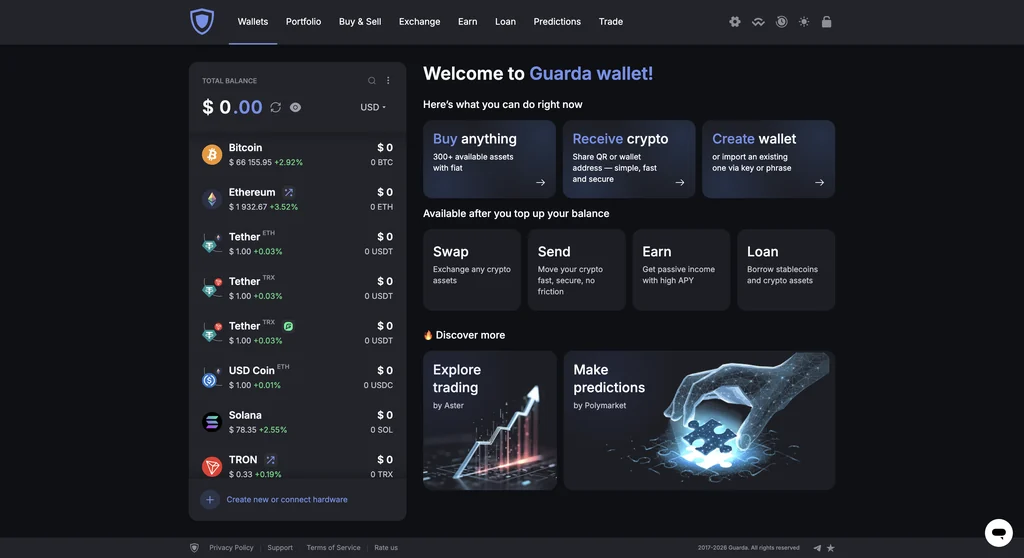
Guarda takes the second spot for users whose self-custody setup spans multiple chains, asset types, and devices. Launched in 2017, it supports 70+ blockchains and more than 1M assets across Web, Desktop, iOS, Android, and Browser Extension.
Guarda keeps private keys under the user’s control rather than storing them on its servers. That makes it possible to manage assets across networks such as Bitcoin, Monero, XRP, TRON, and Ethereum from one crypto wallet. Beyond sending and receiving, users can buy, sell, swap, and stake supported assets.
The more interesting part is how Guarda handles that breadth. Guarda reports a success rate of at least 99.9% for key operations such as sending assets and updating balances. For experienced users managing several networks at once, consistent execution matters as much as the number of assets a wallet supports.
Self-custody still leaves recovery responsibility with the user. Guarda documents several recovery paths, including an encrypted backup, recovery phrases for supported wallets, and individual private keys. If something goes off-plan, 24/7 live support is available without requiring users to hand over custody of their credentials.
For users who prefer offline key storage for supported assets, Guarda also integrates with a Ledger hardware wallet on Web and Desktop. Guarda prepares the transaction while the hardware device signs it, so Ledger-generated private keys stay on the device.
3. Rabby Wallet, Best Choice for Smooth Multichain Swaps
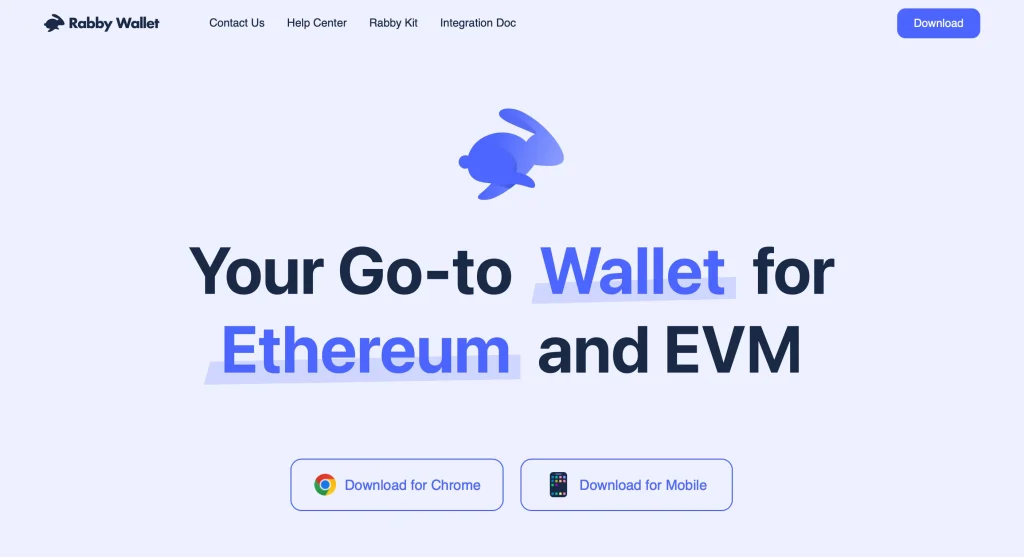
Rabby climbed the ranks fast. By 2026 it had become one of the most recommended wallets for anyone who wants a cleaner, safer, and more predictable Web3 experience.
DeBank, the company behind popular DeFi analytics tools, built it. Many crypto users describe Rabby as the wallet MetaMask would build if it started from scratch today.
Rabby is a browser-based self-custody wallet. Your private keys stay on your device and you approve every action. It detects the correct network automatically when you connect to a decentralized app, something MetaMask users have long wished for. It also simulates each transaction before you click confirm, so you can catch a mistake before it costs you real money.
That simplicity is why Rabby sits third on our list of the best non-custodial wallets. Open a DApp and Rabby tells you the network, the cost, the expected outcome, and whether the contract on the other end looks risky. It is built for people who want self-custody with fewer headaches and more clarity.
4. Zerion Wallet, Best for Unified Web3 Portfolio Management
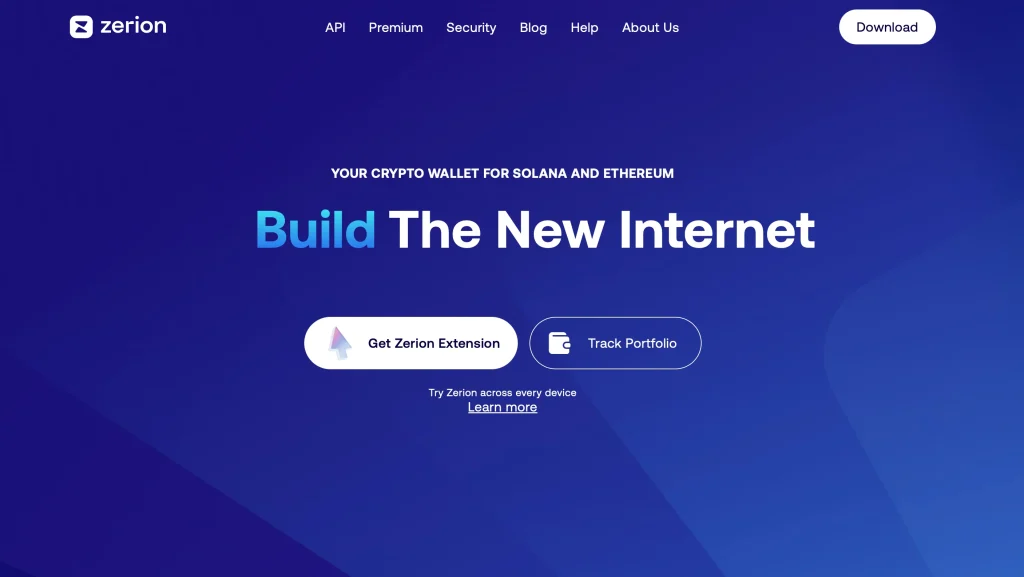
Zerion earned the number three spot because it shines where MetaMask and Rabby fall short. MetaMask is the universal non-custodial wallet with the biggest Web3 footprint. Rabby leads on EVM interactions with its automatic network detection and transaction previews.
Zerion focuses on something different. It is a clean command center for your digital assets, showing your tokens, NFTs, and DeFi positions in one place without burying you in technical clutter.
Many crypto users like Zerion because it feels more like a modern portfolio app than a traditional crypto wallet. It runs on browsers and mobile, syncing your assets and connections so you can move between devices freely. It also follows a self-custody model: your private keys stay local, and you stay in control.
Zerion stands out for organizing everything you own across chains and protocols. If you hold more than a few coins and want a clear view of where your funds sit, it is a strong fit. It ranks third because its DApp integration is not as broad as MetaMask’s and its EVM handling is not as polished as Rabby’s. Still, it is one of the best non-custodial wallets for managing a Web3 portfolio.
5. Trezor, Best Hardware Option for Maximum Self-Custody
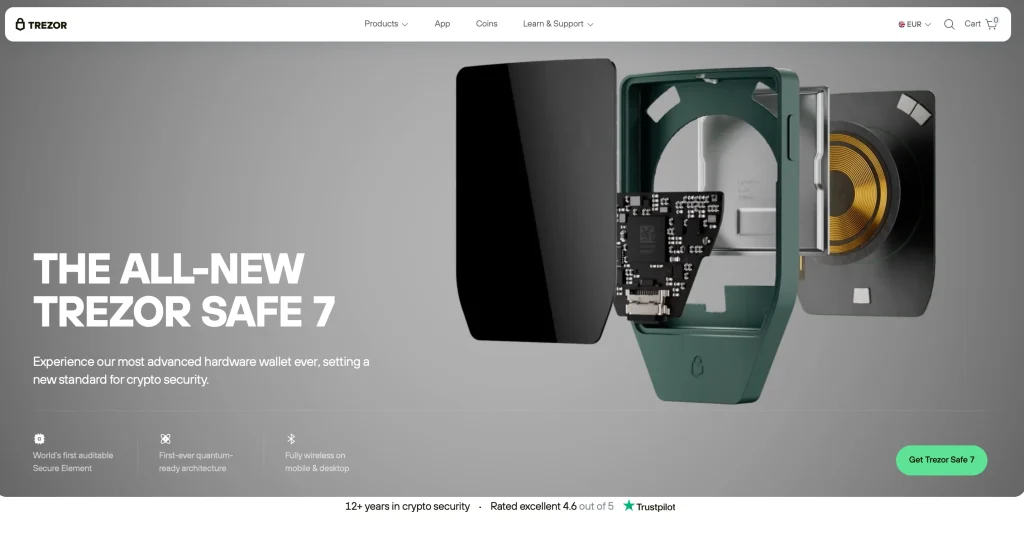
Trezor takes the fourth spot with a stricter approach than the software wallets above. It keeps your private keys offline, which is the principle behind every self-custody wallet taken to its logical end. If you want a non-custodial wallet you can disconnect from the internet entirely, Trezor remains one of the strongest choices in 2026.
Every Trezor device works the same way. Whether you pick the Trezor Model One, Model T, or the Trezor Safe 5, the core experience stays consistent. You get full control of your crypto, isolation from exchanges, and a setup where your private keys never touch your computer or browser. Trezor devices are pure cold wallets, which makes them ideal if you hold larger amounts or long-term positions.
Many crypto users choose Trezor because it cuts counterparty risk and puts a clean buffer between your keys and the internet. Even if your laptop is compromised or a browser extension is spoofed, your keys stay locked inside the hardware.
Trezor ranks fifth on our list of the best non-custodial wallets only because everyday users tend to prefer software wallets for convenience. When safety is the priority, Trezor is tough to beat.
Choosing between Ledger and Trezor can feel overwhelming when every source offers a different opinion. You want reliable protection for your crypto, but it is not always clear which hardware wallet fits your priorities. Our comparison walks through the differences.
6. Ledger, Best for Hardware Protection With Broad Asset Support
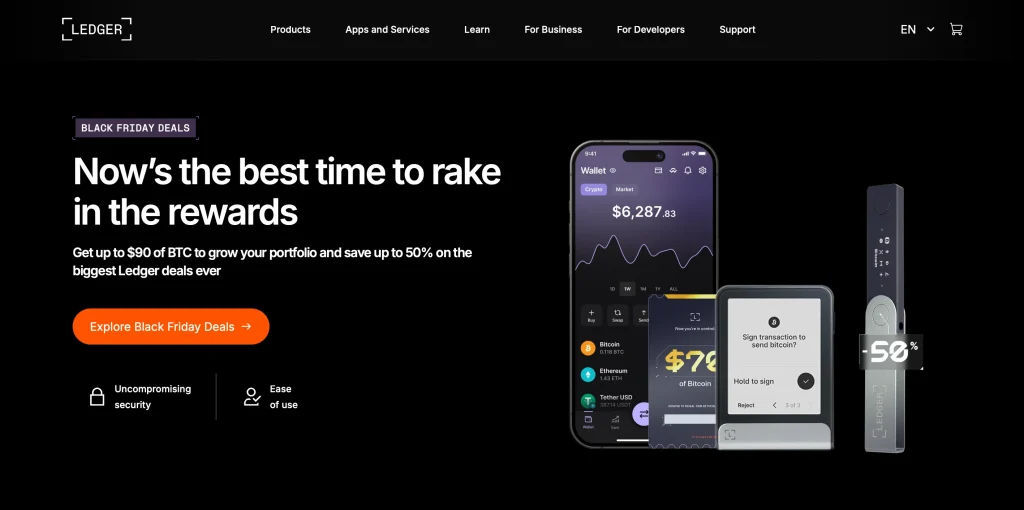
Ledger takes the fifth spot as one of the best self-custody wallets because it still delivers strong hardware protection for anyone who wants private keys stored offline. Every Ledger device follows the same design philosophy, so choosing between the Nano S Plus, Nano X, or Stax does not change the core security model. All of them work as cold wallets: your keys never leave the device, and your funds stay separated from online threats.
Ledger would usually rank higher on its track record and broad asset support, but the brand drew criticism after it introduced Ledger Recover (among other issues). This optional feature splits an encrypted copy of your seed phrase into shards so you can regain access if you lose your original backup.
The community response was intense. Many crypto users worried the feature blurred the line between custodial and non-custodial systems. Even though the feature is opt-in and Ledger has since made it transparent and open source, the episode raised hard questions about responsibility, control, and how non-custodial a hardware wallet should be.
Despite the controversy, Ledger remains a solid choice for anyone who wants a self-custody wallet with reliable physical security. It supports thousands of coins, connects to many decentralized apps through Ledger Live or external interfaces, and cuts counterparty risk sharply compared with leaving assets on an exchange.
The number five placement reflects user sentiment, not a drop in security. Ledger devices still protect crypto through strong hardware isolation and are widely used for long-term storage.
7. Trust Wallet, Best for Mobile Accessibility
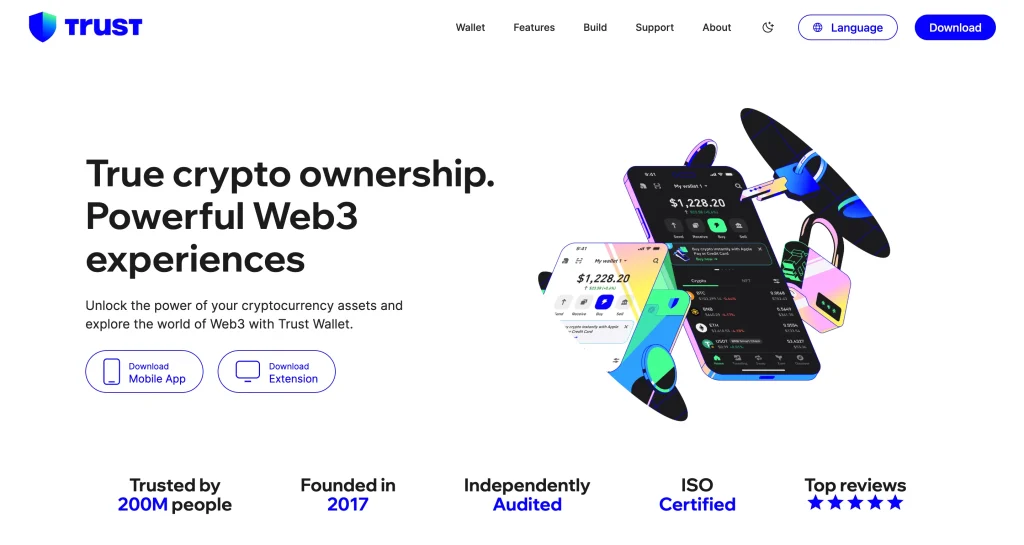
Trust Wallet is one of the most widely downloaded mobile crypto wallets, and it earns that on simplicity. It supports over 70 blockchains, including Ethereum, BNB Chain, and Solana, so it suits anyone holding a mixed bag of assets.
Swaps, NFT storage, and staking all happen inside the app, a few taps away. It is non-custodial: your private keys stay on your phone, and your recovery phrase is the only way back in. Protect that phrase, because nobody at Trust Wallet can restore it for you.
Methodology for Choosing the Best Non-Custodial Wallets
- Security architecture first: We prioritized wallets that keep private keys on your device and use proven protections such as PINs, passphrases, and firmware audits.
- Accurate self-custody model: Only wallets that offer full independence, no custodians, and transparent non-custodial terms made the list.
- Ecosystem compatibility: We checked how smoothly each wallet works with decentralized apps, Web3 tools, and DeFi platforms.
- User experience and interface quality: Wallets with simple setup, clear navigation, and easy management ranked higher, especially for multi-chain and NFT use.
- Cross-device availability: Support across browsers, mobile devices, hardware, and multiple operating systems mattered for accessibility.
- Update frequency and development support: We looked at release cycles, ongoing improvements, and active maintenance as signs a wallet will still be supported years from now.
- Community trust and transparency: User feedback, reputation, and each wallet’s approach to privacy and openness shaped the final rankings.
- Recovery and backup structure: Wallets with clear guidance on seed phrases, recovery, and safe key handling scored better.
- Real-world testing: We tested every wallet for verification, transaction handling, connectivity, and error prevention in live Web3 environments.
FAQ
What is a non-custodial wallet?
A non-custodial wallet lets you store and manage your own digital assets without a custodian. You keep the private keys on your own device, which gives you complete control over your funds. The core idea is simple: not your keys, not your coins.
Is a non-custodial wallet a cold wallet?
Sometimes, but not always. A hardware wallet such as Trezor or Ledger is a cold wallet and is generally safer, while software wallets like MetaMask or Rabby run online. Both count as non-custodial as long as you hold the keys.
What is the main difference between custodial vs. non-custodial wallets?
The main difference between custodial and non-custodial wallets comes down to who holds the keys. In a custodial setup, a company holds your keys and manages access for you. A non-custodial setup keeps the keys on your own device, so you control, protect, and store your assets directly. One relies on a custodian; the other gives you complete independence.
Can I lose my crypto with a non-custodial wallet?
Yes. If you lose your seed phrase, password, or backup, the crypto is gone. You alone are responsible for recovery, and no custodian can help you regain access.
Is Trezor Safe 3 a non-custodial wallet?
Yes. The Trezor Safe 3 is a non-custodial wallet suited to long-term storage, because your private keys stay offline on the device. You keep complete control of your crypto.
What is the safest self-custody wallet?
Cold wallets such as Trezor and Ledger are generally safest because they keep keys offline and add strong security features. They cut counterparty risk and keep your crypto isolated from online threats. The trade-off is convenience: software wallets are easier to use day to day and meet the needs of most crypto users.
Can a non-custodial wallet be tracked?
The wallet is not tied to your identity by default, but transactions on public chains are visible to anyone. Tracking a non-custodial wallet usually means linking its activity to a person through an exchange or other off-chain data.
Which crypto wallet is untraceable?
No crypto wallet is fully untraceable, though privacy-focused tools such as Wasabi help obscure transactions. On-chain data still exists, so your privacy depends on how carefully you use the wallet.
Can the IRS see my crypto wallet?
The IRS cannot see your wallet directly, but it can trace transactions through crypto exchanges, KYC data, or any point where you buy or cash out crypto linked to your identity. Public blockchains make activity visible even without a Coinbase account, for example.
Conclusion
Now you know what separates the best non-custodial wallets from the rest, and why the choice matters.
Each option keeps your private keys on your own device, gives you independence, and removes any reliance on a custodian. When you control the keys, you control your assets and your future.
Pick the wallet that fits how you use crypto, stick to good security habits, back up your seed phrase, and enjoy the freedom that comes with real ownership. Good luck out there.
How I review: Reviewed by Andrei B. I buy the hardware wallets I review, test every product myself and score it on security, UI/UX, ease of use, price and supported coins. Before I publish, I also check recent user reviews and any hack reports.
The whole process is explained on the How We Review page. You can read more about me, or contact me with corrections, from the links at the bottom of this page. For general safety advice, see the FTC guide to cryptocurrency scams.