
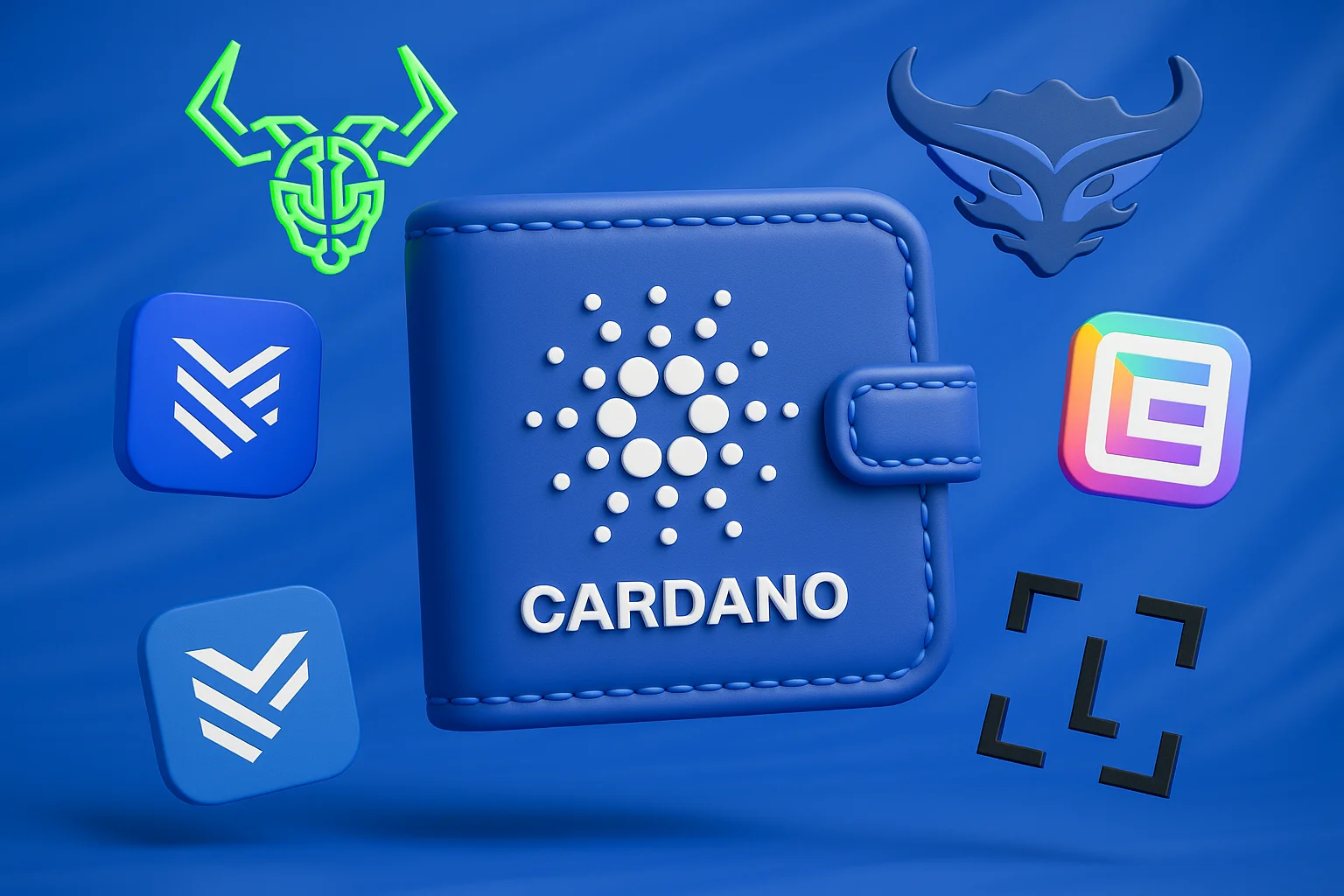
Cardano wallets differ from most chains’ in one welcome way: staking is built into the protocol. It is non-custodial, with no lock-up and no slashing risk for delegators. So the wallet you choose is mostly about interface, trust model, and how you want your keys held. This guide covers the five best options in 2026, from full-node purism to hardware-backed convenience, and the factors that separate them in practice.
Still deciding between ecosystems? Read our comparison Polkadot vs Cardano and the full guide Solana vs Cardano vs Polkadot vs Avalanche to see how Cardano stacks up against other major chains.
Table of contents
Quick Summary: Top 5 Cardano Wallets | |
|---|---|
| Daedalus | Best for Maximum Control: Verifies every transaction locally for complete transparency; Built in Haskell, ensuring unmatched reliability; Includes a paper wallet generator for cold storage; Price: Free. |
| Yoroi | Best for Lightweight Staking; Fast and simple wallet powered by Emurgo; Sustain Catalyst voting and ADA Handles; Available on browser and mobile with instant syncing; Trusted uptime and smooth staking experience; Price: Free. |
| Eternl | Best for NFT & Power Users: Combines staking, NFTs, and DeFi tools in one dashboard; Offers live staking metrics and pool performance data; Sustain batch transactions and encrypted local storage; Fully open-source with active GitHub development; Price: Free. |
| Ledger Nano X | Best for Offline Security: CC EAL5+ secure chip; Keeps ADA completely offline, even during staking; Works with Yoroi, Daedalus, and Eternl; Bluetooth-enabled and compatible with over 5,000 assets; Price: Approximately $149 (official Ledger store). |
| Typhon | Best for Web3 & DeFi: Built for Cardano dApps and DeFi interaction; Integrates the Milkomeda sidechain for cross-chain access; Fast multi-wallet dashboard for NFTs and staking; Updated frequently by the Cardano community; Price: Free. |
1. Daedalus: Best for Maximum Autonomy & Full-Node Security
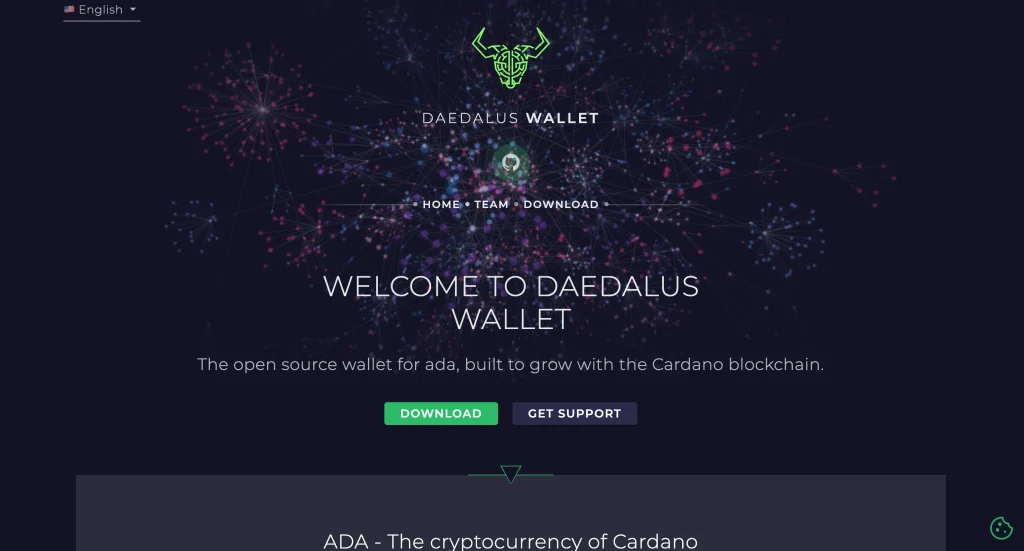
Daedalus is IOG’s full-node wallet. It downloads and validates the entire Cardano blockchain, so it trusts no third-party servers at all. That autonomy costs resources: tens of gigabytes of storage, a long first sync, and desktop only. In return you get the strongest trust model available. It is the wallet for people who take “don’t trust, verify” literally and have the hardware to back it up. Everyone else will be happier with a light wallet below.
Daedalus Specifications | |
|---|---|
| Wallet Type | Full-node desktop wallet; |
| Developer | IOHK (Cardano Foundation); |
| Allowed OS | Windows, macOS, Linux; |
| Staking Availability | Yes (delegation to any stake pool); |
| Open Source | Yes; |
| Hardware Wallet Integration | Yes (Ledger & Trezor); |
| Offline Mode | Partial (view-only when disconnected); |
| Recovery | 24-word seed phrase. |
2. Yoroi: Best for Lightweight Staking & Everyday Use
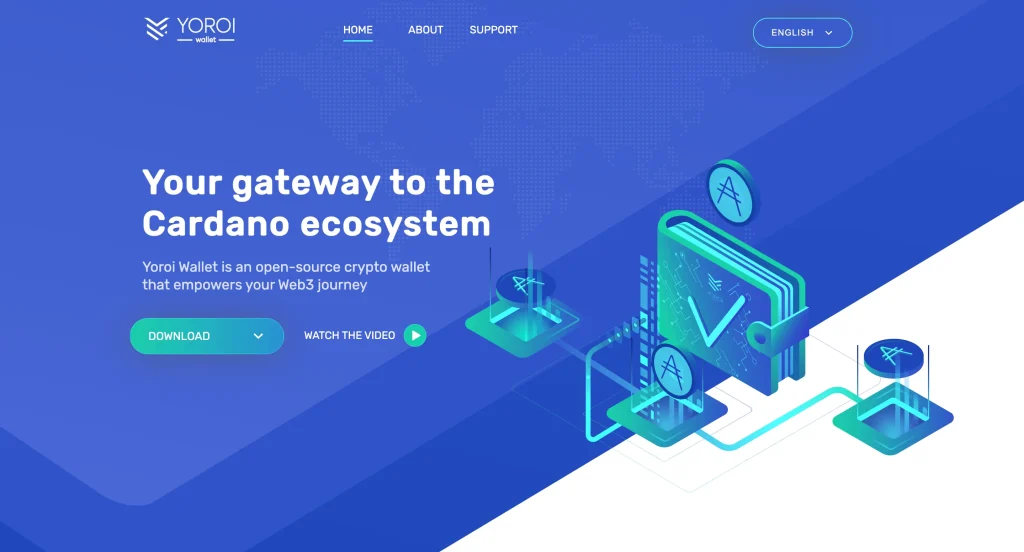
Yoroi, from Emurgo, is the veteran light wallet. Its browser extension and mobile apps connect to hosted infrastructure, so setup is instant and staking takes one click. It pairs with Ledger and Trezor for hardware-backed keys. The interface has stayed deliberately simple while rivals raced ahead on features. Depending on what you need, that is either its charm or its limitation.
Yoroi Specifications | |
|---|---|
| Wallet Type | Light wallet; |
| Developer | Emurgo; |
| Compatible Platforms | Chrome, Firefox, iOS, Android; |
| Staking Availability | Yes (delegation within app); |
| Hardware Wallet Integration | Yes (Ledger, Trezor); |
| Safety | Encrypted private keys are held locally; |
| Backup | 15-word recovery phrase; |
| Multi-Account Support | Yes. |
3. Eternl: Best for Bridging Power & Convenience
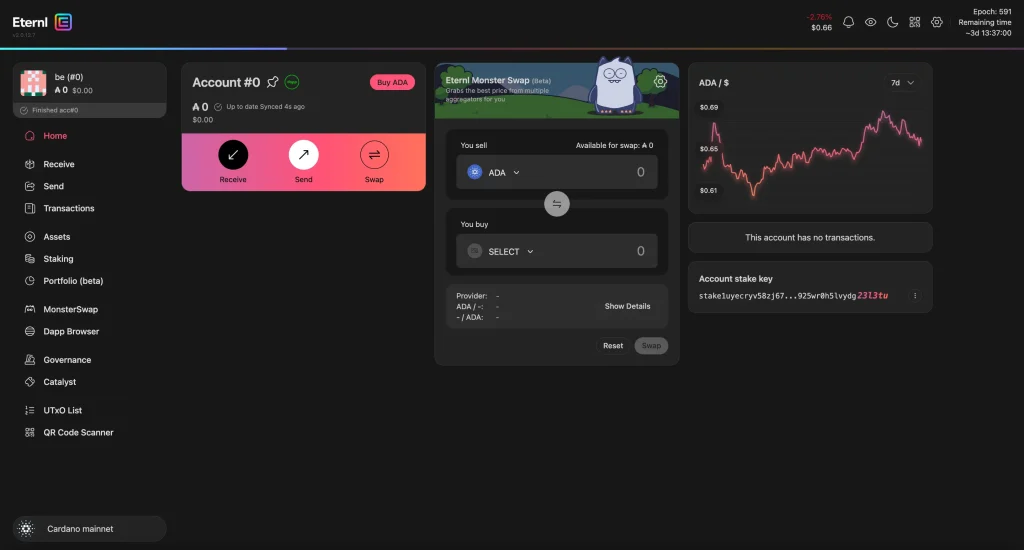
Eternl is the power user’s choice: multi-account support, a dApp connector, native token and NFT handling, transaction-building options no other Cardano wallet exposes, and hardware wallet pairing. The density that veterans love makes newcomers blink. Start elsewhere if this is your first wallet, and come here when you outgrow the training wheels.
Eternl Specifications | |
|---|---|
| Wallet Type | Light wallet; |
| Developer | Community-driven (open-source); |
| Compatible Platforms | Web, Browser Extension, Mobile; |
| Staking Availability | Yes; |
| dApp Integration | Yes (native Web3 connector); |
| NFT Availability | Yes (view, send, and mint); |
| Hardware Wallet Integration | Yes (Ledger, Trezor); |
| Safety | Local key encryption & optional hardware link. |
4. Ledger Nano X: Best Hardware Wallet for Cardano
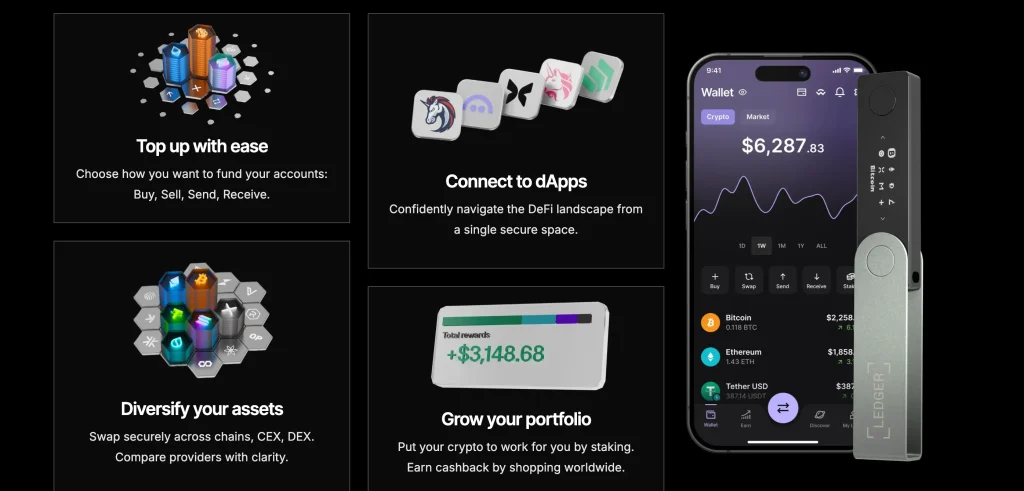
The Ledger Nano X keeps your private keys on a secure chip that never touches the internet. Malware or a phishing page on your computer can see your balance but cannot sign anything away. Made by Ledger SAS, it supports Cardano through Yoroi, Daedalus, Eternl, or Typhon, so you stake as normal while the keys stay offline.
For meaningful ADA balances, hardware is the answer, and the Nano X ($99) is the smoothest fit. Pair it with Yoroi, Eternl, Typhon, or Lace and you get staking and dApp access with keys that never leave the secure element. Delegation works fully from hardware: you stake, earn, and vote while the seed stays cold. The S Plus at $59 does the same job for desk-bound holders.
Ledger Nano X Specifications | |
|---|---|
| Wallet Type | Hardware (cold storage); |
| Developer | Ledger SAS (France); |
| Connectivity | USB-C, Bluetooth; |
| Compatible Assets | 5,000+ coins & tokens; |
| Staking Availability | Yes (via software wallet integration); |
| Security Chip | CC EAL5+ certified; |
| Battery Life | Up to 8 hours; |
| Recovery | 24-word seed phrase. |
5. Typhon: Best for Fast, Feature-Rich Web3 & dApp Interaction
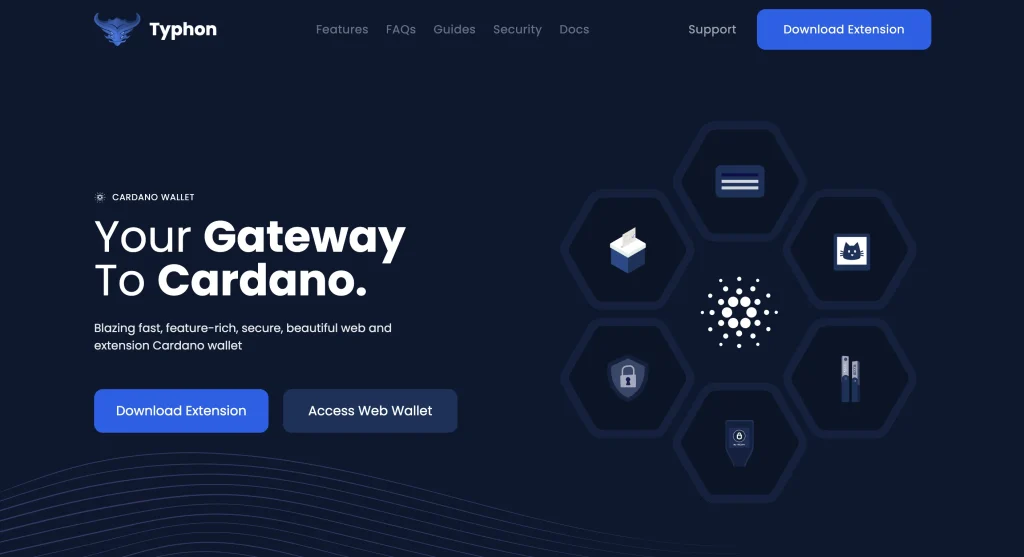
Typhon is the ecosystem’s speed pick: a fast, clean web and extension wallet with strong native-asset support, multi-delegation conveniences, and hardware pairing. It has earned its user base on responsiveness and steady development rather than corporate backing. It is a community-built tool that competes on merit.
Typhon Specifications | |
|---|---|
| Wallet Type | Light wallet; |
| Developer | Cardano Community (AdaLite contributors); |
| Compatible Platforms | Browser (Chrome, Brave), Web; |
| Staking Availability | Yes; |
| dApp Connectivity | Yes (built-in); |
| NFT Availability | Yes; |
| Hardware Wallet Integration | Yes (Ledger, Trezor); |
| Safety | Local key encryption, non-custodial; |
| Backup | 24-word recovery phrase. |
Key Factors to Consider When Picking a Cardano Wallet
Five factors separate these wallets in practice:
1. Security Functionalities
The trust ladder runs like this: a full node (Daedalus) trusts nothing, light wallets trust their infrastructure provider, and hardware pairing removes key exposure from any of them. For balances that matter, use a light wallet for convenience with a Ledger or Trezor holding the keys. The combination beats either alone.
2. Staking Capabilities and Reward Management
If you want to earn rewards on your ADA, check how the wallet handles staking. Software wallets let you delegate to a pool directly. A hardware wallet delegates through the light wallet it is paired with.
All five stake natively. Cardano delegation is protocol-level, rewards arrive automatically, and your funds never leave your control or lock up. The differences are in ergonomics: pool discovery and comparison tools (Eternl and Typhon lead), multi-account delegation, and how clearly rewards are shown.
3. Compatibility (Desktop, Web, Mobile)
Daedalus is desktop-only by nature. Yoroi covers browser and mobile. Eternl and Typhon live in browsers, with mobile options. Hardware pairs with most of them. Match the wallet to where you manage your crypto: the best interface is the one on the device you use.
4. User Experience & Interface
Yoroi optimizes for simplicity, Typhon for speed, Eternl for depth, and Daedalus for sovereignty. Ask a newcomer and a power user to rank them on ease of use and you get opposite lists. There is no best, only best for you.
5. Community Reputation and Updates
All five are established names with years of updates. That matters on Cardano, where fake wallets impersonating real brands are the ecosystem’s recurring plague. Download only from official domains, check URLs letter by letter, and treat every airdrop DM as hostile.
For a broader view across all networks, see our list of the Top Crypto Wallets of 2026.
Types of Cardano Wallets
Three architectures, three trust models:
1. Full-Node Wallets
Full nodes like Daedalus validate everything themselves: maximum sovereignty, maximum resource cost. The right tool for purists and pool operators, and overkill for a stake-and-hold portfolio.
2. Light Wallets
Light wallets (Yoroi, Eternl, Typhon, Lace) query hosted infrastructure instead of syncing the chain. They are instant and convenient, and they depend on their provider’s honesty for chain data, never for your keys, which stay on your device. The pragmatic default for most users.
If you manage assets on the go, see our guide to the Best Mobile Crypto Wallets for multi-chain users.
3. Hardware Wallets
Hardware wallets are physical devices that keep your private keys offline. Malware, phishing pages, and remote attackers cannot reach keys that never touch the internet, which is why they are the safest type of wallet. Best for long-term holders, high-value portfolios, and anyone who puts safety first.
Security Features of Cardano Wallets
How Cardano Wallets Use Private/Public Key Pairs
Every Cardano wallet works through a pair of cryptographic keys. The public key gives you your wallet address. The private key signs transactions, so whoever holds it controls the funds. Your private key is stored encrypted on your device and never leaves it.
If you lose your device, your recovery phrase (seed phrase) is the only way back in. Write it down, keep it offline, and never type it into a website.
If the phrase itself is new to you, our guide to what a seed phrase is and how to store it covers the basics.
Why Hardware Integration Matters
Every light wallet on this list supports Ledger or Trezor pairing, and that changes the security question. The browser extension becomes a viewing and transaction-building layer, while signatures happen on isolated hardware. A compromised computer can propose transactions but cannot approve them. That pairing is the single biggest security upgrade available to any Cardano holder.
Common Risks and How to Mitigate Them
The realistic threat list: fake wallet downloads (check the domain), seed phrases typed into “validation” sites (never, for anyone), malicious dApp approvals (read what you sign, ideally on a hardware screen), and stake pool phishing promising impossible yields (delegation never requires sending ADA anywhere). Notice that every item is a human-layer attack. The protocol itself has held up.
- Download wallets only from official sources (for example, daedaluswallet.io and yoroi-wallet.com).
- Never share your seed phrase, not even with support staff.
- Check URLs and wallet addresses before confirming any transaction.
- Keep your device software and wallet apps updated to close known holes.
Next-Generation Wallets in the Cardano Ecosystem
The ecosystem’s current frontier:
1. Multi-Signature and Smart Contract Support
Newer wallets are adding multi-sig features, where several people must approve a transaction before it goes through. That suits businesses, DAOs, and shared accounts, where no single person should be able to move the funds.
Multisig on Cardano has matured. Shared treasuries and multi-approval setups work through dedicated tooling, and smart contract interaction from mainstream wallets keeps broadening as the dApp layer grows.
2. Advanced dApp Integrations and DeFi Access
The dApp connector standard means Eternl, Typhon, Lace, and peers plug into Cardano DeFi, NFT markets, and governance in the same way, with hardware signing supported across most of it. The gap with EVM tooling has narrowed to preference rather than capability.
3. NFT and Multi-Asset Management
Cardano’s newer wallets support the multi-asset standard, so you manage ADA, tokens, and NFTs in one place. Eternl and Typhon go further and let you mint, send, and display NFTs directly in the wallet.
4. Advanced Safeguards and Privacy
Many wallets now pair with hardware for offline safety and offer biometric login for quick access. Others add encrypted backups and privacy features, which give you more control over your data and cut the risk of phishing or key exposure.
5. Unified Staking and Governance Dashboards
The next step is one clear dashboard for staking, governance, and rewards tracking. With Cardano Ballot and Project Catalyst integration, you can stake ADA, vote on proposals, and track rewards from the same screen.
FAQ
What is a Cardano wallet?
A Cardano wallet is software or hardware that lets you store, send, receive, and stake ADA. It manages your private and public keys so you can use the Cardano blockchain without handing control of your funds to anyone else.
How to get a Cardano wallet?
Download software wallets only from their official sites. Buy hardware wallets such as the Ledger Nano X directly from the manufacturer’s official store. Avoid third-party links, double-check the URL, and back up your recovery phrase offline before you move any ADA.
Is Cardano worth keeping?
Many long-term holders see Cardano (ADA) as a strong project because of its focus on scalability, energy efficiency, and peer-reviewed development. Staking ADA earns regular rewards while helping secure the network. That said, this is not investment advice: diversify, follow the project’s roadmap, and hold only what you can afford to keep for the long term.
Can I have multiple Cardano wallets?
Yes. Many people use different wallets for different jobs: Daedalus or a hardware wallet for long-term storage, and Yoroi or Typhon for quick staking and daily use. Store each seed phrase separately and never share any of them online.
What is the difference between hot and cold Cardano wallets?
Hot wallets (Yoroi, Eternl, Typhon) run on an internet-connected device, which makes them convenient but more exposed to malware and phishing. Cold wallets (Ledger Nano X) keep your private keys offline, so a hacked computer cannot sign transactions. For the best of both, pair a hardware wallet with a light wallet and stake from there.
Final Thoughts
Choosing the best Cardano wallet comes down to your priorities: safety, convenience, or access to Web3.
For maximum control, Daedalus is the full-node option that trusts no one. For easy staking and quick access, pick Yoroi or Eternl. For long-term safety, a hardware wallet like the Ledger Nano X keeps your keys offline. And if you live in DeFi and dApps, Typhon is the fast, feature-rich pick.
Whatever you pick, download only from official sources, back up your recovery phrase offline, and keep your software up to date. Every wallet here is non-custodial and free to try (the Ledger aside), and your keys stay yours.
How I review: Reviewed by Andrei B. I buy the hardware wallets I review, test every product myself and score it on security, UI/UX, ease of use, price and supported coins. Before I publish, I also check recent user reviews and any hack reports.
The whole process is explained on the How We Review page. You can read more about me, or contact me with corrections, from the links at the bottom of this page. For general safety advice, see the FTC guide to cryptocurrency scams.